
Why Is My Car Leaking Oil? Common Causes, Symptoms, and Solutions
Is your car leaking oil? Learn the most common causes, warning signs, potential repair costs, and practical solutions to help identify and address an oil leak before it causes serious engine damage.
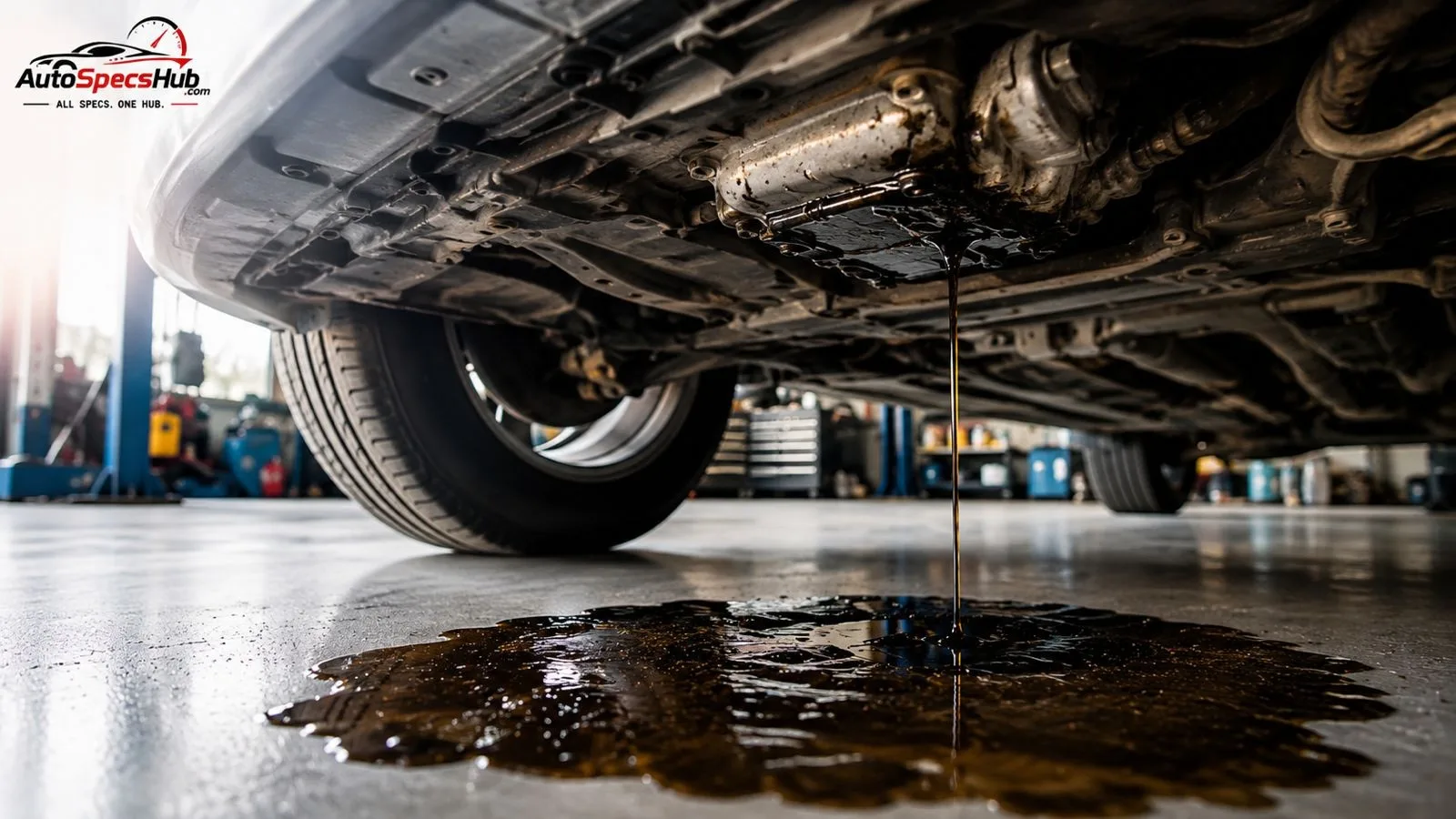
Finding a puddle of oil under your car is one of those moments that makes every driver's stomach drop a little. Is it serious? Or is it something small you can fix in twenty minutes with a wrench?
The truth is, a car leaking oil can mean a dozen different things, and the fix ranges from "tighten a bolt" to "replace a major seal." Almost every leak gives off warning signs before it becomes a real problem — you just have to know what to look for.
Quick answer: most oil leaks trace back to a loose drain plug, a worn oil filter seal, or a deteriorating gasket — issues that are usually inexpensive to fix if caught early. The real danger comes from ignoring a small leak until it grows into a major seal failure or causes low oil pressure, which can permanently damage your engine.
Why Is My Car Leaking Oil?
Oil leaks happen because your engine relies on dozens of gaskets, seals, and threaded fittings to keep pressurized, hot oil contained. Any one of these points can fail with enough age, heat, or physical damage. The most common culprits include:
Worn or hardened engine gaskets
A damaged oil pan
A loose or stripped drain plug
An improperly seated oil filter
A failed valve cover gasket
Cracked crankshaft or camshaft seals
Excess internal engine pressure
Poorly installed aftermarket parts
General wear from age and mileage
Which one applies to your car usually comes down to where the oil is pooling, how old the vehicle is, and when the leak started showing up.
1. Worn or Damaged Engine Gaskets
Gaskets sit between engine surfaces to create an oil-tight seal. Heat and pressure break them down over years of use, and eventually they harden, crack, or shrink just enough to let oil seep through. Depending on which gasket fails, oil can show up almost anywhere on the engine — top, side, or bottom. A classic example is the valve cover gasket, one of the most frequently replaced gaskets on any vehicle with moderate mileage. If you're noticing oil collecting on top of the engine or dripping down the sides, this is usually your first suspect.
2. Damaged Oil Pan
The oil pan bolts to the bottom of the engine and holds the oil reservoir when the car isn't running. Because of its position, it's constantly exposed to speed bumps, potholes, curbs, and road debris. A hard enough impact can dent the pan or crack its gasket, causing oil to drip from the lowest point of the engine bay. If you see fresh oil directly under the center or front of the vehicle, check the pan for dents. Minor gasket leaks can often be resealed, but a cracked or badly dented pan usually needs replacing.
3. Loose or Damaged Oil Drain Plug
Every oil change involves removing the drain plug so old oil can flow out. If it isn't torqued back down correctly — or if the crush washer underneath it is old and worn — oil will slowly weep out around the threads. This is one of the most common leaks reported shortly after a routine oil change, and also one of the easiest to fix. If your leak started right after a service appointment, start here. A fresh crush washer and a properly torqued plug solves most of these cases.
4. Worn Oil Filter
The oil filter has its own rubber gasket that seals against the engine block. If it wasn't tightened enough during installation, if the old gasket from the previous filter got stuck to the mounting surface, or if the filter is simply worn out, oil can leak from around its base. Oil pooling specifically around the filter housing is a strong clue this is your source — and it's one of the cheaper problems to resolve.
5. Failed Valve Cover Gasket
The valve cover sits atop the engine and keeps oil contained around the camshaft and valvetrain. Its gasket faces constant heat cycling, which eventually causes it to shrink and crack. When it fails, oil can seep down the sides of the engine, and if it reaches a hot exhaust manifold, you may notice a burning smell or a thin wisp of smoke. That combination — visible leak plus burning smell — signals this gasket needs attention soon.
6. Crankshaft or Camshaft Seal Leak
These seals sit around the rotating shafts connecting internal engine components to external parts like the timing belt or accessory pulleys. They're built for constant rotation, but like any seal, they eventually wear out. They're also often buried deep in the engine, sometimes requiring removal of other parts just to inspect them. If you keep finding oil under your car after already replacing the drain plug, filter, and visible gaskets, a hidden seal leak is the likely explanation — and a good reason to bring in a professional.
Symptoms of a Car Leaking Oil
Not every leak announces itself with a dramatic puddle. Often, the earliest signs are much subtler.
Oil spots under the vehicle. Fresh oil tends to look amber or light brown; older oil darkens over time. Not every fluid stain is oil, though — check the color, thickness, and smell before assuming.
Oil level dropping between changes. If you're topping off oil more often than your manual recommends, something is leaking externally (or, in rarer cases, burning internally). Don't just keep refilling it — get the source identified.
A burning oil smell. This usually means leaking oil has made contact with a hot surface like the exhaust manifold. Pull over and inspect as soon as it's safe.
Visible smoke from the engine bay. Especially paired with a burning smell, this deserves immediate attention.
The oil pressure warning light. Never ignore this one. If it comes on, stop driving as soon as it's safe. Continuing with low oil pressure is one of the fastest ways to cause catastrophic engine damage.
How to Find an Oil Leak Yourself
Tracking down the exact source can be trickier than it sounds, because oil often travels along the engine block before dripping onto the ground — meaning the drip point isn't always directly below the actual leak.
Start with the basics: check your oil level on the dipstick, and top it off if it's low (a stopgap, not a fix). Then get underneath the car with a flashlight and look at the usual suspects — the oil pan, drain plug, and filter housing. Next, check the top of the engine around the valve cover for streaks or fresh residue. If the leak is subtle, wiping down the suspected area with degreaser and checking again after a short drive can help reveal exactly where fresh oil reappears. If you still can't pin it down, that's the point to hand it off to a mechanic with a lift and a light.
Can You Still Drive With an Oil Leak?
It depends entirely on severity. A very minor leak — a slow drip that barely shows up between oil changes — isn't an emergency, though it shouldn't be ignored indefinitely either.
But if any of the following are true, stop driving and get it looked at:
Oil is dripping rapidly or pooling quickly
Your oil level is critically low
The oil pressure warning light is on
You see smoke or smell burning oil
Continuing to drive under any of these conditions risks turning an affordable repair into a full engine rebuild.
How Much Does It Cost to Fix an Oil Leak?
Costs vary widely depending on what's actually failing, but here's a general range to set expectations:
Drain plug or crush washer: $20–$75 in parts and labor — often a quick fix
Oil filter reseal: $30–$100
Valve cover gasket replacement: $150–$450, depending on engine layout and accessibility
Oil pan gasket or pan replacement: $200–$600
Crankshaft or camshaft seal replacement: $400–$1,200+, since these often require significant disassembly and labor
Your specific make and model, local labor rates, and how accessible the leaking component is will all shift these numbers up or down. Before assuming the worst based on price alone, it's worth checking your vehicle's service specs so you know what's actually recommended for your engine before paying for a repair.
How to Prevent Oil Leaks
Most oil leaks are preventable with consistent maintenance. Stick to your manufacturer's recommended service schedule, use the correct oil grade and filter, and have your drain plug and filter checked at every oil change. During routine maintenance, glance underneath the vehicle and around the engine bay for early signs of seepage — catching a hairline leak early is far cheaper than waiting for it to become a serious one.
When Should You See a Mechanic?
Bring your vehicle in for inspection if you can't identify the source of the leak yourself, if the oil level keeps dropping despite topping it off, or if the leak seems to be getting worse over time.
You should treat it as urgent — not something to schedule for "whenever" — if you notice any of the following:
A large, fast-growing puddle under the vehicle
The oil pressure warning light illuminated
Smoke coming from the engine bay
A strong burning oil smell
Very low or empty oil on the dipstick
Knocking or unusual engine noises
Overheating or a sudden drop in performance
Any of these can point to a problem well beyond a simple external leak, and driving on it risks doing real damage to your engine.
Final Thoughts
A car leaking oil isn't automatically a sign your engine is failing — plenty of leaks trace back to something as simple as a loose drain plug or a worn filter gasket. But it's also not something to shrug off. The engines that end up needing expensive rebuilds are usually the ones where a small, manageable leak was left unaddressed for months or years.
Check your oil level regularly, watch for the warning signs above, and try to pin down the source as soon as you notice one. And if you're ever unsure whether a leak is minor or serious, don't wait it out — a quick inspection now is almost always cheaper than the repair bill you'll face later.