
Best SUV for Families: Comfort, Safety, Space and Practicality Compared
Find the best SUV for families by comparing comfort, safety, passenger space, cargo capacity, practicality, fuel economy, and everyday usability to choose the right family SUV.
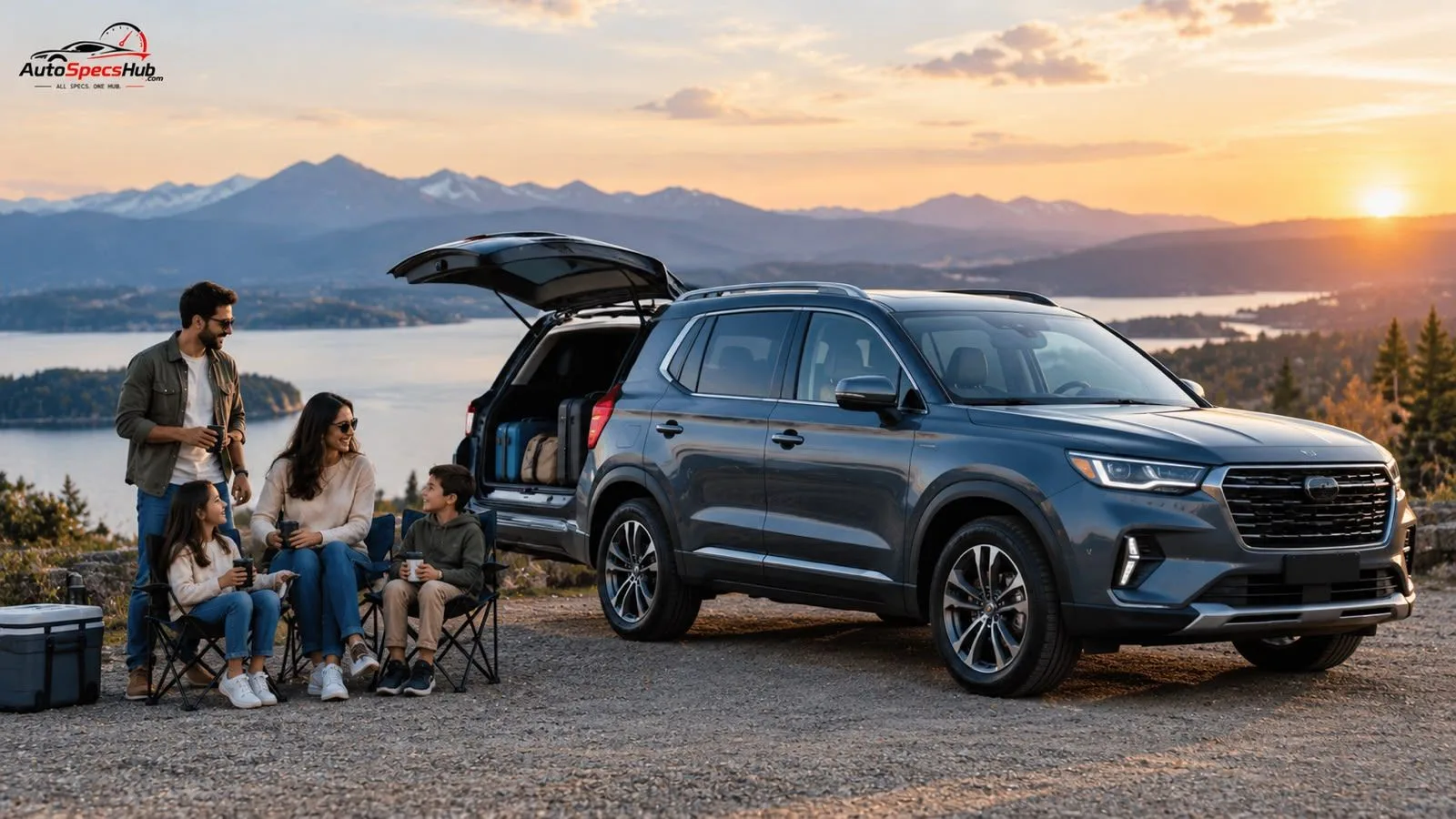
Choosing the best SUV for families is about much more than picking the largest vehicle you can afford. Families need a vehicle that is comfortable on everyday journeys, practical enough for passengers and luggage, easy to live with, and suitable for everything from school runs to long road trips.
An SUV can offer advantages over a traditional sedan or hatchback, including a higher driving position, flexible seating, useful cargo space, and a wide range of available features. However, SUVs vary significantly in size and design. A compact SUV may be easier to park and more economical, while a midsize or three-row SUV can provide the additional space a larger family needs.
The right choice therefore depends on how many people you regularly carry, how much luggage you need, where you drive, and what matters most to your family.
What Makes an SUV Good for Families?
A family-friendly SUV should make everyday transportation easier rather than simply offering a large body and high seating position.
One of the first things to consider is interior space. Families need enough room for adults and children to sit comfortably, while younger passengers may also require child seats or booster seats. The second row should provide enough legroom and width for the occupants you regularly carry.
Cargo space is equally important. A vehicle that feels spacious with the seats upright may become much less practical when you need to carry luggage, groceries, sports equipment, or a stroller.
Safety is another major consideration. Families should look at the vehicle's available safety equipment, crash-test performance, visibility, braking technology, and driver-assistance systems. Features can vary by model year and trim, so it is important to check the exact vehicle rather than assuming every version has the same equipment.
Comfort, reliability, fuel economy, and ownership costs also matter. A family SUV is likely to spend a lot of time on the road, so small differences in convenience can become significant over several years.
Compact, Midsize or Three-Row SUV?
There is no single SUV size that is best for every family.
Compact SUVs
Compact SUVs are often a strong choice for smaller families. They generally provide more interior and cargo space than small hatchbacks while remaining relatively easy to drive in urban areas.
Their smaller dimensions can make parking easier, and many offer reasonable fuel economy compared with larger SUVs.
For a couple with one or two children, a good compact SUV may provide everything necessary without the additional size and running costs of a three-row vehicle.
The main limitation is that cargo and rear-seat space can become restrictive when the family grows or when several passengers need to travel with substantial luggage.
Midsize SUVs
Midsize SUVs provide a useful middle ground.
They typically offer more passenger space, larger cargo areas, and stronger towing capability than compact SUVs without reaching the size of the largest family vehicles.
For families who regularly take road trips or carry bulky equipment, the additional space can be worthwhile. Many midsize SUVs also offer available three-row seating, although the usability of the third row varies considerably between models.
If you want a balance between everyday usability and family practicality, a midsize SUV is often worth considering.
Three-Row SUVs
Large three-row SUVs are designed for families that regularly need additional seating.
The biggest advantage is flexibility. You can carry more passengers without necessarily sacrificing the entire cargo area, depending on the vehicle's design.
However, a third row does not automatically make an SUV more practical. Some third-row seats are suitable mainly for children, while others provide enough room for adults. Access can also vary significantly.
Large SUVs can also be harder to maneuver in crowded areas and may consume more fuel than smaller alternatives. Before choosing one, consider whether you genuinely need three rows or simply like the idea of having them available.
Comfort Matters More Than You Might Think
Families can spend hours inside their vehicles, particularly during vacations and long-distance trips. That makes seating comfort an important part of the buying decision.
Look beyond the appearance of the seats. Consider seat cushioning, adjustment range, rear-seat legroom, headroom, climate control, and how easy it is for passengers to enter and exit.
Rear-seat comfort is especially important when children are involved. Installing child seats can reduce usable space, so test-fitting them before purchasing is a smart idea.
The driving position also matters. A good SUV should provide clear visibility without requiring the driver to sit in an awkward position. Large windows and well-designed mirrors can make everyday driving easier.
Noise levels should also be considered. A quiet cabin can make a major difference during long journeys, particularly when children are traveling in the rear.
Safety Features to Look For
Safety should be one of the highest priorities when choosing a family SUV.
Modern SUVs may offer a variety of driver-assistance features, including automatic emergency braking, lane-departure or lane-keeping assistance, blind-spot monitoring, adaptive cruise control, rear cross-traffic alert, and parking assistance.
However, equipment varies between manufacturers, model years, and trim levels. A feature available on one version may be optional or unavailable on another.
Crash-test results are also worth researching. Rather than judging safety from the vehicle's size alone, look for independent testing and information relevant to the exact model and model year you are considering.
Visibility is another practical safety factor. A high seating position can improve the driver's view of traffic, but thick pillars or poor rear visibility can create blind spots. A reversing camera and parking sensors can be particularly useful on larger SUVs.
Cargo Space and Everyday Practicality
For many families, cargo space is one of the biggest reasons to choose an SUV.
Think about what you actually carry rather than relying solely on the manufacturer's cargo figure. A family may need space for groceries during the week and luggage, strollers, bicycles, or recreational equipment at the weekend.
The shape of the cargo area matters too. A wide and relatively square space can be more useful than a larger figure that is difficult to access.
A low loading floor can make heavy items easier to place inside. Foldable rear seats provide additional flexibility when transporting larger objects.
If you're comparing several SUVs, checking their dimensions and other vehicle data can make the differences easier to understand. You can compare detailed car specifications to look at important information before deciding which models deserve a closer look.
Fuel Economy and Running Costs
A family SUV should fit comfortably within your household budget, and the purchase price is only part of the equation.
Fuel consumption can become a significant expense when the vehicle is used every day. Larger engines and heavier SUVs generally require more energy, although modern powertrains have improved efficiency considerably.
Hybrid SUVs can be attractive for families that want lower fuel consumption without moving completely to an electric vehicle. Conventional gasoline and diesel options may still make sense depending on availability, driving patterns, and local fuel costs.
Insurance, servicing, tires, brakes, and replacement parts should also be considered.
A vehicle that costs slightly more to purchase may be cheaper to operate over several years, while an inexpensive SUV with high running costs may ultimately cost more.
Reliability and Maintenance
Reliability becomes especially important when an SUV is responsible for daily family transportation.
Before buying, research the vehicle's maintenance requirements and reputation, but don't rely entirely on broad claims about a model or brand. Different engines, transmissions, trims, and model years can have different characteristics.
A used SUV should receive additional attention. Check its service history, mileage, previous repairs, accident history, tire condition, brakes, suspension, fluids, and signs of corrosion.
A proper inspection is particularly important if the vehicle has high mileage or has been used for towing, off-road driving, or heavy family use. A used car checklist can help you work through important inspection points before buying and reduce the chance of overlooking an expensive problem.
Which SUV Size Is Best for a Small Family?
For a small family, a compact SUV is often enough.
If you have two adults and one or two children, you may not need a large three-row vehicle. A compact SUV can provide useful rear-seat space and cargo capacity while remaining easier to park and potentially more economical.
However, consider future needs. A vehicle that works perfectly for a young couple may feel cramped after children arrive, especially when child seats, strollers, and additional luggage become part of everyday life.
Buying slightly more space than you currently need can therefore be sensible if you expect your family to grow.
What About Large Families?
Larger families should focus on seating flexibility rather than simply choosing the biggest SUV.
A three-row vehicle may be the obvious solution, but pay attention to how usable the third row actually is. Check access, legroom, headroom, and whether there is still enough cargo space behind the final row.
Sliding second-row seats can also be useful because they allow you to balance passenger space and third-row access.
Families should also consider how frequently all seats will be occupied. If the third row is only needed a few times each year, a spacious two-row SUV may be more comfortable and practical for everyday use.
SUV Features That Make Family Life Easier
Some features may not seem important during a short test drive but can become extremely useful in daily life.
Useful family-oriented features can include:
Multiple USB charging ports
Rear climate controls
Easy-access rear doors
Flexible second-row seating
Power tailgate
Rear parking sensors
Surround-view or high-quality rear cameras
Numerous storage compartments
Large cupholders
Easy-clean interior materials
Keyless entry
Adaptive cruise control for highway driving
Not every family needs every feature. Prioritize equipment that genuinely solves problems you encounter regularly rather than paying extra for technology you may rarely use.
Two-Wheel Drive or AWD?
The choice between two-wheel drive and all-wheel drive depends heavily on where and how you drive.
For families living in areas with normal road conditions, two-wheel drive can be perfectly adequate and may provide lower purchase or operating costs.
AWD can be useful in regions that experience snow, heavy rain, or poor road conditions. It can also provide additional traction on loose surfaces.
However, AWD does not replace appropriate tires or careful driving. Families should choose it because their driving conditions justify it, not simply because the badge sounds more capable.
What Should You Consider Before Buying?
The best SUV for families is the one that fits your actual lifestyle.
Start by determining how many passengers you normally carry and how much cargo you need. Then consider your typical driving environment, annual mileage, fuel costs, parking situation, and expected ownership period.
Create a shortlist based on those requirements rather than starting with brand names. Once you have several candidates, compare their dimensions, engine choices, drivetrain, seating capacity, cargo space, and other specifications.
For used vehicles, add service history and mechanical condition to the list. For new vehicles, compare trim levels carefully because important safety and convenience features may not be standard across the entire range.
Finally, take each shortlisted SUV for a proper test drive. Sit in every row you expect to use, check cargo space, test the infotainment system, and make sure child seats or other family equipment fit properly.
Frequently Asked Questions
What is the best SUV size for a family of four?
A compact or midsize SUV can work well for a family of four. The right choice depends on how much passenger and cargo space you need, how often you travel, and whether you expect your family to grow.
Are three-row SUVs better for families?
Not necessarily. Three-row SUVs provide additional seating, but they can be larger and more expensive to operate. If you rarely use the third row, a spacious two-row SUV may be more practical.
What is the most important feature in a family SUV?
There isn't one feature that matters to every family. Safety, comfortable seating, usable cargo space, reliability, and reasonable running costs are generally more important than having the longest list of optional technology.
Is AWD necessary for a family SUV?
AWD is not necessary for every family. It can be useful for snow, heavy rain, or other low-traction conditions, but two-wheel drive may be sufficient for families who mainly drive on well-maintained roads.
Should I buy a new or used family SUV?
Both can make sense. A new SUV provides the latest equipment and avoids unknown previous ownership, while a used SUV can offer more vehicle for your budget. With a used vehicle, condition and service history are particularly important.
Final Thoughts
There is no single best SUV for families because every family has different needs. The right choice depends on passenger space, cargo capacity, safety, comfort, fuel economy, reliability, and how the vehicle will be used every day.
A compact SUV may be ideal for a smaller family that values easy parking and lower running costs, while a midsize or three-row SUV can make more sense for families that regularly carry more passengers or luggage.
Before buying, compare the vehicles that fit your requirements and take them for a proper test drive. Check the seating, cargo area, visibility, driving position, and features you will actually use. For a used SUV, pay close attention to service history and overall mechanical condition.
Ultimately, the best family SUV is not necessarily the biggest or most expensive one. It is the vehicle that gives your family the right combination of comfort, safety, space, practicality, and value for the way you live and drive.