
Car AC Blowing Hot Air: Common Causes and What to Check
Is your car AC blowing hot air instead of keeping the cabin cool? Learn the most common causes, from low refrigerant and compressor problems to clogged filters and cooling fan issues, plus simple checks you can perform before visiting a mechanic.

Is your car AC blowing hot air instead of keeping the cabin cool? Learn about the most common causes of warm air from your car's AC, including low refrigerant, refrigerant leaks, compressor problems, condenser issues, electrical faults, clogged cabin air filters, and HVAC problems. This guide explains what to check, how to identify possible causes, and when professional AC service may be necessary.
A properly working car air conditioning system should provide cool air and maintain a comfortable cabin temperature, especially during hot weather. When the AC suddenly starts blowing warm or hot air, the problem can range from a simple airflow restriction to a more serious issue involving the refrigerant system or compressor.
One of the first things to determine is whether the system is producing strong airflow that is simply warm, or whether the airflow itself is weak. These symptoms can point to different problems. For example, low refrigerant or a compressor issue may affect cooling, while a clogged cabin air filter or blower problem may reduce airflow.
The good news is that some basic checks can help narrow down the problem before taking your vehicle to a repair shop. Checking the AC settings, airflow, cabin filter, and visible condenser area can provide useful clues.
However, problems involving refrigerant leaks, AC pressure, compressors, electrical components, or other sealed-system parts usually require proper diagnostic equipment and professional service. Understanding the possible causes can help you avoid unnecessary repairs and know what to ask your mechanic.
Why Is My Car AC Blowing Hot Air?
A car's air conditioning system depends on several components working together to remove heat from the cabin. The compressor circulates refrigerant, the condenser releases heat, and the evaporator helps cool the air before it enters the passenger compartment.
If one of these components stops working correctly, the AC may produce warm air instead of cold air.
Common reasons for a car AC blowing hot air include:
Low refrigerant
Refrigerant leaks
A faulty AC compressor
Condenser or cooling fan problems
A clogged cabin air filter
Electrical or fuse problems
HVAC blend door problems
A damaged or blocked condenser
Identifying the exact cause usually requires looking at the symptoms rather than replacing parts based on the hot-air complaint alone.
Common Causes of a Car AC Blowing Hot Air
Low Refrigerant
Low refrigerant is one of the most common reasons a car AC may stop cooling properly. Refrigerant is responsible for absorbing heat from the cabin and transferring it outside the vehicle.
When the refrigerant level becomes too low, the system may not be able to complete the cooling cycle effectively. You may notice warm air, reduced cooling performance, or an AC system that takes much longer than usual to cool the cabin.
Refrigerant does not normally disappear simply because the vehicle gets older. If the level is low, there may be a leak somewhere in the system. Adding refrigerant without finding the underlying problem may only provide temporary improvement.
Refrigerant Leak
A refrigerant leak can develop in hoses, fittings, seals, the condenser, evaporator, or other AC components. Even a small leak can gradually reduce system performance.
Possible signs include:
Warm air from the vents
Cooling that becomes weaker over time
Visible oily residue around certain AC components
The system repeatedly needing refrigerant service
Because automotive AC systems operate under pressure, leak detection and refrigerant service are generally best handled with the correct equipment.
Faulty AC Compressor
The compressor is one of the most important components in the air conditioning system. It circulates refrigerant between the different parts of the system so heat can be removed from the cabin.
A failing compressor can cause the AC to stop cooling or produce inconsistent cooling. Mechanical wear, electrical problems, or issues with compressor controls can all affect its operation.
Unusual grinding, squealing, rattling, or other noises when the AC is operating may indicate a compressor or related component problem. However, noise alone does not confirm that the compressor has failed.
Condenser or Cooling Fan Problems
The AC condenser releases heat from the refrigerant. It needs adequate airflow to perform this job effectively.
If the condenser is dirty, damaged, blocked, or not receiving enough airflow, the AC may struggle to cool the cabin.
A faulty cooling fan can create a particularly noticeable symptom: the AC may seem colder while the vehicle is moving but become warmer when sitting at idle. This happens because driving naturally provides airflow through the condenser.
Clogged Cabin Air Filter
The cabin air filter helps keep dust, dirt, pollen, and other particles from entering the passenger compartment. Over time, the filter can become clogged.
A dirty cabin air filter usually causes weak airflow rather than truly hot air, but it can make the AC feel as though it is not working properly.
If the air coming from the vents is weak even when the blower is set to a high speed, checking the cabin filter is a simple place to start. Replacement intervals vary by vehicle, so owners should follow the manufacturer's recommendations.
Electrical or Fuse Problems
Modern vehicle AC systems rely on electrical components, sensors, relays, wiring, and control modules.
A blown fuse, faulty relay, damaged wiring, or failed sensor can prevent part of the AC system from operating correctly.
Electrical problems may cause symptoms such as:
AC suddenly stops working
Compressor does not engage
AC works intermittently
Controls do not respond normally
Blower operates at some speeds but not others
Electrical diagnosis may require a multimeter, scan tool, or other specialized equipment.
HVAC Blend Door Problems
The HVAC system uses doors and actuators to control how air moves through the heating and cooling system.
If a blend door or its actuator becomes stuck or fails, warm air may enter the cabin even when the AC system is operating.
A common clue is when one temperature setting does not behave as expected, or when different vents produce noticeably different temperatures.
The exact design varies between vehicles, so diagnosis should be based on the specific vehicle's HVAC system.
What to Check When Your Car AC Is Blowing Hot Air
Before troubleshooting AC problems, it can also help to check your vehicle's car specifications and maintenance requirements, as different models can have different AC systems and recommended service procedures.
Check the AC Settings
Start with the simplest possibilities.
Make sure:
The AC button is switched on.
The temperature is set to the coldest setting.
The blower is operating.
The vents are open.
The air is directed toward the appropriate vents.
Recirculation is selected when appropriate.
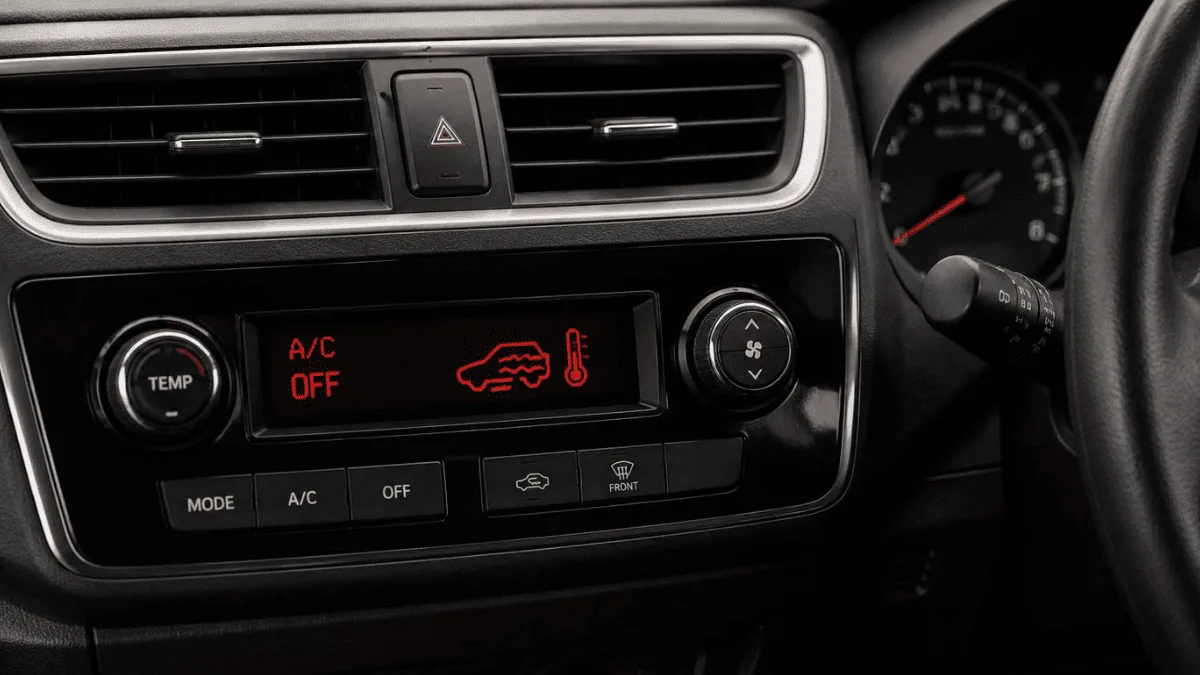
A control setting or HVAC mode can sometimes make the system appear to be malfunctioning when the AC itself is operating normally.
Check the Airflow
Pay attention to how much air is coming from the vents.
If the airflow is strong but warm, the problem may involve refrigerant, the compressor, condenser, or another cooling-system component.
If the airflow is very weak, investigate the cabin filter, blower motor, airflow restrictions, or HVAC doors.
This simple distinction can help narrow down the possible causes.
Notice Whether the AC Changes While Driving
If the AC becomes cooler while driving but warmer when the vehicle is stopped, condenser airflow may be worth investigating.
Cooling fan problems are one possible cause, although other issues can produce similar symptoms.
Inspect the Accessible Areas
With the engine off, you can visually inspect accessible areas for obvious damage or debris.
Look for:
Leaves or dirt around the condenser
Damaged components
Loose-looking connections
Obvious signs of physical damage
Do not open AC refrigerant lines or attempt to release refrigerant from the system.
Hot Air vs. Weak Airflow: What's the Difference?
Understanding the difference between hot air and weak airflow can make troubleshooting easier.
Symptom | Possible Causes |
Strong airflow but warm air | Low refrigerant, compressor issue, condenser problem, blend door |
Weak airflow | Cabin filter, blower motor, airflow restriction |
Cold while driving but warm at idle | Cooling fan or condenser airflow issue |
AC suddenly stops cooling | Electrical problem, refrigerant issue, compressor problem |
Different temperatures from vents | Blend door or HVAC control problem |
These symptoms are useful clues, but they should not be treated as a definite diagnosis. Several AC problems can produce similar symptoms.
Can You Fix a Car AC Blowing Hot Air Yourself?
Some basic AC checks are suitable for vehicle owners. You can check the controls, airflow, cabin filter, and visible debris around the condenser.
However, refrigerant-related work is different. Diagnosing leaks, measuring system pressures, recovering refrigerant, and recharging the system require appropriate equipment and procedures.
Compressor replacement, electrical diagnosis, refrigerant leaks, and other complex repairs are generally better handled by a qualified technician.
Trying to repair the sealed AC system without the correct tools can lead to additional damage or safety problems.
When Should You Take Your Car to a Mechanic?
Professional inspection is recommended when the AC continues blowing hot air after basic checks or when you notice other warning signs.
Consider having the system inspected if:
The AC repeatedly loses cooling performance.
Refrigerant needs to be added repeatedly.
You suspect a refrigerant leak.
The compressor makes unusual noises.
The AC works only intermittently.
The cooling fan is not operating correctly.
There are electrical or warning-light issues.
The system produces unusual smells or sounds.
A technician can test the AC system and determine whether the problem is related to refrigerant, airflow, electrical components, or mechanical parts.
How to Prevent Car AC Problems
Regular maintenance can help keep your vehicle's AC system working efficiently.
Start by replacing the cabin air filter according to the vehicle manufacturer's recommended schedule. Keep the area around the condenser reasonably clear of dirt and debris, and pay attention to changes in cooling performance.
If the AC begins making unusual noises or gradually loses cooling ability, have it checked rather than repeatedly adding refrigerant without determining why the system is losing performance.
Following the manufacturer's maintenance recommendations can also help identify problems before they become more expensive.
Frequently Asked Questions
Why is my car AC blowing hot air?
Common causes include low refrigerant, refrigerant leaks, compressor problems, condenser or cooling fan issues, electrical faults, clogged filters, and HVAC blend-door problems.
Can low refrigerant cause hot air?
Yes. A low refrigerant charge can prevent the AC system from cooling effectively. However, low refrigerant may indicate a leak, so the underlying cause should be diagnosed.
Why is my AC cold while driving but hot at idle?
This can happen when the condenser is not receiving enough airflow while the vehicle is stationary. A cooling fan problem is one possible cause, although other faults can create similar symptoms.
Can a dirty cabin air filter make my AC blow hot air?
A dirty cabin air filter usually restricts airflow rather than directly causing hot air. However, reduced airflow can make the AC feel ineffective.
How do I know if my AC compressor is bad?
Possible signs include poor cooling, unusual noises, inconsistent operation, or problems with compressor engagement. A proper diagnosis is needed before replacing the compressor.
Can I recharge my car AC myself?
Some vehicle owners use consumer AC recharge products, but refrigerant-system diagnosis and servicing are better performed using the correct equipment. If the system is low because of a leak, simply adding refrigerant does not solve the underlying problem.
Final Thoughts
A car AC blowing hot air does not always mean that the entire AC system needs major repairs. The cause could be something relatively simple, such as restricted airflow, or it could involve refrigerant, the compressor, condenser, cooling fan, electrical components, or HVAC controls.
Start with basic checks such as the AC settings, airflow, cabin filter, and visible condenser area. Pay attention to whether the AC performs differently while driving or when the vehicle is stopped, as these details can provide useful clues.
If the problem continues, particularly if you suspect a refrigerant leak or mechanical or electrical failure, professional diagnosis is the safest approach. Identifying the actual cause before replacing parts can help avoid unnecessary expenses and get your vehicle's AC system back to producing the cool air you expect.