
Crew Cab vs Extended Cab: What You Gain and Give Up With Each
Crew cab vs extended cab explained: compare rear-seat space, bed length, maneuverability, towing, payload, and manufacturer cab terminology to find the right pickup configuration.
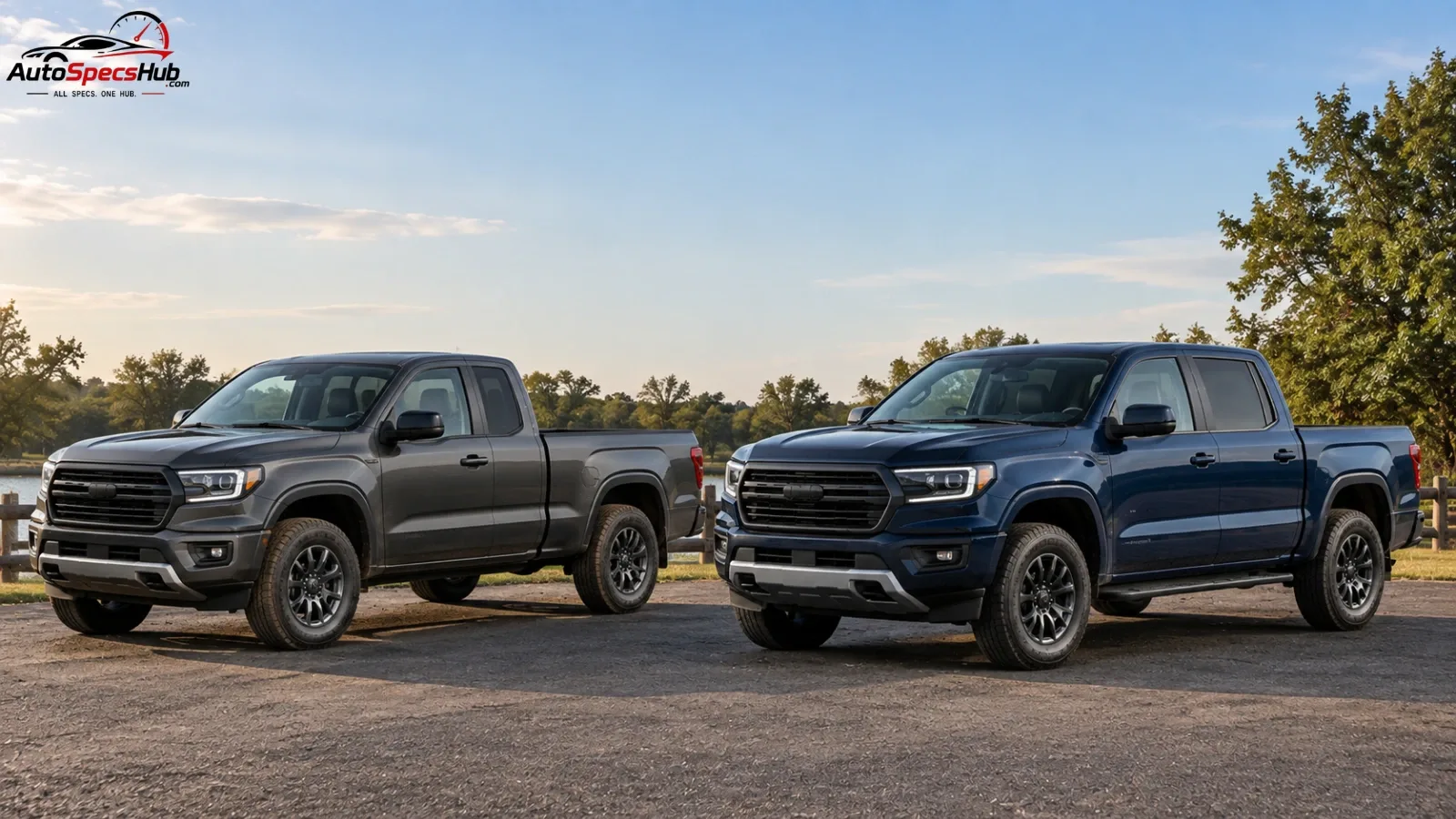
The biggest mistake when choosing a pickup cab is assuming that more cabin space automatically means a better truck. It doesn't. A crew cab gives you a much more usable rear seat, but an extended cab can preserve bed space, storage, and a more compact footprint.
The choice gets even less straightforward because truck manufacturers don't use cab names consistently. Ford has the SuperCab, Toyota uses XtraCab and Double Cab, while GMC uses Double Cab and Crew Cab. Those names can describe noticeably different layouts.
So don't choose based on the badge alone. Look at what you gain, what you give up, and how the entire truck fits the way you actually use it.
Crew Cab and Extended Cab Have Different Priorities
A crew cab is designed primarily around passenger space. It typically has four full-size doors and a substantially larger second row, making it much more practical when adults, children, or coworkers regularly ride in the back.
An extended cab adds space behind the front seats without making the cabin as large. Depending on the truck, that space might contain smaller rear seats, rear-hinged doors, compact jump seats, or enclosed storage.
That creates the basic distinction:
Crew cab prioritizes passengers. Extended cab puts more emphasis on balancing passengers with truck utility.
Neither is automatically the better choice. The right one depends on what you use the truck for most often.
Crew Cab vs Extended Cab at a Glance
Feature | Crew Cab | Extended Cab |
Rear-seat space | More generous | More limited |
Rear-door access | Usually full-size | Usually smaller or different |
Adult passengers | Better for regular use | Better for occasional use |
Bed combinations | Can be more restricted | Often more utility-focused |
Overall footprint | Usually larger | Often more compact |
Best suited to | Families and frequent passengers | Work, storage and occasional passengers |
These are general differences. Exact dimensions, doors, seating and bed choices vary by truck.
The Rear Seat Makes the Difference You Notice Every Day
The crew cab's biggest advantage becomes obvious when people regularly sit behind the front seats.
More rear legroom makes longer journeys easier, while full-size rear doors simplify getting in and out. That's especially useful when the pickup doubles as a family vehicle.
Installing a child seat, loading passengers, or carrying four adults is simply easier when the second row was designed as a genuine passenger area.
An extended cab can still work well if those seats are used occasionally. If you normally drive alone or with one passenger, however, a large rear cabin may spend most of its life unused.
That's where an extended cab's smaller footprint can start to make more sense.
Bed Space Can Change the Entire Decision
For many pickup owners, the bed matters more than the second row.
A larger cab occupies more of the truck's overall length, which can affect the bed combinations a manufacturer offers. An extended cab may therefore give you access to a longer bed without turning the truck into an especially long vehicle.
That matters if you regularly carry:
Lumber and building materials
Landscaping equipment
Work tools
Camping gear
Large or awkward cargo
If you rarely carry rear passengers but use the bed constantly, sacrificing some cabin space can be a very reasonable trade.
The opposite is true for someone whose cargo usually fits in a shorter bed but who carries passengers every day. In that situation, the crew cab's additional interior space is likely to deliver more value.
The important point is to compare the cab-and-bed combination, not just the cab.
Overall Size and Maneuverability Matter Too
Cab choice can affect more than passenger and cargo space. Depending on the truck, it can change overall length, wheelbase, weight and which configurations are available.
A more compact cab can be easier to maneuver around tight parking areas, narrow worksites and crowded streets. A larger cab may provide a more comfortable interior but contribute to a longer overall truck when paired with the same bed.
Don't assume the difference will be dramatic, though. Two trucks with different cab designs can still have surprisingly similar dimensions.
If you're comparing several pickups, the easiest approach is to look at the actual specifications rather than relying on appearance. AutoSpecsHub's car comparison tool lets you put vehicles side by side so differences in dimensions, powertrain and other specifications are easier to spot.
Towing and Payload Depend on More Than the Cab
Cab configuration can influence towing and payload, but it doesn't determine them by itself.
A crew cab isn't automatically worse for towing, and an extended cab isn't automatically better. Engine, drivetrain, axle ratio, suspension, tires, equipment, cab and bed configuration can all affect the final rating.
The Toyota Tacoma is a good example. Its towing capacity changes according to factors including model year, engine, cab style, bed length, drivetrain, trim and towing equipment. Our Toyota Tacoma towing capacity guide breaks down those differences across generations and configurations.
Payload deserves the same attention. The maximum advertised figure isn't necessarily what a particular truck can carry once passengers, accessories and cargo are added.
If towing or hauling is a major reason you're buying a pickup, check the exact configuration and its factory rating before making your decision.
Cab Names Don't Always Tell the Full Story
This is where pickup shopping gets confusing.
Ford uses SuperCab for the smaller F-150 cab and SuperCrew for the larger configuration. Toyota uses XtraCab and Double Cab on the Tacoma, while GMC uses Double Cab and Crew Cab on the Sierra.
These names aren't interchangeable. More importantly, they don't always correspond perfectly to the term "extended cab."
Toyota's 2026 Tacoma is a good example. Its XtraCab is a two-seat configuration with storage behind the front occupants and a 6-foot bed, while Double Cab models provide a conventional rear seating area and can be paired with different bed lengths.
GMC's current Sierra 1500 also demonstrates the difference. Its Double Cab and Crew Cab configurations have different rear-seat dimensions, with the Crew Cab providing considerably more rear legroom.
So when comparing trucks, check the things that actually affect your decision:
Number and type of doors
Rear-seat legroom
Bed length
Overall length and wheelbase
Payload rating
Towing rating
Available engines and trims
The cab name tells you what the manufacturer calls it. The specifications tell you what you're actually getting.
If you're researching different makes and model years, the AutoSpecsHub Cars database is useful for checking specifications across a broad range of vehicles.
When Each Cab Makes More Sense
A crew cab is usually the better fit when passengers are a regular part of your life.
Families, commuters who carry coworkers, and anyone who frequently uses the second row will get more value from the extra space. The larger doors and more usable rear seat are benefits you'll notice every day.
An extended cab makes more sense when rear passengers are occasional and truck utility takes priority. It can be particularly attractive for work-focused buyers who want additional enclosed storage without dedicating as much of the vehicle to passenger space.
There's also a middle ground. If you occasionally need extra seating but spend most of your time carrying equipment, an extended cab can provide enough flexibility without the larger passenger compartment of a crew cab.
For a used pickup, don't make the cab style your only consideration. Condition, maintenance history, previous use, tires, frame condition and equipment can have a much bigger effect on the quality of the purchase. Our used-car checklist covers the major areas worth inspecting.
Frequently Asked Questions
Is a crew cab bigger than an extended cab?
Generally, yes. A crew cab normally provides more rear passenger space and larger rear doors, while an extended cab has a smaller rear area.
Is an extended cab good for families?
It can work for occasional passengers, but a crew cab is generally more comfortable if adults or children regularly ride in the back.
Does an extended cab always have a longer bed?
No. Bed availability varies by truck and configuration. Some extended-cab-style pickups offer longer beds, but you should check the exact model rather than assume.
Does a crew cab tow less than an extended cab?
Not necessarily. Towing capacity depends on the complete configuration, including the engine, drivetrain, axle ratio, cab, bed and equipment.
Which cab is better for work?
An extended cab can be a strong choice when rear passengers are occasional and bed space or enclosed storage matters more. A crew cab is better when the truck regularly carries several people.
Choose the Space You Will Actually Use
The best pickup cab isn't necessarily the largest one. It's the one that gives you the most useful space for the way you actually use your truck.
If passengers regularly occupy the second row, a crew cab's comfort and easy access are difficult to beat. If your truck spends more time carrying equipment than people, an extended cab can provide a better balance of storage, bed utility and overall size.
Before buying, look past the badge and compare the actual doors, rear-seat dimensions, bed length, towing capacity, payload and overall dimensions of the configurations you're considering.
That's the real difference in a crew cab vs extended cab comparison: not simply how much space each truck has, but where that space is used and what you have to sacrifice to get it.