
Honda Civic vs Toyota Corolla: Which One Should You Buy? Pros, Cons and Final Verdict
Honda Civic vs Toyota Corolla is one of the most popular compact-car comparisons. See how they differ in performance, comfort, fuel economy, reliability, practicality, features, and ownership costs to find out which one is right for you.
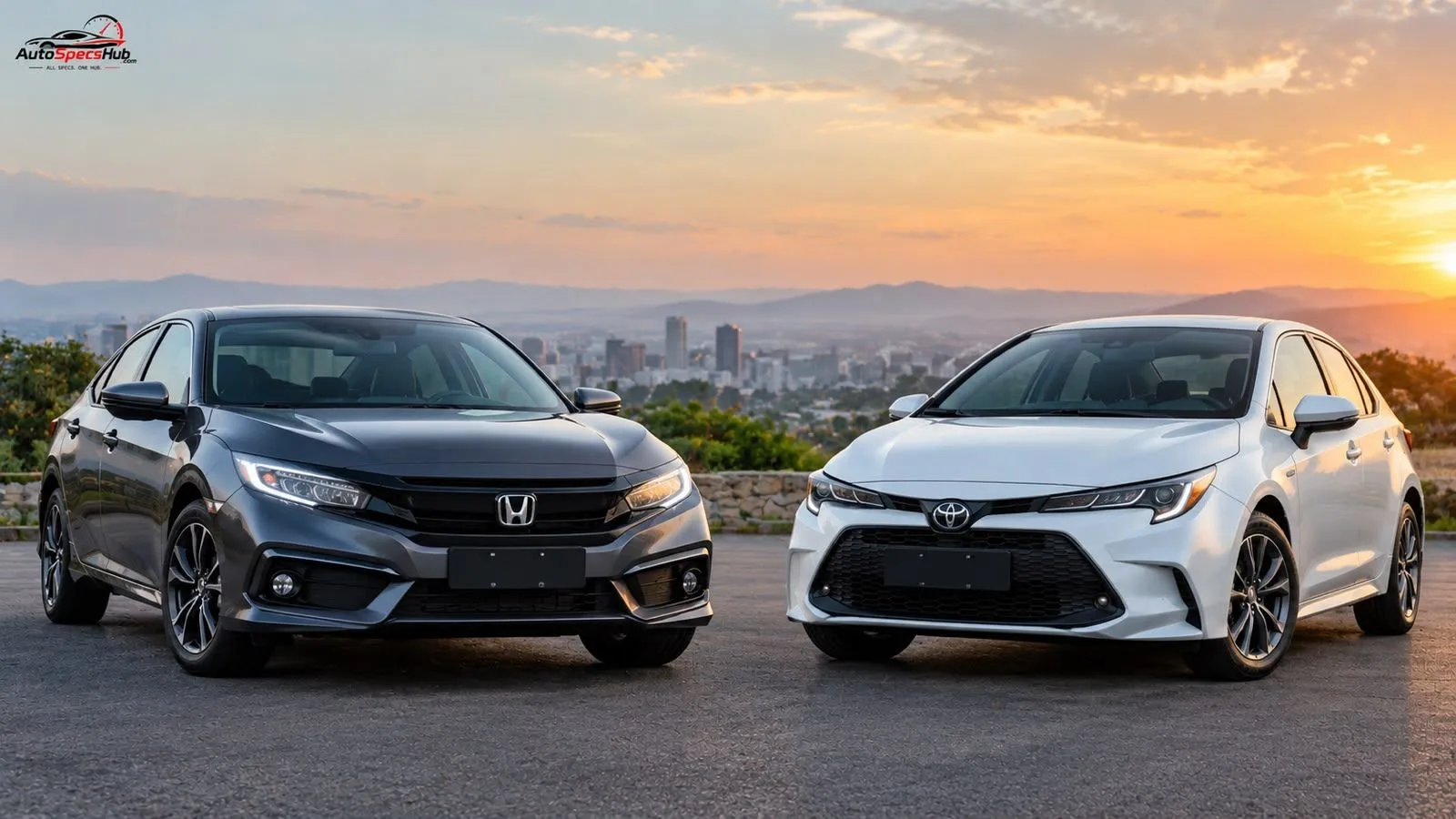
Honda Civic vs Toyota Corolla is one of the most important comparisons to make if you're shopping for a compact sedan. Both have earned decades-long reputations for reliability, efficiency, practicality, and everyday comfort, but they aren't simply two versions of the same car. The Civic generally stands out for its more engaging driving experience, spacious cabin, and refined interior, while the Corolla counters with strong fuel economy, broad hybrid availability, and a reputation for low-cost, dependable ownership.
So, which one should you buy? The answer depends on what matters most to you, from purchase price and fuel economy to performance, interior space, safety, reliability, and long-term ownership costs. This comparison breaks down the key differences between the Honda Civic and Toyota Corolla so you can decide which one fits your needs better.
The better choice depends on what matters most to you. Price, fuel economy, interior space, performance, safety equipment, reliability, and the exact trim can all change the answer. Here's how the two compare and what you should consider before buying.
Honda Civic vs Toyota Corolla: What Sets Them Apart?
The Honda Civic and Toyota Corolla are both compact cars, but they have developed noticeably different personalities.
The Civic tends to focus more on driving refinement and versatility. Its cabin is spacious for the class, the ride is composed, and higher trims offer a more premium feel. Depending on the market and model year, Civic buyers can also choose between gasoline and hybrid powertrains, with performance-focused versions available in the wider Civic lineup.
The Corolla takes a more value-oriented approach. It offers a straightforward driving experience, competitive fuel economy, and a wide range of hybrid options. Toyota also puts considerable emphasis on standard safety and driver-assistance technology.
One important point is that neither model has a single specification that applies to every year. Engines, transmissions, body styles, trims, features, and fuel-economy figures can change by model year and market. Always compare the exact Civic and Corolla you're considering rather than relying on specifications from a different year.
Pricing and Overall Value
Price is often one of the first reasons shoppers compare these two cars.
The Corolla has traditionally positioned itself as the more affordable entry point, although the actual difference depends on the model year, trim, destination charges, incentives, and market. That lower starting price can make the Toyota attractive to buyers working with a strict budget.
The Civic can command a higher starting price, but Honda aims to justify the difference with its interior space, driving characteristics, design, and available equipment.
The comparison becomes particularly interesting when hybrids enter the discussion. Toyota has made hybrid technology available across a broad portion of the Corolla lineup, while Civic hybrid availability depends on the generation and trim structure.
Rather than comparing only starting MSRPs, consider the price of the specific trim you actually want. A cheaper base car isn't necessarily the better value if you need to spend considerably more to get the features you want.
Also consider insurance, fuel costs, maintenance, financing, and resale value. The lowest purchase price is only one part of the overall ownership equation.
Engines and Performance
Powertrain choices are one of the biggest differences between the Civic and Corolla.
Depending on model year and market, Civic gasoline models have been offered with naturally aspirated and turbocharged engines, while newer Civic hybrid models use an electrified powertrain that combines a gasoline engine with electric motors.
The Corolla has also offered naturally aspirated gasoline engines and hybrid powertrains, with specifications varying according to market and trim.
On paper, horsepower doesn't tell the whole story. The way an engine delivers power, how the transmission responds, and how the vehicle is tuned can have a bigger impact on how the car feels during everyday driving.
For city use, both provide enough performance for normal commuting. The Civic tends to feel more responsive and composed when you push it harder, while the Corolla focuses more heavily on predictable, easygoing driving.
If performance matters to you, don't just compare horsepower figures. Take both cars for a test drive and pay attention to acceleration from a stop, merging onto highways, passing, steering response, and how the transmission behaves under different conditions.
Fuel Economy
Fuel efficiency is one of the strongest reasons to consider either car.
Gasoline versions of the Civic and Corolla can deliver competitive fuel economy, while their hybrid versions can reduce fuel consumption further. However, exact figures depend heavily on engine, transmission, body style, trim, wheel size, model year, and testing standards.
The Corolla's hybrid availability can be particularly attractive if your priority is maximizing fuel economy without moving into a larger or more expensive vehicle.
The Civic hybrid, however, offers a more powerful driving experience while still delivering strong efficiency. That makes it appealing to buyers who don't want to choose between fuel economy and performance.
Your driving habits matter too. A driver who spends most of the week in city traffic may benefit differently from a hybrid than someone who spends most of their time cruising on highways.
Instead of choosing based solely on the highest advertised MPG figure, consider how and where you'll actually drive.
Interior, Comfort and Passenger Space
Interior space is an area where the Civic has a meaningful advantage.
The Civic generally provides a spacious cabin with good passenger room, particularly in the rear. This makes it a strong choice for buyers who regularly carry adult passengers or want more room for longer journeys.
The Corolla's cabin is perfectly usable for everyday driving, but rear-seat space can feel tighter compared with the Civic. If you regularly carry passengers, sit in the back seat of both before making a decision.
The quality and layout of the cabin also matter. The Civic tends to offer a clean, modern dashboard design and a more refined overall atmosphere, particularly in higher trims.
The Corolla focuses more on straightforward controls and practicality. Depending on the trim, it can still provide a strong selection of technology and convenience features without making the cabin unnecessarily complicated.
Ultimately, interior preference is personal, so spend time inside both cars rather than judging them from photographs.
Technology and Safety Features
Modern Civic and Corolla models offer considerably more technology than their predecessors.
Both can be equipped with smartphone connectivity, touchscreen infotainment, digital displays, and a range of driver-assistance systems. However, the exact equipment depends on the model year and trim.
Honda uses its Honda Sensing suite of safety technologies, while Toyota uses Toyota Safety Sense. Depending on the vehicle, these systems can include features such as adaptive cruise control, lane-keeping assistance, and automatic emergency braking.
Toyota has also placed a strong emphasis on making safety technology widely available across the Corolla range. Honda offers a similarly comprehensive safety approach, although individual features can differ between trims.
When comparing the two, check the actual equipment list for the cars you're considering. A feature that is standard on one trim may be optional or unavailable on another.
Safety ratings should also be checked by model year and body style because testing procedures and ratings can change over time.
Reliability and Maintenance
Reliability is one of the main reasons people consider either Honda or Toyota.
Both brands have long-standing reputations for building durable mainstream vehicles, but reliability shouldn't be treated as a guarantee. The condition of a particular car, its maintenance history, mileage, driving environment, and previous repairs can have a major effect on ownership experience.
For a new car, follow the manufacturer's maintenance schedule and keep records of completed services. For a used Civic or Corolla, service history becomes even more important.
Check whether routine oil changes and other scheduled maintenance were completed. Look for signs of neglected fluids, worn tires, brake problems, leaks, or previous accident repairs.
If you're considering a Civic with a CVT, it's also worth researching the transmission requirements and history for the specific model year you're buying. Honda Civic CVT reliability and maintenance information can help buyers understand what to look for when evaluating a Civic equipped with this transmission.
Neither vehicle should be purchased solely because someone says Honda or Toyota is “reliable.” Evaluate the individual car and its maintenance record.
Driving Experience
This is where the Civic and Corolla feel most different.
The Civic generally has the more engaging driving character. Its steering, chassis balance, and ride quality make it feel more confident when driving through corners or at highway speeds. It can still be comfortable and easy to drive in traffic, but there's more involvement when you want it.
The Corolla is more focused on predictable, uncomplicated transportation. Recent generations have improved the driving experience considerably, but the car still prioritizes ease of use and everyday comfort over sporty handling.
Neither approach is necessarily better.
If you enjoy driving and want a compact car that feels responsive, the Civic is likely to appeal more. If you prefer a relaxed and predictable commute, the Corolla may be the better match.
A test drive is particularly important here because these differences are difficult to communicate through specifications alone.
Practicality and Cargo Space
For everyday practicality, the Civic generally has an advantage thanks to its spacious cabin and useful cargo area.
The Corolla remains practical for commuting, shopping, and everyday errands, but the Civic's additional passenger and cargo flexibility can make a difference for families and buyers who regularly carry larger items.
Body style matters as well. Depending on the model year and market, the Civic has been available as a sedan and hatchback, while Corolla body-style availability also varies by market.
If cargo flexibility is important, compare the exact body styles rather than simply comparing the Civic and Corolla nameplates.
Open the trunk, check the loading opening, sit in the rear seats, and think about how the car would work with your normal luggage, groceries, sports equipment, or child seats.
Honda Civic: Pros and Cons
Pros
Spacious and comfortable interior
Strong overall driving dynamics
Refined ride and handling
Strong hybrid performance in applicable models
Good practicality
Wide range of Civic variants across different markets
Cons
Can cost more than a comparable Corolla
Hybrid availability depends on model year and trim
Some features may require moving to a higher trim
Exact transmission and powertrain choices vary by market
Toyota Corolla: Pros and Cons
Pros
Competitive starting price
Broad hybrid availability in recent lineups
Strong fuel-efficiency focus
Straightforward and predictable driving experience
Strong reputation for long-term ownership
Extensive standard driver-assistance technology on many recent models
Cons
Rear-seat space can be tighter than the Civic
Less engaging to drive
Interior can feel less premium on lower trims
Exact features and powertrains vary by market and model year
Which One Should You Buy?
The answer depends on what you want from your next compact car.
Choose the Honda Civic if you value a roomier interior, more engaging driving dynamics, a refined cabin, and stronger performance from applicable hybrid models. It is particularly appealing to drivers who want their everyday car to feel like more than basic transportation.
Choose the Toyota Corolla if your priorities are a lower entry price, fuel efficiency, broad hybrid availability, straightforward ownership, and extensive standard safety technology.
For families or buyers who frequently carry passengers, the Civic's additional interior space may be important. For buyers focused heavily on fuel economy and keeping the purchase price under control, the Corolla deserves serious consideration.
If you're buying either model used, don't base your decision on reputation alone. Check the vehicle's service history, mechanical condition, mileage, accident history, and overall condition before making an offer. A used car checklist can help you work through the most important inspection points before you buy.
Frequently Asked Questions
Is the Honda Civic better than the Toyota Corolla?
Neither is universally better. The Civic generally has advantages in interior space, driving dynamics, and refinement, while the Corolla can be more appealing for buyers focused on value, fuel efficiency, and broad hybrid availability.
Which is more reliable, the Honda Civic or Toyota Corolla?
Both have strong reliability reputations. The condition and maintenance history of an individual vehicle are more important than simply choosing one brand over the other, especially when buying used.
Which gets better fuel economy, the Civic or Corolla?
Fuel economy depends on the exact engine, hybrid system, trim, body style, model year, and driving conditions. Recent Corolla hybrids are particularly focused on efficiency, while Civic hybrids combine strong efficiency with more performance.
Is the Honda Civic more spacious than the Toyota Corolla?
The Civic generally offers more passenger space, particularly in the rear, and can provide a more comfortable cabin for adults. However, exact dimensions vary by generation and body style.
Should I buy a Civic or Corolla as a used car?
Either can be a good used-car choice if properly maintained. Prioritize service history, mechanical condition, accident history, mileage, tire and brake condition, and the overall condition of the specific vehicle rather than choosing based only on the model name.
Final Thoughts
The Honda Civic and Toyota Corolla remain strong choices because they approach the compact-car market from slightly different directions. The Civic is the better fit for buyers who want space, refinement, and a more engaging drive, while the Corolla is especially appealing to those who value efficiency, affordability, and straightforward ownership.
There is no reason to choose based purely on brand loyalty. Compare the exact versions available to you, look carefully at the equipment and ownership costs, and take both cars for a proper test drive.
Whether you choose the Civic or Corolla, buying the right individual car in the right specification and condition is ultimately more important than simply choosing the winning badge.