
How to Reset a Tire Pressure Light (3 Methods)
Tire pressure light won't turn off? Here's how to reset it properly, plus why it sometimes stays on even after your tires are correctly inflated.
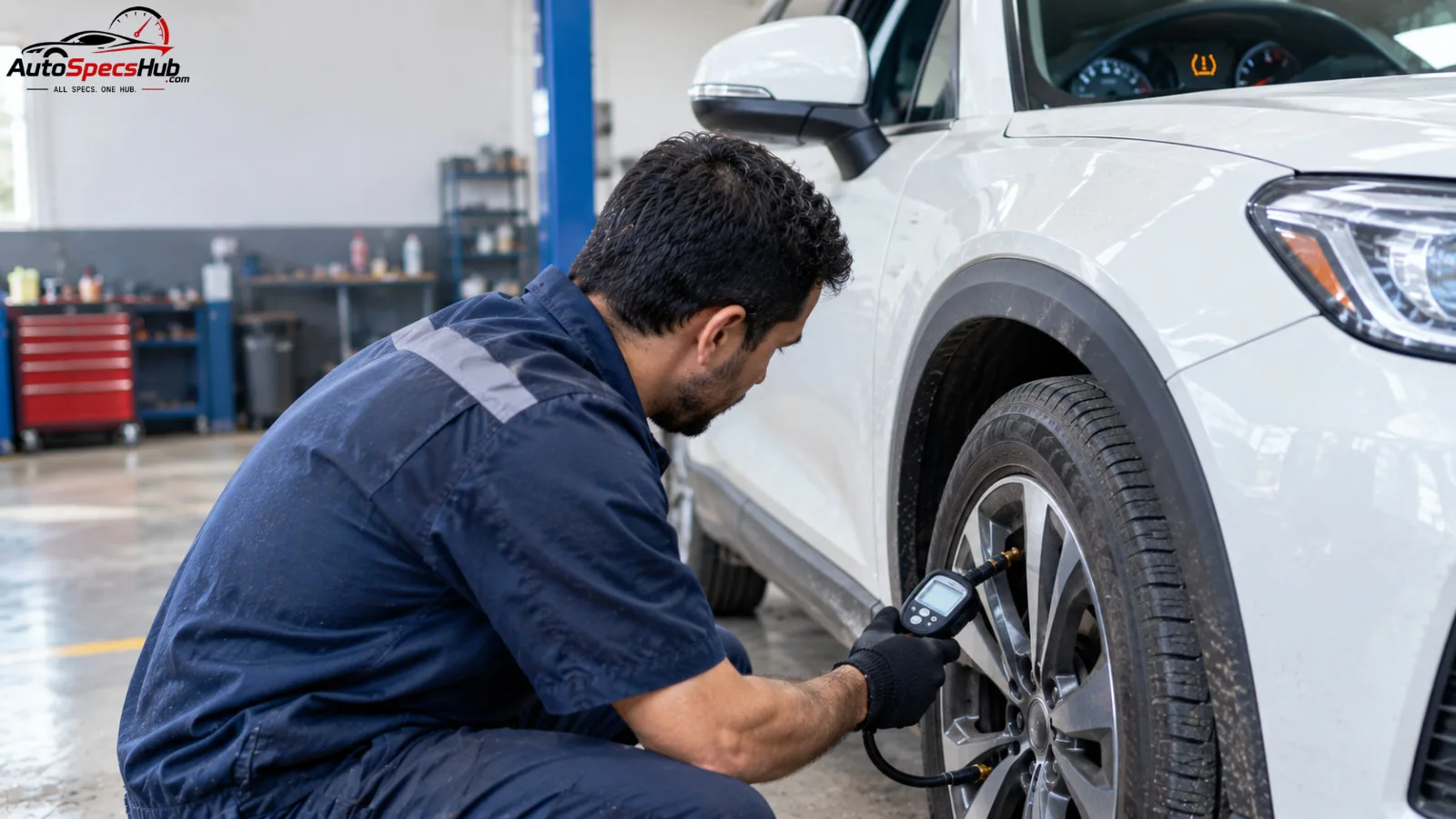
You just filled your tires, but the warning light on your dash is still glowing like nothing happened. That's more common than most drivers expect, and it usually isn't a sign anything's broken. Depending on the vehicle, the warning may clear automatically after driving, require a dedicated reset procedure, or need a TPMS relearn through the vehicle's controls or a diagnostic tool.
Which method actually works depends on your specific vehicle, and skipping the first real step, checking your actual tire pressure, is the reason a lot of people get stuck fighting a light that won't go away.
Check Your Actual Tire Pressure First
Before touching any reset button, confirm that every tire, including the spare if it has its own sensor, is at the pressure listed on the sticker inside the driver's door jamb. That number is almost always different from the "max pressure" printed on the tire's sidewall, and using the wrong figure is a common reason the light won't clear.
If a tire was noticeably low, add air and recheck it once the tire has cooled down, since pressure readings shift with temperature. For a broader look at tire maintenance, how often you should rotate your tires can also help you keep pressure, wear, and overall tire condition in check. Skipping this step and jumping straight to a reset button won't fix an actual pressure problem. It only clears a light that's telling you something real.
Let the System Reset Itself While Driving
On many vehicles, the tire pressure monitoring system (TPMS) clears the warning on its own once the pressure issue is corrected. The exact driving procedure varies by manufacturer, so your owner's manual should take priority. A common approach is:
Make sure all tires are inflated to the correct PSI.
Drive at a steady speed for the period specified by the vehicle manufacturer, often for several minutes.
Turn the vehicle off, then restart it and check whether the light is gone.
This works because many systems are designed to recheck sensor readings automatically while the car is in motion. If the light is still on after following the recommended drive procedure, move on to the next method rather than repeating the drive multiple times.
Use the TPMS Reset Button, If Your Vehicle Has One
Plenty of vehicles include a dedicated TPMS reset button, often located beneath or near the steering wheel, though its exact placement varies enough that checking your owner's manual is worth the two minutes it takes. The general procedure looks like this:
With the tires properly inflated, turn the key to the "On" position without starting the engine, or use the appropriate ignition mode on a push-button vehicle.
Locate the TPMS reset button and press and hold it according to the manufacturer's instructions.
Release the button when the system indicates that the reset or relearn process has started.
Start the vehicle and drive as directed in the owner's manual so the sensors can complete the relearn process.
Not every vehicle has a physical button for this. A growing number of newer models, especially those with larger touchscreen displays, handle this through a settings menu instead, usually under something like Vehicle Settings or TPMS Calibration. If you can't find a physical button anywhere near the steering column, that menu is worth checking before assuming your car doesn't support a manual reset at all.
Follow the Manufacturer's TPMS Relearn Procedure
Some vehicles require more than a simple drive or button press. After a tire change, sensor replacement, or other service, the TPMS may need a specific relearn procedure that can involve the vehicle's menu system, a scan tool, or a dedicated TPMS activation tool.
Because these procedures differ significantly between manufacturers and model years, there is no single universal sequence that works for every vehicle. Check the owner's manual or manufacturer's service information for the exact procedure before attempting a manual relearn.
A Solid Light and a Flashing Light Don't Mean the Same Thing
A steady, solid tire pressure light generally points to low pressure in one or more tires. A flashing light, particularly one that flashes for a period after startup and then stays solid, usually points to something different: a TPMS system fault rather than simply low tire pressure.
That distinction matters because no amount of driving or button-pressing will fix a flashing light caused by a failed sensor or another TPMS fault. If your light behaves this way, it's a sign to have the system checked rather than keep trying reset methods designed for a pressure issue.
Why the Light Sometimes Stays On After You've Done Everything Right
If you've corrected the pressure, followed the recommended drive procedure, and completed the appropriate reset or relearn procedure, but the light is still on, a few things are worth ruling out.
TPMS sensor batteries typically last several years, but their lifespan varies by vehicle, sensor design, and usage. A dying sensor battery can trigger a fault that looks similar to a pressure warning. A recent tire rotation or tire swap can also throw things off on vehicles where sensor position matters, since some systems need to relearn which sensor is in which wheel position. A spare tire without its own sensor, or one that's been swapped in temporarily, can also affect how the system reads overall on some vehicles.
None of these are things a reset button can necessarily fix on its own. They may call for a TPMS scan tool or a technician who can check each sensor individually.
When It's Worth Seeing a Professional
If the light won't clear after you've corrected the tire pressure and followed the vehicle's recommended reset or relearn procedure, or if it's flashing rather than staying solid, that's a reasonable point to stop troubleshooting on your own. A shop with a TPMS scan tool can check each sensor's signal and battery status directly, rather than guessing based on dashboard behavior alone.
If you're checking a used vehicle, tire condition and warning lights should also be part of the wider inspection. Our used car checklist covers other areas worth checking before you buy.
Frequently Asked Questions
Why is my tire pressure light on even though my tires look fine?
Tires can lose several PSI without looking visibly low, especially with seasonal temperature changes. Checking the actual pressure with a gauge, rather than trusting how the tire looks, is the only reliable way to know.
Can I just ignore the tire pressure light if I already checked my tires?
It's better not to. If the pressure is genuinely fine and the light is still on, that usually points to a sensor or TPMS system issue, which is worth diagnosing rather than living with indefinitely.
Does every car have a TPMS reset button?
No. Some rely entirely on the driving reset method, others use a touchscreen menu, and some require a scan tool for a full relearn, particularly after sensor replacement or other tire service.
Will disconnecting my battery reset the tire pressure light?
Battery disconnection is not a universal TPMS reset method and can reset other vehicle settings as well. Unless the manufacturer's instructions specifically call for it, use the vehicle's recommended TPMS reset or relearn procedure instead.
How long do TPMS sensor batteries usually last?
TPMS sensor batteries typically last several years, but their lifespan varies by vehicle, sensor design, and usage. Once a sensor battery dies, the sensor itself typically needs to be replaced rather than recharged.
The Bottom Line
Most tire pressure lights clear once the actual pressure problem is fixed and the vehicle completes its required TPMS reset or relearn process. The mistake to avoid is skipping the pressure check itself and going straight for a reset, since that does not solve an actual pressure problem.
If the light keeps coming back, or if it's flashing instead of staying solid, that's usually a sign of a TPMS system fault rather than something a basic reset can fix. At that point, a shop with the right diagnostic tool can identify the problem without relying on repeated reset attempts.