
Manual vs Automatic: Which Is Better for Daily Driving?
Manual vs automatic—which is better for daily driving? Compare comfort, fuel economy, reliability, maintenance, traffic, performance, and ease of driving to find the right transmission for your needs.
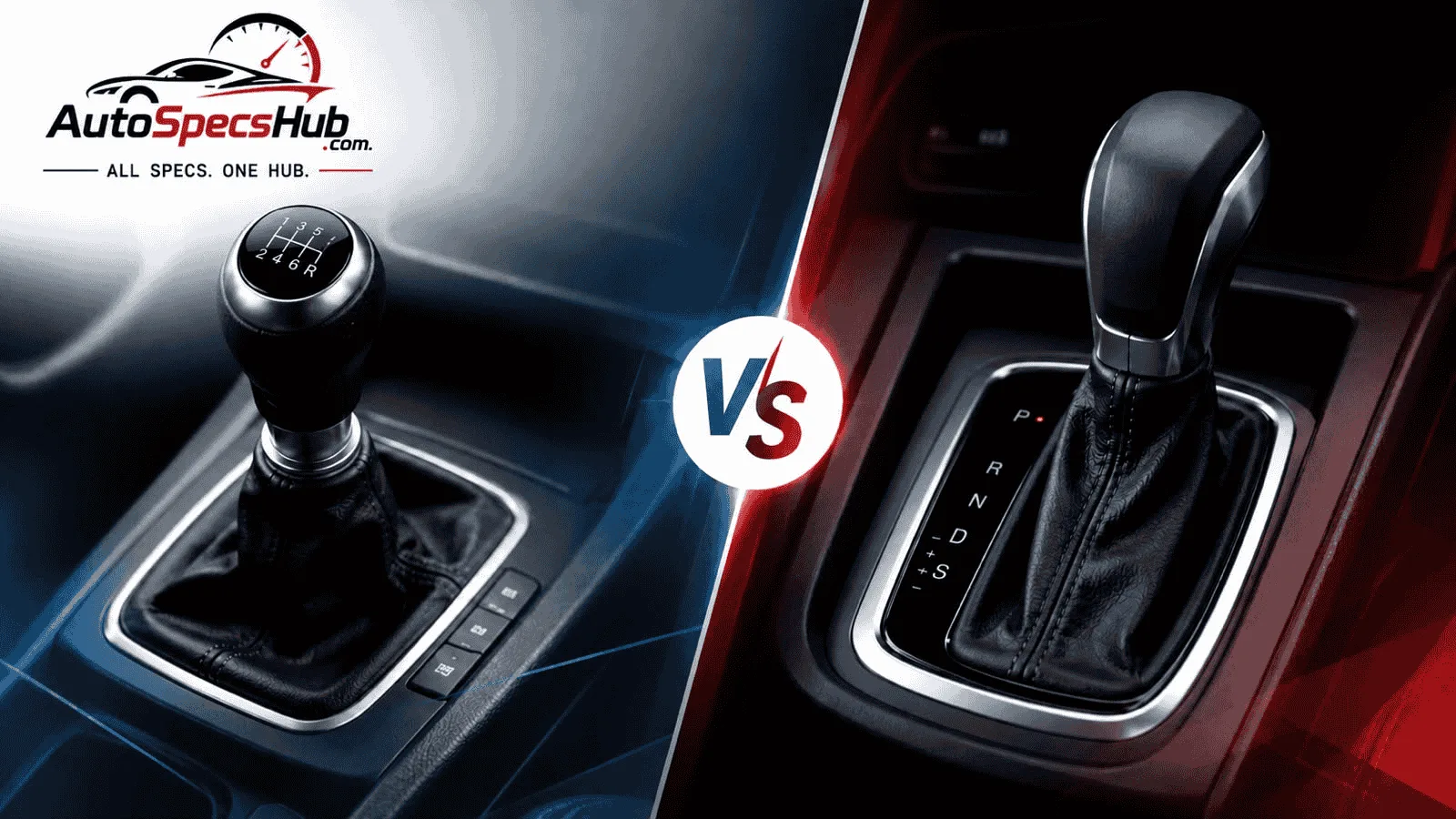
Choosing between a manual and automatic transmission can affect how comfortable, convenient, and enjoyable your car is to drive every day. A manual transmission gives you direct control over gear changes, while an automatic changes gears for you.
For daily driving, neither option is automatically better for everyone. Your choice depends on how much time you spend in traffic, your driving experience, maintenance expectations, and whether you enjoy being more involved behind the wheel.
For most commuters, an automatic transmission is easier and more convenient, especially in busy city traffic. However, a manual transmission can be an excellent choice for drivers who enjoy greater control and a more engaging driving experience.
This guide compares manual vs automatic transmissions based on comfort, traffic, fuel economy, performance, reliability, maintenance, and everyday usability.
Manual vs Automatic: Quick Comparison
Feature | Manual | Automatic |
Gear changes | Driver-controlled | Automatic |
Clutch pedal | Yes | No |
Ease of driving | Requires practice | Easier |
Heavy traffic | More tiring | More convenient |
Driver control | Higher | Lower |
Fuel economy | Can be efficient | Can be very efficient |
Maintenance | Clutch wear is a consideration | Can be more complex |
Best suited for | Enthusiasts and control | Commuting and convenience |
What Is a Manual Transmission?
A manual transmission requires the driver to select gears using a gear lever and operate a clutch pedal.
When changing gears, you press the clutch, select the appropriate gear, and release the clutch while controlling the accelerator. This means you decide when the vehicle shifts rather than leaving the decision to the transmission.
One advantage of a manual is greater control. You can select a lower gear when climbing a hill or use engine braking when traveling downhill.
The main drawback is the additional effort required. New drivers need to learn how to coordinate the clutch, accelerator, and gear lever smoothly.
Once you become familiar with the process, manual driving can feel natural and enjoyable.
What Is an Automatic Transmission?
An automatic transmission changes gears without requiring the driver to operate a clutch pedal or manually select each gear during normal driving.
The driver generally selects Drive and controls the accelerator and brake while the transmission manages gear changes.
Modern automatic vehicles can use different transmission designs, including traditional automatics, continuously variable transmissions (CVTs), and dual-clutch transmissions (DCTs).
The biggest advantage is convenience. You can focus on steering, traffic, and road conditions without constantly thinking about gear changes.
Manual vs Automatic for Daily Driving
The biggest difference between the two is the amount of work required from the driver.
A manual requires regular clutch and gear operation, while an automatic handles these tasks for you.
On an open road, the difference may not be significant. During a long commute with frequent stops, however, an automatic can be much less tiring.
A manual can still be a good daily driver if you enjoy shifting gears and don't mind the extra involvement.
For most daily commuters, automatic is the more convenient option.
Which Is Better in Heavy Traffic?
Heavy traffic is where automatic transmissions have a major advantage.
With a manual, slow-moving traffic can require repeated clutch operation. You may need to engage first gear, move forward, brake, press the clutch again, and repeat the process.
Doing this for a few minutes isn't usually a problem, but long periods of stop-and-go traffic can become tiring.
An automatic eliminates the need for constant clutch operation, making congestion easier to manage.
Winner for heavy traffic: Automatic
If your daily route regularly involves traffic jams, an automatic is generally the more comfortable choice.
Which Is Easier to Drive?
Automatic transmissions are usually easier for beginners.
There is no clutch pedal to operate and no need to manually select gears during normal driving. This allows new drivers to concentrate on steering, braking, traffic, and road signs.
Manual driving requires additional practice. You may initially stall the engine or struggle to make smooth gear changes.
With experience, these challenges become much easier.
Winner for ease of driving: Automatic
Which Gives You More Control?
Manual transmissions give drivers more direct control over gear selection.
You can choose a lower gear when climbing a steep hill, maintain a particular gear through a corner, or downshift before descending a hill.
Automatic transmissions can also offer control through manual modes, paddle shifters, sport modes, or low-gear settings, depending on the vehicle.
However, a manual transmission still gives the driver the most direct control over when gears change.
Winner for driver involvement: Manual
This is one of the main reasons driving enthusiasts continue to prefer manual vehicles.
Manual vs Automatic Fuel Economy
It is a common belief that manual cars always use less fuel, but this is no longer true in every situation.
Older automatic transmissions were often less efficient than manuals. Modern automatic transmissions, however, can use multiple gears and advanced electronic controls to improve efficiency.
Some CVTs can also keep the engine operating within an efficient range.
As a result, a modern automatic can sometimes achieve fuel economy that is similar to or better than a comparable manual.
Fuel consumption also depends on engine size, vehicle weight, driving style, traffic, road conditions, and maintenance.
Winner for fuel economy: Depends on the vehicle
Always compare the fuel-economy figures for the exact make, model, engine, and model year.
Which Is Faster?
A manual transmission gives the driver control over gear changes, but that doesn't automatically make it faster.
Modern automatic and dual-clutch transmissions can shift extremely quickly. Their electronic controls can also select the appropriate gear for acceleration.
In some performance vehicles, an automatic version can accelerate faster than the equivalent manual.
However, many drivers still prefer manuals because they provide a more involved driving experience.
Winner for acceleration: Depends on the vehicle
If performance matters, compare the actual acceleration figures rather than choosing based only on transmission type.
Which Is More Reliable?
Both manual and automatic transmissions can be reliable when properly designed and maintained.
Manual transmissions generally have a simpler design, but their clutches are wear components. Aggressive driving, frequent hill starts, or riding the clutch can increase clutch wear.
Automatic transmissions can have more complex mechanical, hydraulic, and electronic components. As a result, major repairs can sometimes be expensive.
That doesn't mean automatic transmissions are unreliable. A properly maintained automatic can provide many years of service.
Winner for reliability: Depends on the specific vehicle
If you're buying a used car, research the reliability record of the exact transmission and model year instead of assuming all manuals or automatics are equally reliable.
Manual vs Automatic Maintenance
Both types require appropriate maintenance.
Manual transmissions may require transmission-fluid service, while the clutch will eventually wear and may need replacement.
Signs of clutch wear can include:
Engine RPM rising without a matching increase in speed
Difficulty getting the car moving
Shuddering during engagement
Burning smell
Difficulty changing gears
Automatic transmissions also have maintenance requirements that vary by design and manufacturer.
Possible warning signs include delayed engagement, harsh shifting, slipping, shuddering, or fluid leaks. If you're experiencing transmission problems like these, identifying the issue early can help prevent further damage.
Which Is Cheaper to Maintain?
There is no universal answer.
A manual transmission may be relatively straightforward to maintain, but replacing a worn clutch can be expensive.
An automatic may have higher repair costs if a major internal or electronic component fails.
Maintenance costs also depend heavily on the vehicle.
Before buying a car, check the manufacturer's maintenance schedule and research common repair costs for the specific make, model, engine, and transmission.
For a used car, service records are especially valuable because they can show whether the transmission has been properly maintained.
Which Is Better on Hills?
Manual transmissions give experienced drivers excellent control on steep roads.
You can select a lower gear while climbing and downshift while descending to increase engine braking.
Automatic transmissions can also handle hills effectively. Many modern systems automatically select lower gears when additional power or engine braking is needed.
Some vehicles also offer hill-descent control or manual gear-selection modes.
For control: Manual
For convenience: Automatic
Which Is Better for City Driving?
For most city commuters, an automatic transmission is the easier choice.
Urban driving often includes traffic congestion, frequent stops, traffic lights, parking, and repeated acceleration and braking.
An automatic handles gear changes while you focus on traffic and road conditions.
A manual can still work perfectly well in the city, but repeated clutch operation can make heavy traffic more tiring.
Winner for city driving: Automatic
Which Is Better for Highway Driving?
Both manual and automatic transmissions can work well on highways.
At steady speeds, neither requires frequent gear changes. A manual can be enjoyable for drivers who like controlling the vehicle, while an automatic can make long journeys more relaxed.
Winner: Tie
If most of your driving is on highways, comfort and personal preference may matter more than the transmission type.
Manual vs Automatic: Pros and Cons
Manual Transmission
Pros:
Greater control over gear selection
Engaging driving experience
Direct driver involvement
Useful engine braking
Popular with driving enthusiasts
Cons:
More tiring in heavy traffic
Requires practice
Clutch can wear out
Requires more driver involvement
Automatic Transmission
Pros:
Easy to drive
Convenient in traffic
No clutch pedal
Less tiring during commuting
Suitable for beginners
Modern versions can be highly efficient
Cons:
Some repairs can be expensive
More complex systems in many vehicles
Less direct involvement for some drivers
Maintenance requirements vary
So, Which Is Better for Daily Driving?
For most people, automatic is the better choice for daily driving because it is easier and more convenient, particularly in busy traffic.
Choose an automatic if you:
Spend a lot of time in city traffic
Want a simple driving experience
Prefer convenience
Are a new driver
Want less effort during commuting
Choose a manual if you:
Enjoy shifting gears
Want greater control
Prefer an engaging driving experience
Don't mind operating a clutch
Enjoy being more involved while driving
Before choosing between a manual and automatic, consider the vehicle itself, including its specifications, features, performance, and ownership requirements. Compare different models and their specifications to find the right vehicle for your driving needs.
Final Verdict
There is no single winner in the manual vs automatic debate.
For everyday commuting, especially in heavy traffic, automatic usually wins for convenience and comfort. A manual remains an excellent choice for drivers who value control and enjoy a more involved driving experience.
Before choosing, consider the specific vehicle, transmission reliability, maintenance requirements, fuel economy, and your typical driving conditions.
Ultimately, the best transmission is the one that fits your daily driving needs and personal preferences.