

Nissan Bluebird: What Made This Nissan Sedan So Popular?
Discover the Nissan Bluebird’s history, generations, engines, design, features, and the reasons this long-running Nissan sedan became popular with drivers around the world.
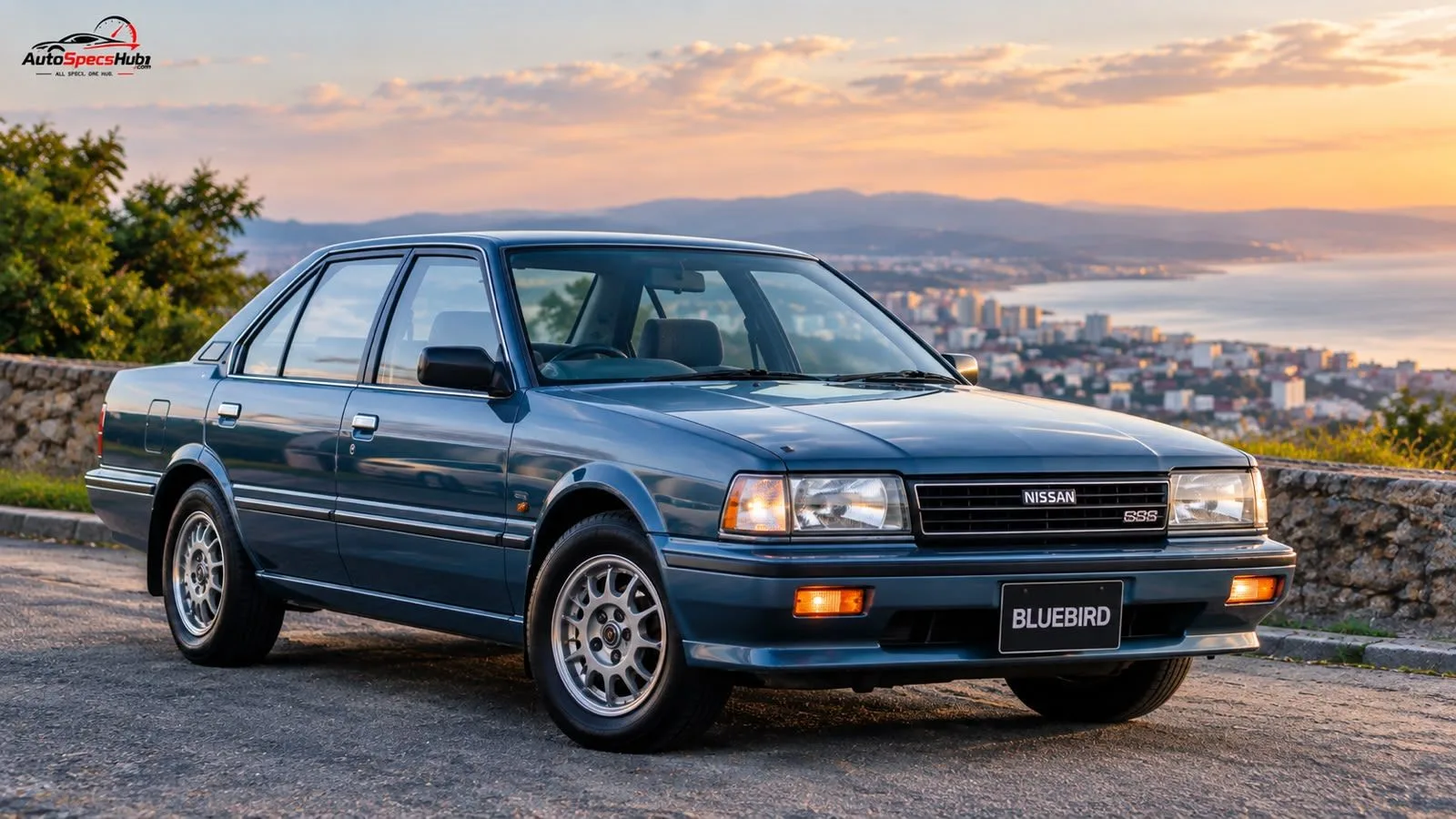
The Nissan Bluebird became one of Nissan’s best-known family cars, evolving through multiple generations with practical designs, comfortable interiors, efficient engines, and improved technology. Its long history reflected the growth of Japan’s automotive industry and Nissan’s ability to adapt to changing customer needs.
The Bluebird’s popularity came from its balanced combination of practicality, comfort, affordability, reliability, and continuous development. Rather than depending on one standout feature, Nissan developed the Bluebird as a versatile car for families, commuters, and everyday drivers across different markets.
What Was the Nissan Bluebird?
The Nissan Bluebird was a long-running passenger car produced by Nissan and positioned primarily as a practical family and everyday vehicle. It appeared in several generations, with Nissan updating its design, engines, equipment, and driving characteristics as automotive expectations changed.
One of the important characteristics of the Bluebird was its ability to adapt. Earlier versions reflected the straightforward engineering and styling of their era, while later models became more refined and technology-focused. Different body configurations and engine choices also allowed the Bluebird nameplate to serve a broad range of buyers.
This gradual development helped the model remain relevant for many years rather than being tied to a single automotive trend.
The Early Nissan Bluebird Years
The Bluebird story began during a period when Japan’s automotive industry was expanding rapidly. Nissan needed vehicles that could meet the growing demand for affordable and dependable transportation, and the Bluebird became an important part of that strategy.
Early Bluebird models focused on straightforward usability. Their designs were relatively simple compared with later generations, but they provided the qualities many drivers needed from a family car: usable passenger space, practical dimensions, and engines suited to everyday driving.
As ownership of private cars became increasingly common, models such as the Bluebird played an important role in bringing Japanese automotive products to a wider audience. The name gradually became associated with practical transportation rather than being limited to a particular type of customer.
How the Bluebird Changed Through the Generations
One reason the Nissan Bluebird remained significant was its continuous development. Each generation gave Nissan an opportunity to respond to changes in customer expectations and automotive technology.
During the 1970s and 1980s, the Bluebird developed beyond its earlier straightforward family-car character. Styling became more modern, engines became more advanced, and the available equipment expanded. Nissan also experimented with different approaches to performance, comfort, and efficiency.
By the 1990s, buyers expected considerably more from family sedans. Fuel efficiency, interior comfort, safety equipment, driving refinement, and modern styling had all become important considerations. The Bluebird continued to evolve around these expectations.
This progression shows why the model is useful when looking at Nissan’s broader history. Instead of remaining unchanged, the Bluebird reflected the technological and design changes taking place across the automotive industry.
Why Did the Nissan Bluebird Become a Family Favorite?
The Bluebird appealed to families because it offered a practical balance rather than concentrating on a single characteristic. A family sedan needs to be comfortable enough for daily use, economical enough for regular commuting, and practical enough for passengers and luggage.
The Bluebird was designed around these everyday requirements. Depending on the generation and specification, buyers could find different engine choices, body styles, and equipment levels.
Its conventional sedan character also made it approachable. Drivers who wanted a straightforward car for commuting, family transportation, and longer journeys could find the Bluebird suited to those needs without requiring the compromises associated with more specialized vehicles.
For Nissan, this broad appeal was valuable because the Bluebird could serve ordinary transportation needs while also demonstrating improvements in engineering and vehicle design.
Nissan Bluebird Engines
Engine availability changed throughout the Bluebird’s long production history, with Nissan offering different petrol and diesel powertrains depending on the generation and market.
Earlier versions generally emphasized straightforward performance and everyday usability. As technology progressed, Nissan introduced more advanced engines designed to provide better efficiency, refinement, and performance.
The range also demonstrated how Nissan responded to different customer requirements. Some drivers prioritized economical transportation, while others wanted stronger performance or a more responsive driving experience.
When comparing a Bluebird from a particular year, it is therefore important to consider the exact engine and specification rather than treating every Bluebird as mechanically identical. Engine size, fuel type, transmission, body style, and equipment could vary considerably between versions.
For detailed vehicle specifications and comparisons, you can also explore AutoSpecsHub to examine vehicle information alongside other models.
The Bluebird and Japanese Automotive Engineering
The Nissan Bluebird is also interesting because it represents the development of Japanese automotive engineering over several decades.
Japanese manufacturers increasingly focused on producing vehicles that combined efficient engineering with dependable everyday operation. The Bluebird followed that direction as Nissan improved its engines, chassis, interiors, technology, and manufacturing approaches.
Later generations benefited from advances that were becoming increasingly common throughout the automotive industry. Better engine management, improved transmissions, more sophisticated suspension systems, and additional comfort features helped transform family cars from basic transportation into more refined vehicles.
The Bluebird therefore provides a useful example of how a mainstream Nissan model evolved alongside the wider Japanese automotive industry.
Turbocharged and Performance-Oriented Bluebird Models
Although the Bluebird was primarily known as a practical family car, Nissan also explored more performance-oriented versions and turbocharged technology within its broader range.
Turbocharging allowed Nissan to produce stronger performance from relatively compact engines, while also demonstrating the company’s growing interest in performance engineering. These developments became particularly interesting to enthusiasts because Nissan was developing vehicles that could combine everyday usability with considerably stronger performance.
The Bluebird’s place within Nissan’s wider performance history can be better understood by looking at other Nissan models that used similar engineering ideas. For example, the Nissan Pulsar GTI-R shows how Nissan’s turbocharged and performance-focused engineering developed into a much more specialized direction.
This contrast is useful: the Bluebird represented mainstream practicality, while Nissan’s performance models demonstrated what the company could achieve when performance became the primary objective.
Comfort and Everyday Usability
Comfort was another important part of the Bluebird’s appeal. Family cars spend much of their lives dealing with ordinary journeys rather than dramatic driving situations, so usability matters.
The Bluebird’s development brought improvements in seating, cabin layout, equipment, and overall refinement. Later generations generally offered a more modern environment than earlier versions, reflecting changing expectations from family-car buyers.
The sedan format also provided a practical balance between passenger accommodation and luggage capacity. For commuting, shopping, family trips, and longer journeys, this type of layout remained familiar and useful.
Rather than being designed around extreme performance or luxury, the Bluebird concentrated on making regular driving easier and more comfortable.
Styling Through the Years
The appearance of the Nissan Bluebird changed substantially as the generations progressed. Early models had the proportions and styling associated with older Japanese family cars, while later versions adopted smoother shapes and more contemporary designs.
These changes were not simply cosmetic. Automotive styling evolved alongside aerodynamics, manufacturing technology, safety requirements, and consumer preferences.
The Bluebird’s changing appearance therefore provides a visual record of Nissan’s design development. Looking across different generations, it is possible to see how Nissan moved from relatively traditional sedan shapes toward more modern and streamlined designs.
For enthusiasts, this variety is part of what makes the Bluebird interesting today. Different generations have distinct identities rather than looking like minor updates of the same vehicle.
Why Was the Bluebird Important to Nissan?
The Bluebird was important because it occupied a mainstream position in Nissan’s passenger-car lineup for a long period. A successful family car can provide a manufacturer with a broad customer base, and the Bluebird was developed with exactly this type of market in mind.
Its long evolution also allowed Nissan to introduce improvements gradually. Changes in engine technology, design, comfort, and equipment could be incorporated into newer generations while maintaining the basic idea of a practical passenger car.
The model also demonstrates how Nissan balanced different priorities. Efficiency, practicality, comfort, and performance did not always receive equal emphasis, but the Bluebird could adapt its character as market expectations changed.
Nissan Bluebird vs Modern Family Sedans
Comparing an older Bluebird with a modern family sedan highlights how much the automotive industry has changed.
Modern cars typically offer more advanced safety technology, improved infotainment, sophisticated driver-assistance systems, greater connectivity, and increasingly efficient powertrains. They are also designed around modern emissions and safety standards that did not exist in the same form when earlier Bluebird generations were developed.
However, the Bluebird has a different appeal. Older cars can provide a simpler driving experience and a stronger connection to the mechanical character of their era. Enthusiasts may also appreciate the styling and engineering details that distinguish one generation from another.
This does not make the Bluebird automatically better or worse than a modern sedan. They were created for different automotive environments and reflect different expectations.
Is the Nissan Bluebird Still Worth Considering?
For someone interested in classic Japanese cars, the Nissan Bluebird can be an appealing model to research. Its long production history means there are many different versions, and the differences between generations can be substantial.
Condition is particularly important when considering an older vehicle. Age can affect mechanical components, bodywork, interior materials, electrical systems, and availability of replacement parts. The exact engine, transmission, specification, and previous maintenance history should therefore be examined before making a purchase.
The Bluebird can also appeal to collectors who are interested in Nissan’s development rather than only in high-performance models. It represents an important part of the company’s mainstream automotive history.
What Made the Nissan Bluebird So Popular?
The Bluebird’s popularity was not based on one revolutionary feature. Its strength was the combination of qualities that mattered to everyday drivers.
Across its long development, Nissan continued adapting the model to changing expectations. Practicality remained important, while engines, styling, comfort, and technology changed with the times.
That combination gave the Bluebird a broad identity. It could function as a commuter car, family sedan, long-distance vehicle, and, in certain versions, something more performance-oriented.
Its history also explains why the Bluebird remains recognizable among enthusiasts interested in Japanese automotive development.
Frequently Asked Questions
What type of car was the Nissan Bluebird?
The Nissan Bluebird was primarily a family and passenger car. It was offered in different configurations over its long production history and was designed around everyday practicality, comfort, and usability.
Was the Nissan Bluebird available with different engines?
Yes. Engine choices changed between generations and markets, with petrol and diesel options appearing across the model’s history. Exact availability depended on the particular version.
Did Nissan make performance versions of the Bluebird?
Nissan explored turbocharged and performance-oriented engineering during the Bluebird era. The company’s wider range also included more specialized performance models that demonstrate its approach to turbocharged technology.
Why is the Nissan Bluebird important in automotive history?
The Bluebird is significant because it represents the evolution of Nissan’s mainstream passenger cars over several decades. Its development reflects changes in Japanese automotive engineering, styling, efficiency, comfort, and technology.
Is the Nissan Bluebird a classic car?
Many older Bluebird generations can be considered classic Japanese cars, particularly those that have developed interest among collectors and enthusiasts. Their desirability depends heavily on generation, specification, condition, originality, and market.
Final Thoughts
The Nissan Bluebird became an important part of Nissan’s history by consistently adapting to the needs of everyday drivers. Its generations show how a practical family car can evolve alongside changes in automotive technology, design, and customer expectations.
From its early straightforward character to later developments in engines, comfort, styling, and performance, the Bluebird tells a broader story about Nissan and the growth of the Japanese automotive industry. For enthusiasts today, its appeal comes not only from individual specifications but from the history represented by the nameplate.