
Nissan Fuga Import Guide: 5 Things to Check Before Buying From Japan
Planning to import a Nissan Fuga from Japan? Learn the five key things to check before buying, from auction history and vehicle condition to engine, mileage, rust, and import considerations.
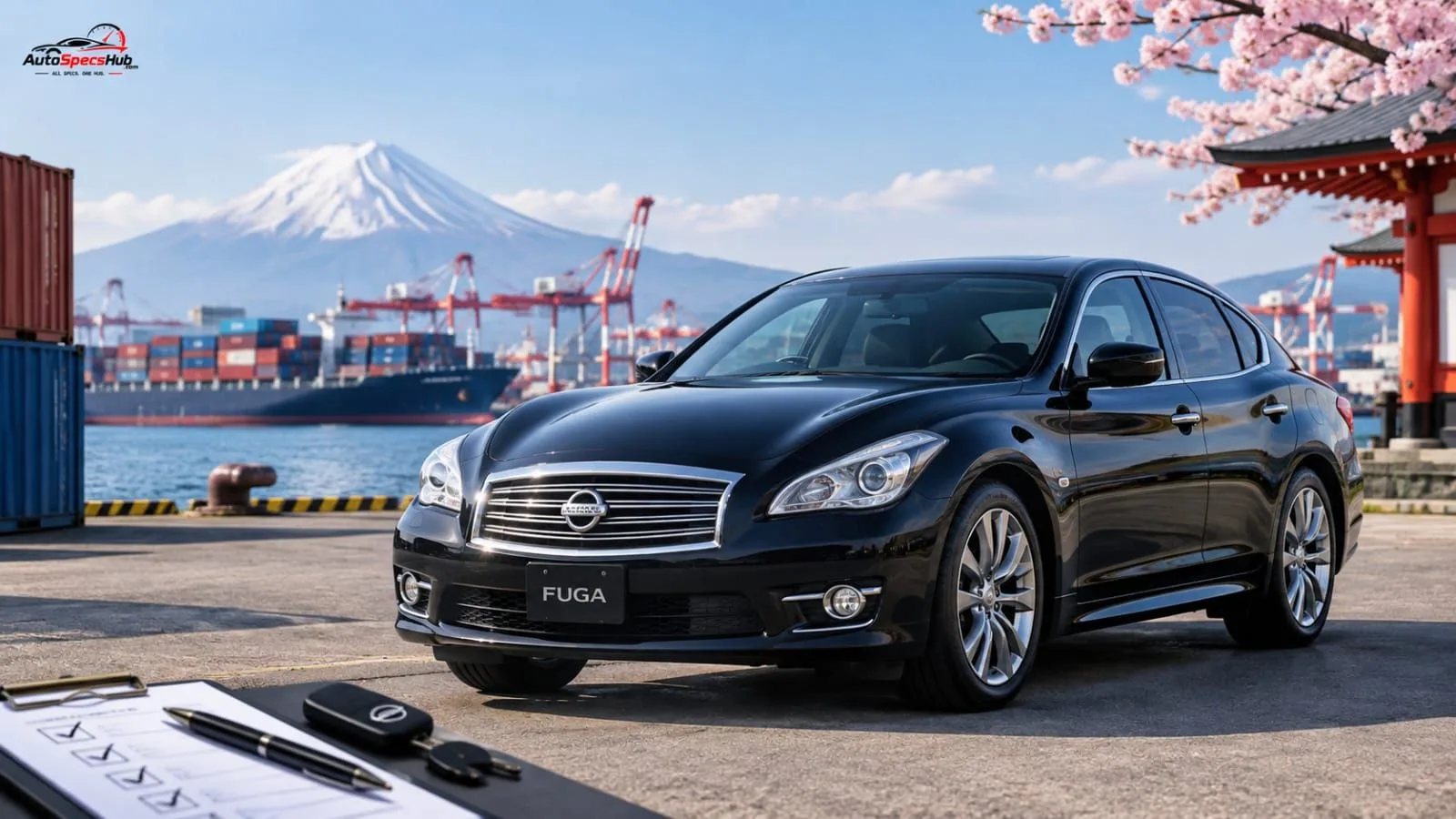
Importing a Nissan Fuga from Japan can be an appealing choice for buyers who want a distinctive Japanese luxury sedan with strong performance, comfortable road manners, and a level of equipment that can be difficult to find at the same price in other used-car markets.
But importing a used car is very different from buying one locally. You aren't able to walk into a dealership, inspect the vehicle yourself, and take it for a test drive before handing over the money. Instead, you're often making a decision based on an auction sheet, photographs, specifications, and information supplied by an export agent.
That makes preparation especially important.
The Nissan Fuga has also been offered in different generations, engines, trims, and configurations, so choosing the right example requires more than finding the lowest auction price. You need to understand exactly what you're buying, assess its condition, confirm that it can legally be imported, calculate the real cost, and make sure the person handling the transaction is trustworthy.
Here are the five most important things to check before buying a Nissan Fuga from Japan.
Confirm the Exact Nissan Fuga You're Buying
Before worrying about price or auction grade, identify exactly which Nissan Fuga you're looking at. The model has two main generations, and the differences between them are significant.
The first-generation Fuga, known by the Y50 chassis code, was introduced in 2004 and remained in production until 2009. It was Nissan's executive sedan and was closely related to the Infiniti M35 and M45 sold in other markets. Depending on the version, the Y50 could be equipped with different engines and drivetrains, including rear-wheel drive and all-wheel drive.
The second-generation Fuga, identified by the Y51 chassis code, arrived in 2009 and remained in the Japanese market for many years. It brought updated styling, newer technology, and a broader range of powertrains. Depending on the model and year, buyers could find versions such as the 250GT and 370GT, as well as hybrid models.
This matters because two Fugas that look similar in an online listing can have very different specifications.
This is particularly important when buying from Japan because trim names and specifications can be unfamiliar to overseas buyers. A vehicle may also have aftermarket wheels, body parts, badges, or other modifications that make it appear different from its original factory configuration.
Parts availability is another reason to identify the exact version before buying. Some components may be shared with related Nissan or Infiniti models, while others can be specific to a particular generation, engine, or trim.
Before you become committed to a particular listing, verify the specifications and make sure they match what you're looking for. The car specs database can also help you cross-check the engine, drivetrain, dimensions, and other specifications of the vehicle you're considering.
Read the Japanese Auction Sheet Carefully
The auction sheet is arguably the most important source of information when you're buying a used Nissan Fuga from Japan.
Unlike a simple online listing, an auction sheet provides an assessment of the vehicle's condition. It can identify exterior damage, interior condition, repaired areas, mileage information, and other details that may not be obvious from photographs.
Japanese auction sheets generally include an overall condition grade along with separate interior and exterior assessments. However, you need to understand what those grades actually mean before using them to judge a vehicle.
A grade number should never be viewed in isolation. A used vehicle with an average auction grade may still be a perfectly reasonable purchase, while a higher-grade car can still have individual issues that need attention.
The damage diagram is particularly important. Inspectors use various letters, numbers, and symbols to indicate scratches, dents, repaired areas, replaced panels, rust, and other imperfections. The exact meaning of markings can vary between auction systems, so it is better to have someone familiar with that particular auction sheet explain the details.
Pay close attention to any indication of structural repair or previous accident damage. A repaired car isn't automatically a bad purchase, but you should understand what was repaired, how significant the damage was, and whether the repair could affect the car's future reliability or resale value.
Don't rely only on the standard auction photographs either. Ask whether additional photographs are available, particularly of the engine bay, underbody, wheels, tires, and any areas marked on the auction sheet.
A photograph can make a vehicle look excellent while hiding corrosion, leaks, or previous repairs. Additional images can give you a much better understanding of the car before it leaves Japan.
Check Whether Your Country Allows the Fuga to Be Imported
Finding the right Nissan Fuga is only part of the process. Before you bid, you need to make sure your country allows that particular vehicle to be imported and registered.
Import regulations can differ dramatically between countries. Requirements may depend on the vehicle's age, engine, emissions equipment, steering position, safety standards, and intended use.
The right-hand-drive configuration is especially important for a Japanese-market Nissan Fuga. Some countries allow RHD vehicles with relatively few restrictions, while others have specific requirements or limitations. In some markets, vehicle age can also determine whether additional safety or emissions requirements apply.
Don't assume that a Fuga is automatically eligible simply because other people in your country have imported one. Regulations can change, and requirements may be different depending on the vehicle's age and specification.
Before placing a bid, check with your local transport authority, customs authority, or a qualified import specialist. Find out about:
Vehicle age requirements
Right-hand-drive eligibility
Emissions standards
Safety or compliance requirements
Import duties
Customs procedures
Registration requirements
Inspection requirements
Required modifications
This step should happen before you buy the car, not after it has already been shipped.
It is also worth checking insurance requirements. A Japanese-market luxury sedan may have equipment or specifications that are unfamiliar to some local insurers. Confirm that the vehicle can be insured at a reasonable cost before committing to the purchase.
A few minutes spent confirming the rules can prevent a much bigger problem later.
Calculate the Full Cost Before You Bid
The auction price is only one part of the cost of importing a Nissan Fuga.
A car that appears inexpensive on a Japanese auction website can become considerably more expensive once shipping, fees, duties, registration, and other expenses are included. This is one of the most common mistakes made by first-time importers.
Depending on your country and shipping arrangement, the final cost may include the auction price, agent fees, inland transportation, export documentation, shipping, marine insurance, import duty, customs charges, registration, inspections, and any required modifications.
Currency exchange rates can also affect the amount you ultimately pay.
Because these costs vary significantly between countries, it isn't useful to assume that you can simply add a fixed percentage to the auction price. Instead, ask the export agent for a detailed estimate before bidding.
Ideally, the estimate should clearly show:
Vehicle purchase price
Auction fees
Export-agent charges
Inland transportation
Export documentation
Shipping costs
Marine insurance
Import duty
Customs charges
Registration fees
Inspection costs
Compliance or modification costs
You should also budget for maintenance once the vehicle arrives.
Even a good-condition Fuga is an older used car, and age can affect components such as tires, batteries, fluids, belts, hoses, seals, suspension components, and brakes. A vehicle that has spent weeks being transported may also require some attention before it is ready for everyday use.
It's worth comparing the estimated landed cost with similar vehicles already available in your country. Importing makes the most sense when the finished cost, specification, condition, and ownership experience justify the additional effort.
Choose the Export Agent Carefully
Finding a good car is important, but choosing a reliable export agent is just as important.
Your agent may be responsible for bidding at auction, communicating with the auction house, arranging transportation, preparing export paperwork, and coordinating shipping. If communication is poor or fees aren't clearly explained, even a good vehicle purchase can become stressful.
A trustworthy agent should be willing to answer questions about the auction sheet, provide photographs of the actual vehicle, explain the bidding process, and tell you about potential problems rather than simply encouraging you to buy.
Be cautious if an agent pressures you to place a bid quickly, refuses to provide documentation, avoids questions about additional fees, or gives vague answers about the condition of the vehicle.
Before sending a deposit, ask exactly what the agent's service includes and what happens if your bid is unsuccessful. You should also understand when additional payments become due and whether shipping costs are included in the quoted price.
A few direct questions can tell you a lot. Can the agent provide additional photographs? Will they point out problems on an auction sheet? Can they explain the total cost clearly? Do they have experience exporting vehicles to your country?
A reliable agent should be comfortable answering these questions.
It's also important to approach the vehicle inspection with the same level of care. A used car checklist can help you work through important inspection areas and avoid overlooking condition, maintenance, or documentation issues before committing to a purchase.
What Should You Check After the Fuga Arrives?
Even if you've carefully inspected the auction sheet and photographs, remember that you're buying an older used vehicle.
Once the Nissan Fuga arrives, have it inspected before using it as a daily driver. Check the engine oil, coolant, brakes, tires, battery, suspension, steering, underbody, and other important mechanical components.
Look for leaks or signs of deterioration that may not have been visible in the auction photographs. Check the condition of rubber components and hoses, particularly if the vehicle is several years old.
The first few drives are also a good opportunity to identify anything unusual. Pay attention to warning lights, engine behavior, transmission operation, braking, steering, suspension noises, and unusual vibrations.
If possible, arrange a professional inspection. A mechanic familiar with Japanese vehicles can often identify issues that a general visual inspection might miss.
Taking care of small problems early can prevent them from developing into larger and more expensive repairs.
Is the Nissan Fuga Worth Importing From Japan?
The Nissan Fuga can be an appealing choice for buyers who want something different from the more common Japanese imports. It offers the character of a Japanese executive sedan while providing a range of engines, trims, and equipment depending on the generation.
However, the cheapest Fuga at auction isn't necessarily the best value.
A slightly more expensive example with a cleaner history, better condition, desirable specification, and stronger documentation may prove to be the smarter purchase over the long term.
Mileage should also be considered in context. A low-mileage vehicle can be attractive, but mileage alone doesn't tell you how well a car has been maintained. Service history, auction condition, previous repairs, and overall mechanical condition can be just as important.
You should also think about how you'll use the car. If you plan to drive it every day, consider fuel consumption, maintenance, parts availability, insurance, and local servicing before making your decision.
Frequently Asked Questions
Is the Nissan Fuga a good car to import from Japan?
The Nissan Fuga can be an appealing JDM import because of its combination of luxury, comfort, performance, and distinctive Japanese-market character. The individual vehicle's condition, history, specification, and total landed cost should be evaluated before buying.
Which Nissan Fuga generation should I buy?
That depends on your budget, preferred engine, styling, features, and intended use. The Y50 and Y51 generations have significant differences, so it's important to compare the exact specifications rather than choosing based only on appearance.
What should I look for on a Nissan Fuga auction sheet?
Pay close attention to the overall grade, interior and exterior condition, damage diagram, mileage information, repair history, and inspector's comments. If you're unsure about any marking, ask your agent or a qualified translator to explain the specific sheet.
How much does it cost to import a Nissan Fuga from Japan?
The total cost depends heavily on your destination. In addition to the auction price, you may need to pay agent fees, inland transportation, shipping, insurance, import duty, customs charges, registration, inspections, and other local expenses.
Can I import a right-hand-drive Nissan Fuga?
Whether you can import and register a right-hand-drive Fuga depends on the laws in your country. Some markets allow RHD vehicles, while others have restrictions based on vehicle age, safety standards, or registration requirements. Always confirm the current rules before bidding.
Final Thoughts
A Nissan Fuga can be a compelling Japanese luxury sedan to import, but finding a good example requires more than browsing auction listings and choosing the lowest price. The smartest approach is to verify the exact specification, understand the auction sheet, confirm local import rules, calculate every major cost, and carefully evaluate the export agent.
Don't let attractive photographs or a low auction price rush your decision. The right car is one with a condition, history, specification, and total cost that all make sense together.
For a first-time importer, careful research may take a little more time before the auction, but it can save considerable money and frustration later. If the numbers work and the vehicle checks out, importing a Nissan Fuga from Japan can be a rewarding way to own a distinctive JDM luxury sedan.