
Starter vs Alternator: What’s the Difference and How Do They Work?
Understand the difference between a car starter and alternator, how each works, their main functions, common failure symptoms, and how they affect your vehicle.
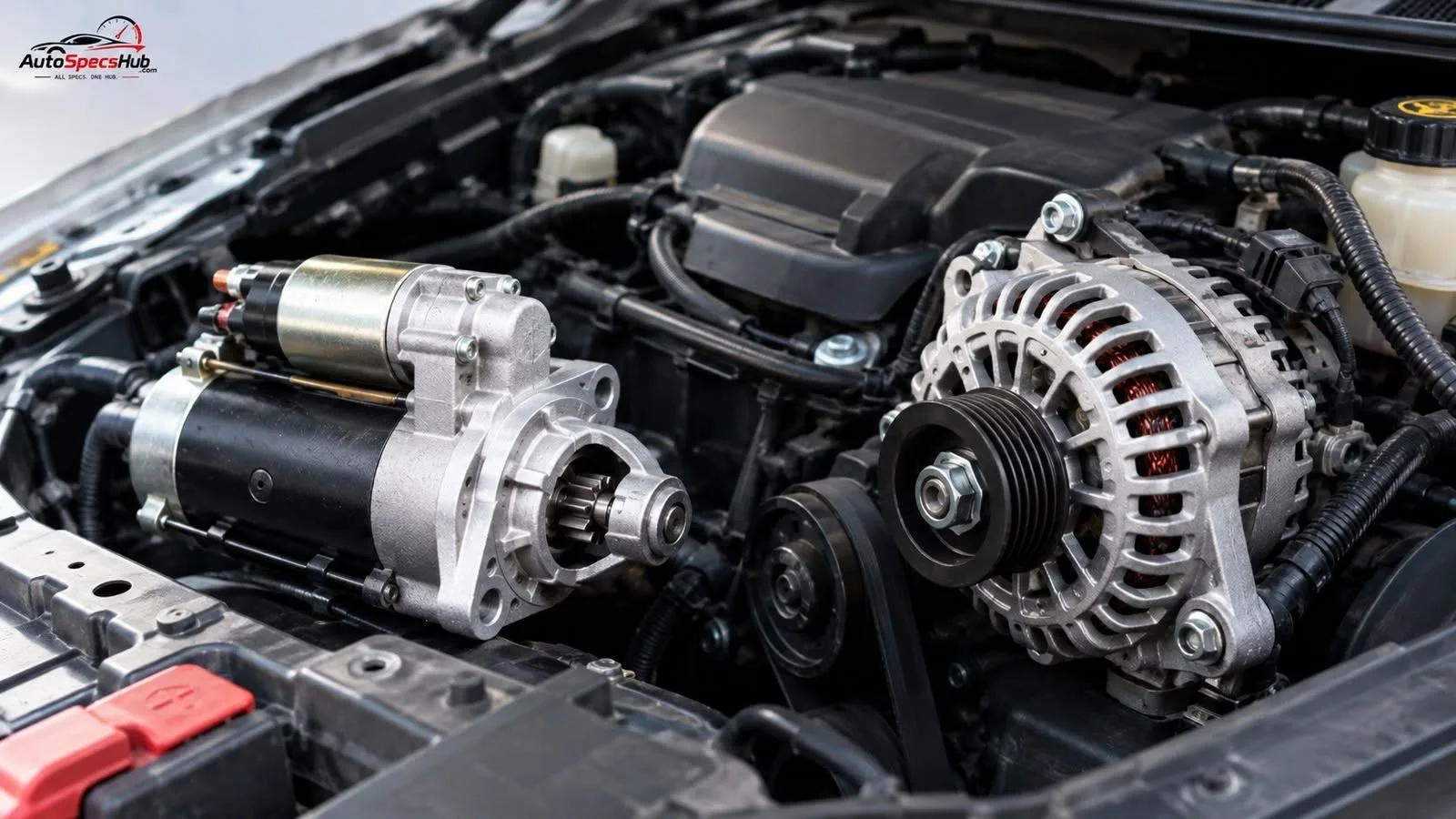
Starting a car may seem simple: turn the key or press a button, and the engine comes to life. Behind that simple action, however, several electrical and mechanical components work together. Two of the most important are the starter and alternator. Although they are connected to the vehicle's electrical system and work closely with the battery, they perform completely different jobs.
The starter provides the initial mechanical force needed to turn the engine over, while the alternator generates electrical power once the engine is running and helps keep the battery charged. Understanding the difference between these two components can make it easier to recognize starting problems, charging issues, and symptoms that may initially seem similar.
What Does a Car Starter Do?
The starter is an electric motor that turns the engine over when you start the vehicle. An internal-combustion engine needs an initial rotation before it can begin operating under its own power.
When you turn the key or press the start button, the battery sends electrical current to the starter system. The starter motor then engages with the engine's flywheel or flexplate and rotates the crankshaft. This movement allows the engine's combustion process to begin.
Once the engine starts running independently, the starter disengages.
In simple terms, the starter's main responsibility is to get the engine turning so it can start. It does not normally provide electrical power to the vehicle after the engine is running.
What Does a Car Alternator Do?
The alternator has almost the opposite role. Instead of using electrical energy to create mechanical movement, it uses mechanical energy from the running engine to generate electrical power.
Once the engine is running, the alternator is driven by the engine, usually through a belt. It produces electricity that helps power the vehicle's electrical systems and replenish the battery's charge.
Modern vehicles rely on electrical power for many systems, including headlights, climate controls, infotainment, sensors, computers, safety equipment, and other electronics.
Without a functioning charging system, the battery can gradually lose its stored energy. Eventually, there may not be enough power available to start the engine again.
Starter vs Alternator: The Main Difference
The easiest way to remember the difference is:
The starter helps start the engine, while the alternator helps keep the electrical system powered after the engine starts.
The starter uses electrical energy from the battery to create mechanical movement.
The alternator uses mechanical energy from the running engine to produce electrical energy.
Component | Main Function | Primary Operating Stage |
|---|---|---|
Starter | Turns the engine over | During starting |
Alternator | Generates electrical power and charges the battery | While the engine is running |
Battery | Stores and supplies electrical energy | Starting and electrical support |
Although their jobs are different, they are closely connected through the vehicle's battery and electrical system.
How Does a Starter Work?
The starting process begins when the driver activates the ignition or start button.
The battery sends a large amount of electrical current through the starting circuit. The starter solenoid helps control this process and engages the starter mechanism with the engine.
The starter motor then spins the engine's flywheel or flexplate, causing the crankshaft to rotate. This initial rotation allows air and fuel to enter the cylinders and the combustion process to begin.
After the engine starts, the starter disengages. It does not continue turning the engine during normal driving because the engine is now producing its own mechanical power.
Because starting requires substantial electrical current, the starter depends heavily on the battery and the condition of the electrical connections.
How Does an Alternator Work?
The alternator operates after the engine has started.
A belt connected to the engine turns the alternator as the engine runs. Inside the alternator, mechanical movement is converted into electrical energy.
The alternator produces alternating current internally, which is converted into the electrical current required by the vehicle. A voltage regulator helps control the output so the electrical system receives an appropriate charging voltage.
The electricity generated by the alternator supplies the vehicle's electrical equipment while also helping recharge the battery.
This means the alternator plays an important role throughout normal driving, rather than only during the starting process.
How Do the Starter, Alternator, and Battery Work Together?
The starter, alternator, and battery form a basic cycle.
First, the battery supplies electrical energy to the starter. The starter uses that energy to turn the engine.
Once the engine is running, the alternator generates electrical power. That power supports the vehicle's electrical systems and helps restore the battery's charge.
The process can be summarized as:
Battery → Starter → Engine Running → Alternator → Battery
If one component develops a problem, the others can eventually be affected.
For example, a failing alternator may stop charging the battery properly. The car might continue running temporarily, but the battery can gradually become discharged. Eventually, there may not be enough power available for the starter to crank the engine.
Common Symptoms of a Bad Starter
A failing starter can produce several symptoms, although some of them can also be caused by a weak battery or electrical connection.
Clicking When Starting
A clicking sound when you turn the key or press the start button can indicate a starter or starting-circuit problem. However, a weak battery can produce a similar symptom.
Engine Does Not Crank
If the starter fails completely, the engine may not turn over when you attempt to start the vehicle.
You may hear a single click, repeated clicks, or nothing at all, depending on the nature of the problem.
Intermittent Starting
A starter can begin failing gradually. The vehicle may start normally on one occasion and then fail to crank the next time.
Intermittent problems can be difficult to diagnose because the starter may work normally when the vehicle reaches a repair shop.
Slow Cranking
An engine that turns over unusually slowly can indicate a weak battery, poor electrical connections, or a starter problem.
Testing the complete starting system is therefore more reliable than blaming the starter immediately.
Common Symptoms of a Bad Alternator
Alternator problems tend to appear while the vehicle is running or after the charging system has failed to maintain the battery.
Battery Warning Light
A battery-shaped warning light on the dashboard can indicate a charging-system problem. It does not necessarily mean the battery itself is defective.
Dimming or Flickering Lights
Headlights and interior lights that become dim or flicker may indicate that the electrical system is not receiving stable power.
Electrical Accessories Become Weak
Power windows, climate-control equipment, infotainment systems, or other electrical features may behave unusually if the alternator is not producing sufficient power.
Battery Repeatedly Goes Flat
If a battery repeatedly loses its charge despite being relatively new, the alternator and charging system should be checked.
Engine May Eventually Stall
If the alternator stops providing sufficient electrical power, the vehicle can eventually use most of the battery's stored energy. In some situations, this can cause the engine to stall and prevent the vehicle from restarting.
Starter Problems vs Alternator Problems
The timing of the symptoms can provide an important clue.
If the main problem occurs when you try to start the vehicle, the battery, starter, electrical connections, or starting circuit should be investigated.
If the vehicle starts but develops electrical problems while running, the alternator or charging system may be involved.
However, these symptoms are not enough to confirm a failed component. A weak battery can imitate starter problems, while a charging problem can eventually create what appears to be a battery or starter failure.
Proper testing is the best way to identify the actual cause.
Can a Bad Alternator Cause a Car Not to Start?
Yes, but usually indirectly.
The alternator does not normally turn the engine over. However, it is responsible for helping recharge the battery while the engine is running.
If the alternator fails, the battery can gradually lose its stored electrical energy. Once the battery becomes too weak, it may not have enough power to operate the starter.
This means an alternator problem can eventually result in a no-start condition.
If a vehicle repeatedly needs a jump-start, replacing the battery without checking the charging system may not solve the underlying problem.
Can a Bad Starter Drain the Battery?
A starter problem can contribute to battery issues, particularly if the starter draws excessive current or the driver repeatedly attempts to start the vehicle.
However, a battery that repeatedly becomes discharged does not automatically mean the starter is responsible.
Other possibilities include a weak battery, alternator failure, parasitic electrical drain, or poor battery connections.
The starting and charging systems should therefore be evaluated together when the same problem keeps returning.
How Can You Tell Which Component Is Failing?
Start by observing exactly what happens when you attempt to start the vehicle.
If the engine does not crank, check the battery condition, terminals, electrical connections, and starter circuit.
If the engine starts but the battery warning light appears or electrical equipment becomes weak, the alternator and charging system should be investigated.
If the battery repeatedly becomes discharged, both the battery and alternator should be tested.
A technician can use electrical testing equipment to measure battery condition, charging output, and starting-system performance. This is more dependable than replacing components based only on symptoms.
What Role Does the Battery Play?
The battery is the link between the starting and charging systems.
It provides the electrical energy required by the starter and stores energy generated by the alternator.
A weak battery can cause slow cranking, clicking, or a complete lack of starting power. At the same time, an alternator problem can cause a healthy battery to become discharged.
This is why a dead battery does not always mean the battery itself is the original cause.
When inspecting a used vehicle, the battery and starting system should be included alongside the other important mechanical and electrical components. A used car checklist can help buyers organize these checks before purchasing.
What Happens If the Alternator Belt Fails?
Many alternators are driven by a belt connected to the engine. If that belt becomes loose, damaged, or breaks, the alternator may stop turning correctly.
Without sufficient rotation, the alternator cannot generate the electrical power required by the vehicle.
Depending on the vehicle's design, the same belt may also operate other components, making belt failure potentially more serious than a simple charging problem.
Unusual belt noises, visible damage, or a charging warning light should be investigated promptly.
Can You Drive With a Bad Alternator?
A vehicle may continue running for a limited period after an alternator develops a problem because the battery still contains stored electrical energy.
However, that stored energy is limited. As the battery becomes discharged, electrical systems may begin to stop working properly and the vehicle may eventually stall.
If a charging warning light appears or electrical problems develop while driving, it is better to have the vehicle inspected rather than continuing until the battery is completely discharged.
Can You Drive With a Bad Starter?
A vehicle with a failing starter may continue to drive normally once the engine has started.
The problem is that the engine may not restart after you switch it off.
An intermittent starter can therefore leave you stranded at an inconvenient time, even if the car appears completely normal while driving.
If starting problems become more frequent, the starter and related electrical components should be checked before the vehicle fails completely.
How Vehicle Specifications Can Help
The starter and alternator are only two parts of a vehicle's larger mechanical and electrical system. When researching different cars, understanding the engine, transmission, electrical equipment, and other specifications can provide useful context.
Looking at detailed vehicle specifications can help you compare different models and understand how their engines and equipment differ before making a purchasing decision.
Frequently Asked Questions
Is the starter the same as the alternator?
No. The starter turns the engine over when you start the vehicle, while the alternator generates electrical power and helps recharge the battery while the engine is running.
Can a bad alternator make a car fail to start?
Yes. If the alternator fails to recharge the battery, the battery can eventually become too weak to provide enough power for the starter.
How do I know if my starter is bad?
Common signs include clicking when attempting to start, no engine cranking, intermittent starting, or unusually slow cranking. However, battery and electrical problems can create similar symptoms.
What are common signs of alternator failure?
Battery warning lights, dimming or flickering lights, weak electrical accessories, repeated battery discharge, and electrical problems while driving can indicate a charging-system problem.
Can a car run without an alternator?
A vehicle may continue running temporarily using the battery's stored energy, but it cannot normally operate indefinitely without a functioning charging system.
Should I replace the battery if my car will not start?
Not necessarily. A no-start condition can be caused by the battery, starter, alternator, electrical connections, or other components. Testing the system first can help identify the actual cause.
Final Thoughts
The starter and alternator perform two completely different but equally important jobs. The starter gets the engine turning, while the alternator generates electrical power and helps keep the battery charged once the engine is running.
Understanding how they work together makes it easier to interpret common starting and electrical symptoms. A vehicle that refuses to crank points toward the starting system, while charging warnings and electrical problems during operation can point toward the alternator.
Still, symptoms alone cannot always identify the failed component. Since the battery, starter, alternator, wiring, and charging system work together, proper testing is the most reliable way to diagnose the problem and avoid replacing parts unnecessarily.