
Check Engine Light Flashing: Causes, What It Means & What to Do
A flashing check engine light usually means your vehicle has detected an active engine or emissions problem, often an engine misfire. Learn the common causes, warning signs, whether it is safe to drive, and what to do next.
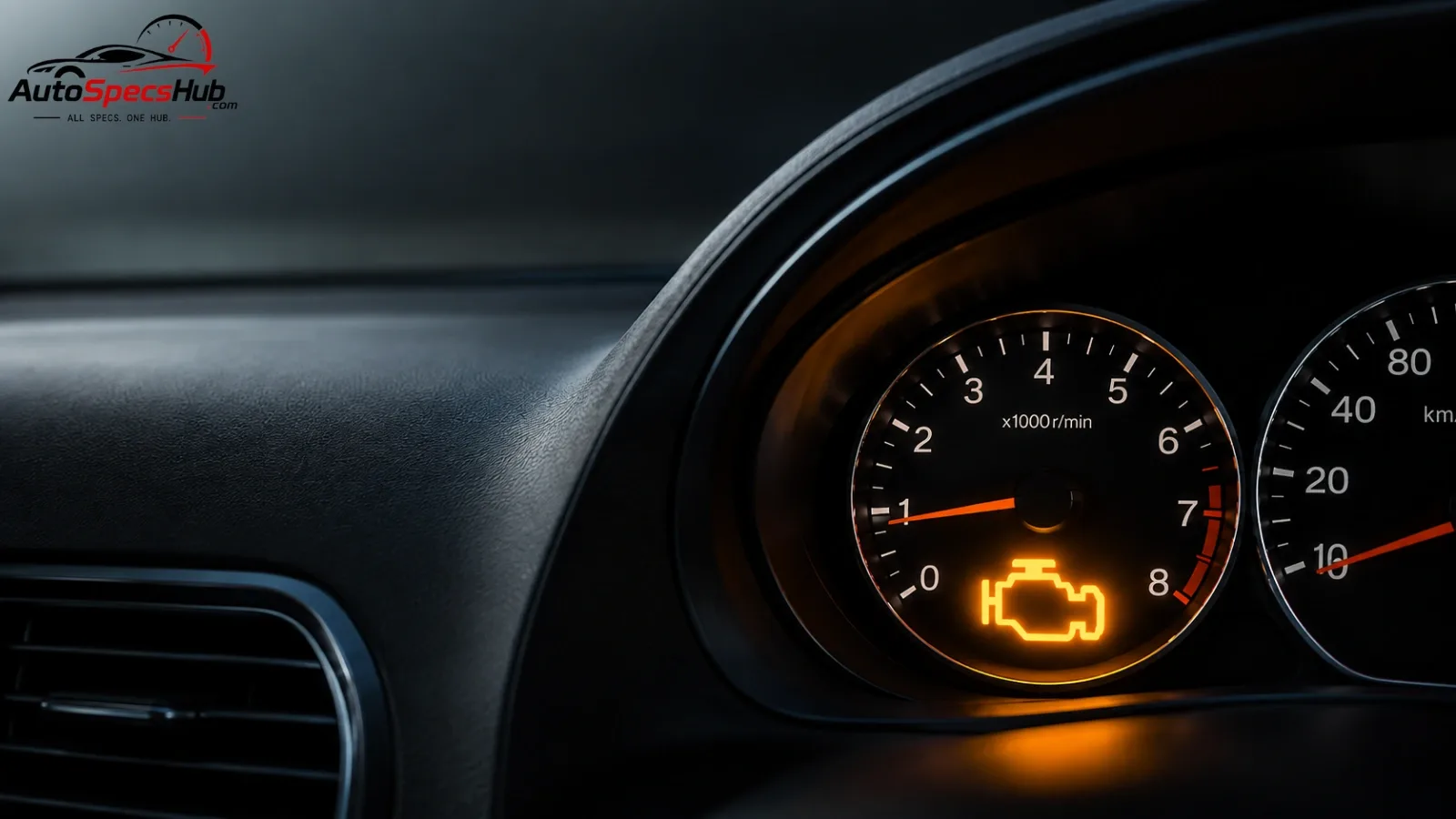
A flashing or blinking check engine light usually means your vehicle has detected an active engine or emissions problem that needs prompt attention. An engine misfire is one of the most common causes, but ignition, fuel, air-fuel mixture, compression, wiring, and other faults can also trigger the warning.
If your check engine light is flashing on and off, don't assume the problem has fixed itself. An intermittent misfire can occur only during acceleration, at certain engine speeds, or under specific operating conditions.
If the engine is shaking badly, losing significant power, overheating, smoking, or making unusual noises, reduce engine load, pull over safely, and have the vehicle inspected. A flashing check engine light is generally more urgent than a steady check engine light.
Quick Answer
A flashing or blinking check engine light usually means the engine is experiencing an active misfire or another potentially serious fault. Common causes include worn spark plugs, failing ignition coils, fuel injector problems, air-fuel mixture issues, low compression, and other engine or emissions faults.
What you see | What it usually means | What to do |
|---|---|---|
Solid check engine light | A fault has been detected | Diagnose it soon |
Flashing check engine light | A more serious active fault may be present | Reduce engine load and get it checked promptly |
Flashing light with shaking or power loss | Significant drivability problem | Stop safely and seek assistance |
Always check your owner's manual for model-specific guidance because warning-light behavior can vary between manufacturers.
What Does a Blinking Check Engine Light Mean?
A blinking check engine light means the same basic thing as a flashing check engine light. The terms "blinking" and "flashing" are commonly used to describe a malfunction indicator lamp that repeatedly turns on and off.
A flashing warning can indicate an active misfire or another fault that may cause further engine or emissions-system damage if the vehicle continues to be driven under heavy load. If the vehicle is shaking, losing power, overheating, or running poorly, reduce engine load and stop safely when possible.
What Does a Flashing Check Engine Light Mean?
A flashing check engine light usually indicates that the vehicle has detected a fault that is occurring now or under the current driving conditions. One common cause is an engine misfire, where one or more cylinders fail to burn the air-fuel mixture correctly.
The engine control unit (ECU) monitors combustion and emissions-related systems and can trigger the malfunction indicator lamp when it detects a problem. A flashing warning is generally more urgent than a steady warning because an active misfire can allow unburned fuel to enter the exhaust and potentially overheat the catalytic converter.
An engine misfire is a common reason. A misfire happens when one or more cylinders fail to burn the air-fuel mixture correctly. The engine may run roughly, lose power, or hesitate. Unburned fuel can also enter the exhaust and create excessive heat in the catalytic converter.
7 Common Causes of a Flashing Check Engine Light
A flashing check engine light does not identify one specific failed part. Several ignition, fuel, air, electrical, exhaust, and mechanical problems can produce a similar warning. Proper diagnosis is important before replacing components.
1. Engine Misfire
A healthy engine needs the right amount of air, fuel, compression, and spark. If one is missing or incorrect, combustion can fail.
Common signs include rough idle, hesitation, loss of power, shaking, poor acceleration, and an uneven engine sound. A misfire may happen constantly or only under load, such as during hard acceleration or climbing a hill.
A misfire is particularly important to investigate when the check engine light is flashing. The problem may be caused by ignition, fuel delivery, air-fuel mixture, compression, timing, or electrical faults.
2. Worn or Fouled Spark Plugs
Spark plugs ignite the air-fuel mixture inside gasoline engines. As they wear, become contaminated, or develop an incorrect gap, the spark can weaken.
A plug may work at idle but misfire under greater load, which is why some drivers notice the warning only when accelerating.
3. Failing Ignition Coil
Ignition coils supply the high voltage needed by the spark plugs. If a coil starts failing, the affected cylinder may misfire and the engine can feel rough, hesitate, or shake.
A code may identify the misfiring cylinder, but it does not automatically prove the coil is bad. The plug, injector, wiring, or compression may also need testing.
4. Fuel Injector Problem
Fuel injectors deliver a controlled amount of fuel to the engine. An injector that is clogged, leaking, or electrically faulty can upset combustion.
Too little fuel can create a lean condition, while too much can make the mixture overly rich. Either can lead to rough running, reduced performance, and misfire-related codes.
5. Air-Fuel Mixture Problems
Vacuum leaks, incorrect sensor readings, restricted fuel delivery, or intake problems can cause the engine to run too lean or too rich.
The ECU can compensate for small changes, but a larger imbalance can cause hesitation, loss of power, or misfires.
6. Low Compression or Mechanical Problems
Not every misfire is caused by spark or fuel. Low compression can result from valve problems, worn piston rings, incorrect timing, or other internal engine faults.
These issues may require a compression test, leak-down test, or further mechanical inspection.
7. Catalytic Converter or Exhaust Problems
A severe or repeated misfire can overheat the catalytic converter because unburned fuel reaches the exhaust.
The converter can also become restricted or damaged. Poor acceleration, unusual exhaust smells, or loss of power can justify checking the exhaust system too.
A damaged catalytic converter can also contribute to poor engine performance, but a catalytic converter problem should be properly diagnosed rather than assumed from the flashing warning alone.
Can You Drive With a Flashing Check Engine Light?
You should generally avoid normal driving with a flashing check engine light until the cause is diagnosed. If the vehicle still feels normal, reduce engine load and avoid hard acceleration, high engine speeds, towing, or other demanding driving.
If the light is flashing and the engine is shaking, misfiring severely, losing substantial power, or showing signs of overheating, stop driving when it is safe to do so and seek assistance.
What Should You Do When the Light Starts Flashing?
1. Ease Off the Accelerator
Reduce engine load and avoid hard acceleration.
2. Pay Attention to Other Symptoms
Notice whether the car is shaking, hesitating, losing power, idling roughly, overheating, smoking, or smelling strongly of fuel or burning. These details can help narrow down the fault.
3. Check the Other Warning Lights
A flashing check engine light combined with an oil-pressure warning, overheating warning, or another serious alert deserves extra caution.
4. Stop If the Car Is Running Badly
If the engine is shaking violently, losing major power, overheating, or making mechanical noises, stop in a safe location.
5. Scan the Car for OBD-II Codes
An OBD-II scanner can retrieve stored diagnostic trouble codes. Misfire-related codes commonly include:
Code | General meaning |
|---|---|
P0300 | Random or multiple-cylinder misfire |
P0301 | Cylinder 1 misfire detected |
P0302 | Cylinder 2 misfire detected |
P0303 | Cylinder 3 misfire detected |
P0304 | Cylinder 4 misfire detected |
A fault code is a starting point, not a diagnosis. P0302, for example, tells you cylinder 2 has misfired. It does not tell you whether the cause is the spark plug, ignition coil, injector, wiring, compression, or another fault.
6. Diagnose Before Replacing Parts
Avoid replacing parts based only on a code. Proper diagnosis may involve inspecting spark plugs, testing ignition coils, checking injector operation, looking for intake leaks, reviewing sensor data, and testing cylinder compression.
Before ordering parts or following model-specific repair advice, confirm exactly which engine and powertrain your vehicle uses. AutoSpecsHub's vehicle specifications can help identify the correct configuration.
Why Does the Check Engine Light Flash When Accelerating?
A flashing check engine light that appears mainly during acceleration often points to a fault that becomes noticeable under heavier engine load.
Acceleration requires stronger ignition, more fuel, and greater cylinder pressure. A weak ignition coil, worn spark plug, fuel-delivery issue, or compression problem may not be obvious at idle but can cause a misfire when you press the accelerator.
If the car also shudders, vibrates, or loses power, see our guide to why your car is shaking when accelerating and avoid pushing it harder until the cause is found.
Why Is My Check Engine Light Flashing On and Off?
A check engine light that flashes on and off can indicate an intermittent fault. The underlying problem may occur only under certain conditions, such as acceleration, higher engine load, a particular engine temperature, or a specific RPM range.
Common possibilities include an intermittent engine misfire, weak ignition coil, worn spark plug, fuel-delivery problem, wiring issue, or another fault that becomes noticeable under load.
The fact that the light stops flashing does not necessarily mean the problem is fixed. The vehicle may still have stored or pending diagnostic information. Scan the vehicle as soon as practical and avoid clearing the codes before diagnosis.
What If It Happens During a Used-Car Test Drive?
Treat a flashing check engine light as a major warning sign.
A seller may describe the issue as a sensor, spark plug, or simple service item, but there is no reliable way to know without diagnosis. Also be cautious if codes were recently cleared, because pending faults or incomplete emissions-readiness monitors may still reveal a recent reset.
If you are evaluating a second-hand vehicle, use a full used car checklist to inspect warning lights, fluids, tires, service history, body condition, and test-drive behavior before buying.
Frequently Asked Questions
What does a blinking check engine light mean?
A blinking check engine light means the same basic thing as a flashing check engine light. It can indicate an active misfire or another fault that needs prompt attention. If the engine is running poorly, shaking, losing power, overheating, or making unusual noises, reduce engine load and stop safely when possible.
Why is my check engine light flashing on and off?
A check engine light may flash on and off when an engine or emissions fault occurs intermittently. The problem may appear only during acceleration, under heavy engine load, at certain engine speeds, or under particular operating conditions. The light stopping does not necessarily mean the underlying fault is fixed, so scanning the vehicle can help identify stored or pending diagnostic information.
Why is my check engine light flashing but the car runs fine?
The fault may be intermittent or only occur under certain driving conditions. The engine can feel normal again once the misfire stops, but a stored or pending diagnostic code may remain. A flashing warning is still worth checking.
Can bad spark plugs cause a flashing check engine light?
Yes. Worn, fouled, damaged, or incorrectly gapped spark plugs can cause incomplete combustion and misfires. Ignition coils, injectors, wiring, mixture problems, and low compression can create similar symptoms.
Why does my check engine light flash only at high speed?
Higher speed and heavier engine load can expose ignition or fuel problems that are not noticeable during gentle driving. A weak coil, worn plug, fuel-delivery issue, or another fault may only trigger a misfire when the engine works harder.
Can low oil cause a flashing check engine light?
Low oil is more directly associated with an oil-level or oil-pressure warning. However, serious lubrication problems can affect engine operation. If an oil-pressure warning appears, stop the engine as soon as it is safe and investigate the cause.
Will a flashing check engine light reset itself?
The light may stop flashing when the active fault stops, but that does not mean the problem is repaired. The vehicle may still store diagnostic information that can help identify what happened.
Final Thoughts
A flashing or blinking check engine light should not be ignored. An active engine misfire is a common cause, but ignition, fuel, air-fuel mixture, electrical, exhaust, and mechanical problems can also trigger the warning.
If the light starts flashing, reduce engine load and avoid hard acceleration. If the vehicle is shaking badly, losing significant power, overheating, smoking, or making unusual mechanical noises, stop safely and seek assistance.
An OBD-II scan can help identify diagnostic codes, but a code does not automatically identify the failed part. Proper diagnosis is important before replacing components.
If the light flashes and then stops, the fault may still be present intermittently. Have the vehicle checked rather than assuming the problem has resolved itself.