
Compact SUV vs Midsize SUV: Which One Should You Buy?
Comparing a compact SUV vs midsize SUV? Learn how they differ in space, comfort, fuel economy, maneuverability, cargo capacity, towing, winter driving, and overall ownership costs to choose the right SUV for your needs.
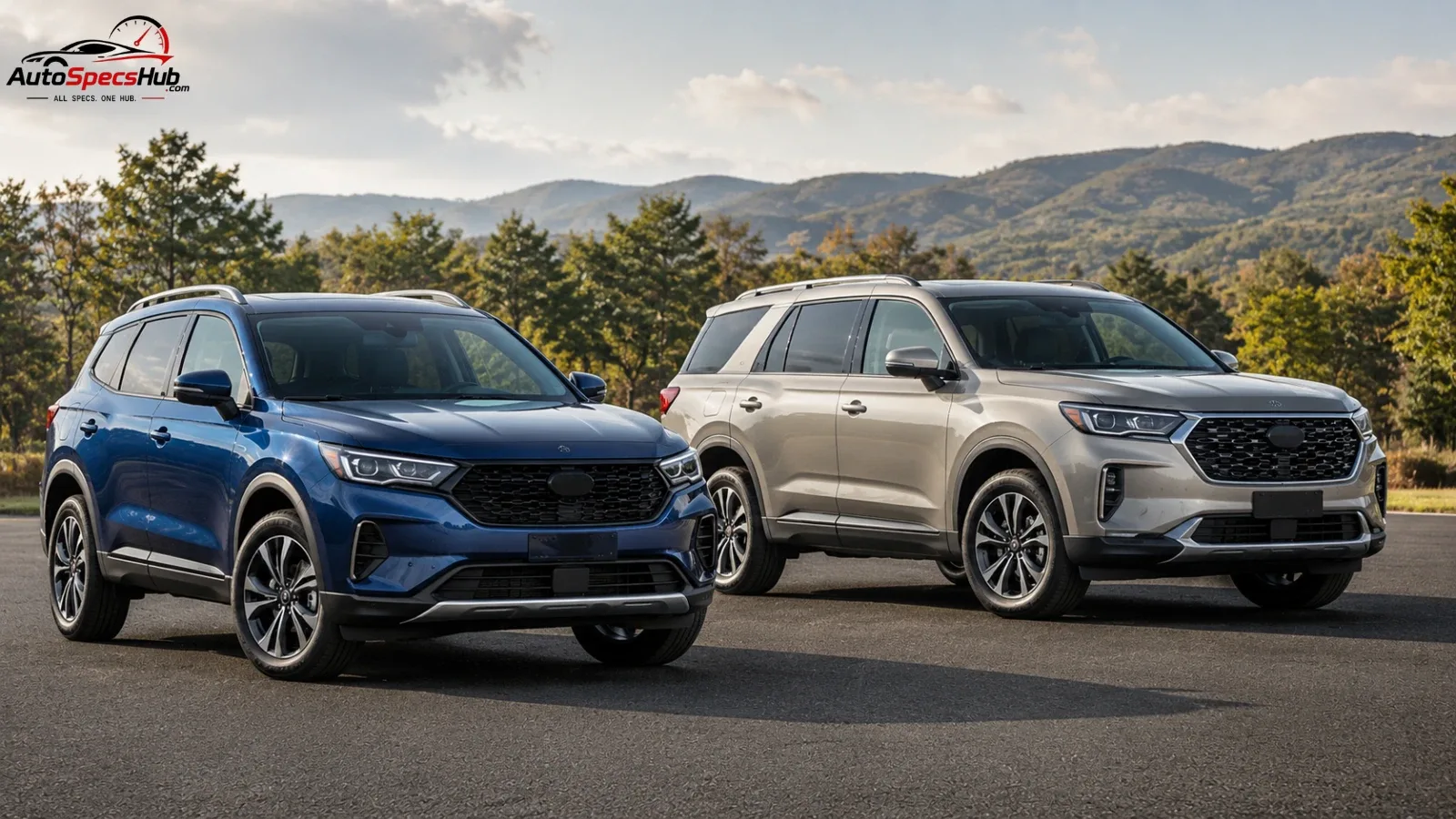
Compact SUVs and midsize SUVs overlap in what they can do, but they aren't interchangeable when it comes to everyday use. A compact model can be easier to park, cheaper to run, and perfectly adequate for a small family. A midsize SUV can earn its extra footprint with more passenger room, additional cargo capacity, or stronger towing ability.
The difficult part is knowing whether you actually need that extra size. If most of your driving involves commuting, errands, and occasional trips, a compact SUV may be all the vehicle you need. If you're regularly carrying several adults, bulky gear, or a full load of luggage, stepping up to a midsize SUV can make more sense.
This Compact SUV vs Midsize SUV comparison looks at the differences that matter after you leave the showroom, including space, maneuverability, fuel economy, comfort, winter driving, towing, and long-term ownership costs.
Compact SUV vs Midsize SUV: What's the Difference?
There is no universal size measurement that separates every compact SUV from every midsize SUV. Manufacturers use different platforms, dimensions, and packaging strategies, so some vehicles sit close to the boundary.
In general, compact SUVs are designed to provide useful passenger and cargo space without taking up as much road or parking space as larger vehicles. Examples include the Honda CR-V, Toyota RAV4, Mazda CX-5, and Subaru Forester.
Midsize SUVs generally provide more interior room and can offer larger cargo areas or three-row seating. Examples include the Honda Pilot, Toyota Grand Highlander, Kia Telluride, and Hyundai Palisade.
The important difference isn't simply exterior size. It's what that additional size gives you and whether you'll use it.
Where a Compact SUV Makes More Sense
A compact SUV is often the easier choice for everyday driving.
Its smaller footprint can make a noticeable difference in cities, especially when dealing with narrow streets, crowded parking lots, or older parking garages. It can also feel more manageable for someone moving from a sedan or hatchback.
That doesn't mean compact SUVs are cramped. Models such as the Honda CR-V and Toyota RAV4 offer useful rear-seat and cargo space, while vehicles such as the Subaru Forester emphasize passenger room and visibility.
A compact SUV can therefore work well for commuting, shopping, school runs, and weekend trips without requiring the additional bulk of a midsize model.
For a household that rarely carries more than four or five people or transports large amounts of cargo, the smaller vehicle may provide everything necessary.
When a Midsize SUV Is Worth the Extra Size
The case for a midsize SUV becomes stronger when your everyday requirements involve more people or equipment.
A larger cabin can provide additional room for rear passengers, while a larger cargo area can make it easier to carry luggage, sports equipment, camping gear, or bulky purchases. Some midsize SUVs also offer three-row seating, which can be useful for larger families.
The key is to distinguish between having extra space and needing extra space.
If the third row is used only once a year and the additional cargo room is usually empty, the advantages may not justify the extra size and expense. But if you regularly travel with several passengers and luggage, that extra capacity can quickly become worthwhile.
Passenger Space and Family Comfort
For families, the rear seat can be more important than the driver's seat.
A compact SUV can be perfectly comfortable for a small family, particularly when children occupy the back. But as children grow, rear legroom and shoulder room become more noticeable. Adults sitting in the second row also tend to appreciate the additional space offered by many midsize SUVs.
Three-row midsize SUVs introduce another option, but buyers should inspect the third row carefully. Some are suitable for children or occasional use rather than three adults on a long journey.
If you regularly use child seats, bring them to the test drive. Check how easily they fit, how much room remains in front of them, and whether passengers can still access the rear seats comfortably.
Cargo Space Depends on More Than the Number
Manufacturers publish cargo-volume figures, but those numbers don't always tell you how useful the space will be.
A compact SUV can handle groceries, backpacks, carry-on luggage, and everyday shopping without difficulty. Folding the rear seats can also create considerable additional room.
A midsize SUV becomes more useful when you need to carry people and cargo at the same time. That's particularly important on family road trips, when five passengers can occupy most of the available seating while luggage still needs somewhere to go.
Think about what you carry during a typical month. If you rarely transport bulky items, additional cargo capacity may not be worth paying for.
Which Is Better for City Driving?
This is where compact SUVs usually have a practical advantage.
A smaller vehicle is easier to position in tight spaces and can be less stressful on crowded streets. Parking sensors and cameras help with either category, but they don't change the physical dimensions of the vehicle.
A midsize SUV can still work perfectly well in a city, especially if it has a good camera system and parking assistance. The difference becomes more noticeable when you frequently encounter narrow spaces or have to park in older garages.
If your driving is predominantly urban, compact size can be an everyday convenience rather than just a specification difference.
Fuel Economy and Ownership Costs
A larger SUV can cost more to operate, although the actual difference depends heavily on the powertrain.
Compact SUVs often have an advantage in fuel economy when comparable powertrains are used because there's generally less mass to move. However, hybrid technology can change the equation. A midsize hybrid may use less fuel than a conventional compact SUV.
Purchase price is only part of the calculation. Consider fuel, insurance, tires, brakes, maintenance, registration, and financing when comparing long-term costs.
If you're paying considerably more for a midsize SUV but rarely use its additional capacity, the smaller vehicle may offer better overall value.
Comfort on Long Trips
Long-distance travel can shift the balance toward a midsize SUV.
A compact SUV can be an excellent road-trip vehicle for two people or a small family. But when the vehicle is full of adults and luggage, additional cabin and cargo space can make a noticeable difference.
Ride quality also matters. Don't assume every midsize SUV is more comfortable than every compact SUV. Seats, suspension tuning, wheel size, tire choice, and cabin insulation can have a greater effect on comfort than vehicle category.
If road trips are a major part of your driving, test both sizes with enough time to assess seat comfort, rear-seat room, cargo capacity, and highway noise.
Compact SUV vs Midsize SUV for Snow
Vehicle size alone doesn't determine winter capability.
A compact SUV with AWD and suitable winter tires can perform very well on snowy roads, while a larger SUV with inadequate tires can still lose traction. Ground clearance, drivetrain behavior, tires, and traction systems are more important than simply having a larger body.
If snow is a major factor in your decision, our Best SUV for Snow guide explains the features that matter most when evaluating winter capability.
A midsize SUV can have an advantage when you regularly encounter deep or unplowed snow, particularly if its configuration provides additional clearance and a capable 4WD system. But for normal roads that are cleared regularly, a compact SUV may be entirely adequate.
Towing and Heavy Loads
Towing is one area where a midsize SUV can offer a meaningful advantage, but category alone doesn't determine towing capacity.
Some compact SUVs can tow useful loads, while certain midsize models are engineered for substantially heavier trailers. The exact rating depends on the engine, drivetrain, cooling system, transmission, and factory equipment.
Before buying, check the manufacturer's rating for the specific configuration you're considering. Payload matters too because passengers, luggage, and trailer tongue weight all contribute to the vehicle's overall load.
If you tow regularly, a suitable midsize SUV may justify its additional size. If towing is rare, there's little reason to choose a larger vehicle solely for an occasional requirement.
Which One Is Easier to Drive?
Compact SUVs tend to feel more approachable when maneuverability is important.
Their shorter bodies and smaller footprints can make parking, turning, and judging vehicle corners easier. This can be particularly noticeable for drivers who have previously owned smaller cars.
Midsize SUVs can feel more substantial, which some drivers prefer. Modern cameras, parking sensors, blind-spot monitoring, and other driver-assistance features can also make them easier to manage.
Still, technology doesn't eliminate the difference in dimensions.
The best test is to drive both categories back to back. Try parking, reversing, making tight turns, and driving on the roads you normally use. The SUV that feels natural to you is usually the better everyday choice.
How to Choose the Right SUV Size
Look at your normal routine rather than an occasional situation.
A compact SUV may be the better choice if you:
Mostly drive in cities or suburbs
Frequently park in tight spaces
Usually carry one to four people
Need moderate cargo space
Want easier maneuverability
Prefer to keep running costs manageable
A midsize SUV may make more sense if you:
Regularly carry several adults
Need more cargo room
Take frequent family road trips
Carry bulky equipment
Need greater towing capability
Want available three-row seating
These are guidelines rather than hard rules. A well-designed compact SUV can meet the needs of many families, while a midsize SUV may be unnecessary for someone who spends most of the week driving alone.
Don't Buy More SUV Than You Need
More space and capability sound appealing, but they aren't automatically better value.
A midsize SUV gives you a larger cabin and potentially greater capability, but you're also buying a larger vehicle that may cost more to fuel, insure, maintain, and equip with tires.
Going too small can create the opposite problem. If passengers constantly feel cramped or you struggle to fit everyday cargo, saving money upfront won't make the vehicle satisfying to own.
The best decision is somewhere in between: buy enough SUV for your real needs, with some reasonable room for the situations you regularly encounter.
What to Check During a Test Drive
A dealership test drive should be more than a quick trip around the block.
Adjust the driver's seat and make sure you have a comfortable driving position. Then check the rear seats for legroom, headroom, access, and visibility. If you have children, bring their car seats.
Open the cargo area and test it with the rear seats in their normal position. If you regularly carry specific equipment, check whether it actually fits.
Also pay attention to steering, braking, ride quality, cabin noise, visibility, and parking ease.
If you're deciding between a compact and midsize SUV, driving both on the same day can reveal differences that specifications alone won't show.
Frequently Asked Questions
Is a compact SUV better than a midsize SUV?
Neither category is universally better. A compact SUV is often more practical for urban driving and smaller households, while a midsize SUV can be a better fit when passenger space, cargo capacity, towing, or three-row seating are priorities.
Is a midsize SUV safer than a compact SUV?
Size alone doesn't determine safety. Crash performance, safety equipment, tires, driver-assistance systems, and the specific vehicle all matter. Compare the individual models rather than assuming one category is automatically safer.
Which gets better fuel economy?
Compact SUVs often have an advantage, but the powertrain can make a significant difference. A midsize hybrid, for example, may be more efficient than a conventional compact SUV.
Is a compact SUV big enough for a family?
For many small families, yes. A compact SUV can provide sufficient passenger and cargo space for everyday use. Larger families or those who frequently carry several adults may benefit from a midsize model.
Is a midsize SUV better for road trips?
It can be, particularly when several passengers and substantial luggage are involved. However, a compact SUV can still be an excellent road-trip vehicle for smaller groups.
Which is better for snow, compact or midsize?
Neither is automatically better. AWD or 4WD, suitable tires, ground clearance, traction systems, and driving conditions have a greater effect on winter capability than vehicle size alone.
Do midsize SUVs cost more to maintain?
They can, depending on the model. Larger tires, brakes, higher fuel consumption, and more substantial components can increase ownership costs, but actual expenses vary significantly between vehicles.
Final Verdict
The Compact SUV vs Midsize SUV decision comes down to whether you need the additional space and capability that a larger vehicle provides.
A compact SUV is usually the more convenient choice for city driving, smaller households, and buyers who want useful SUV practicality without excessive size. A midsize SUV earns its place when passenger room, cargo capacity, towing, or frequent long-distance travel are genuinely important.
Before buying, think about the people you normally carry, the things you normally transport, the roads you drive, and the costs you're comfortable with.
Choose the SUV size that fits your everyday life rather than paying for space and capability you rarely use.