

Toyota Celsior: Specs, Generations, Engine & Luxury History
Explore the Toyota Celsior’s three generations, key specs, luxury features, Lexus LS connection, and lasting appeal as a JDM luxury icon.
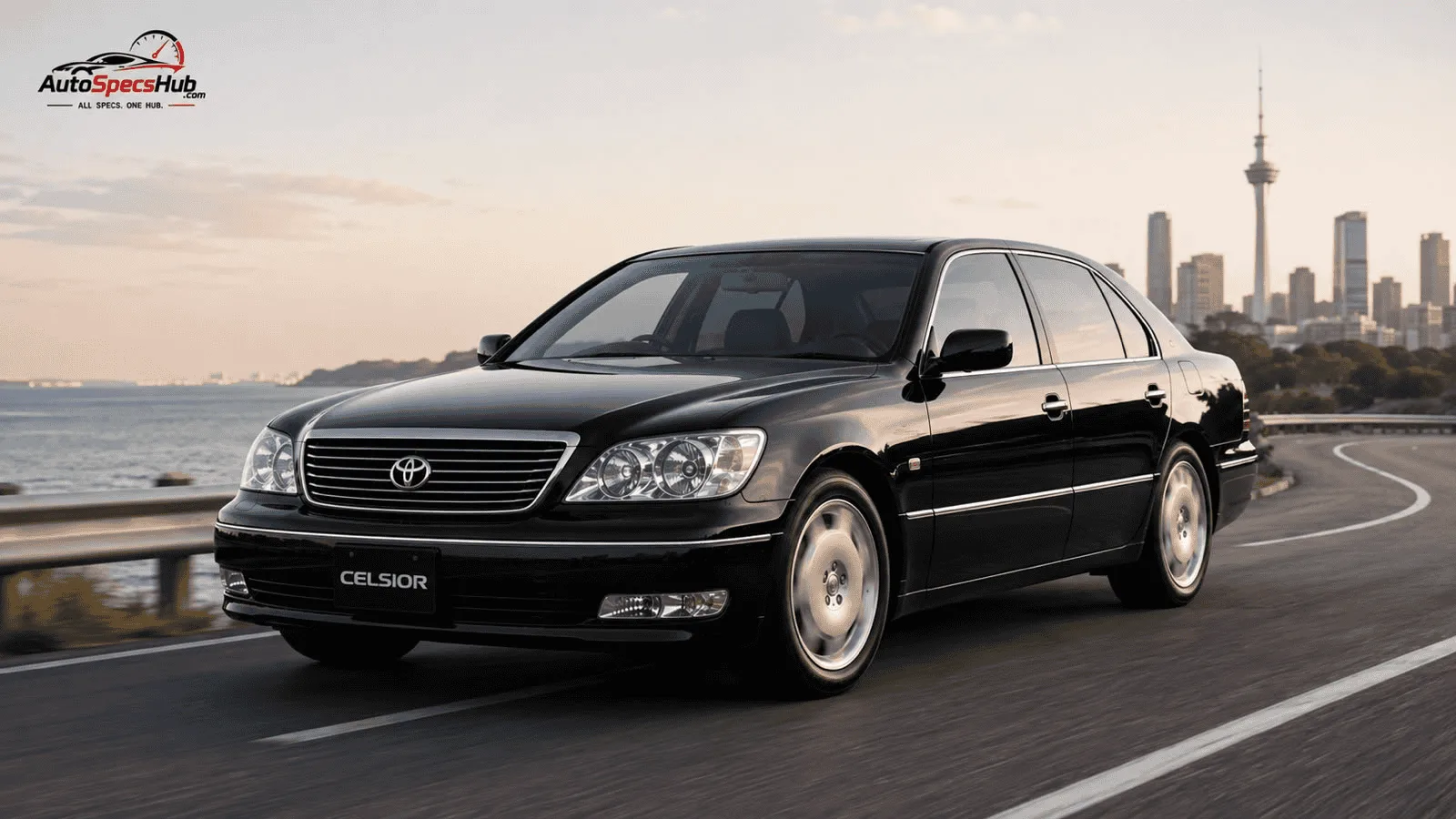
The Toyota Celsior was Japan’s flagship luxury sedan, developed to compete with the world’s most prestigious cars in comfort, quietness, refinement, and build quality. Closely related to the Lexus LS sold internationally, it became one of Toyota’s most important luxury models.
Produced from 1989 to 2006 across three generations, the Celsior combined smooth V8 power with rear-wheel drive, advanced suspension technology, and an exceptionally quiet cabin. Today, it remains a sought-after JDM luxury sedan among collectors and enthusiasts.
What Is the Toyota Celsior?
The Toyota Celsior was Toyota’s flagship full-size luxury sedan for the Japanese market, while the closely related international version was sold as the Lexus LS. The name “Celsior” comes from the Latin word celsus, meaning “lofty” or “elevated,” reflecting the car’s position at the top of Toyota’s passenger-car range.
The Celsior was produced from 1989 to 2006 across three generations. Every generation used a front-engine, rear-wheel-drive layout and a smooth V8 engine, with Toyota placing particular emphasis on reducing noise and vibration, improving ride quality, and creating a highly refined driving experience.
The first-generation Celsior was developed from scratch with a strong focus on driving performance, comfort, and finish. It also won the 1989–1990 Japan Car of the Year award.
Toyota Celsior History: Generation by Generation
First Generation (XF10 / UCF10-UCF11) — 1989 to 1994
The first-generation Celsior arrived in Japan in October 1989 with Toyota’s newly developed 4.0-liter 1UZ-FE V8. Japanese-market versions produced 260 PS at 5,400 rpm and used a DOHC, 32-valve design with an automatic transmission.
Toyota concentrated heavily on refinement rather than simply adding power. The car used four-wheel double-wishbone suspension, while higher-grade versions could be equipped with electronically controlled air suspension. Certain models also offered Piezo TEMS, which adjusted damping characteristics according to driving conditions.
The international Lexus LS 400 shared the same underlying luxury-car program and became an important part of Lexus’s entry into the American market. Its combination of refinement, quality, and competitive pricing challenged established luxury manufacturers.
Second Generation (XF20 / UCF20-UCF21) — 1994 to 2000
Toyota introduced the second-generation Celsior in October 1994. It retained the rear-wheel-drive layout and 4.0-liter 1UZ-FE V8 while gaining more space and additional technology.
The sedan measured 4,995 mm in length and had a 2,850 mm wheelbase. Representative early models produced 265 PS at 5,400 rpm. Four-wheel double-wishbone suspension continued, with electronically controlled air suspension available on higher-grade versions.
Later models received updates including VVT-i and a variable intake system. Output increased to 280 PS, while a five-speed automatic transmission became available.
For enthusiasts, the second generation offers a particularly appealing balance of classic luxury-car character, proven mechanical components, and relatively manageable technology.
Third Generation (XF30 / UCF30-UCF31) — 2000 to 2006
The third-generation Celsior arrived in August 2000 and introduced the biggest mechanical change in the model’s history. Toyota replaced the 4.0-liter engine with a 4.3-liter 3UZ-FE V8 producing 280 PS at 5,600 rpm.
The wheelbase grew to 2,925 mm, while the overall length remained close to five meters. The car also gained a more modern interior, updated electronics, and additional luxury and safety equipment.
Its long proportions and extensive factory equipment made the third generation particularly popular with VIP-style enthusiasts. However, age and electronic complexity can make neglected examples expensive to restore, so suspension, electronics, interior equipment, and other age-related components deserve careful inspection.
Production ended in 2006 as Toyota’s domestic luxury strategy increasingly moved toward the Lexus brand.
Toyota Celsior Specifications
Specification | Toyota Celsior |
|---|---|
Body style | 4-door full-size luxury sedan |
Drivetrain | Front-engine, rear-wheel drive |
Engine | 4.0L V8 (Gen 1–2), 4.3L V8 (Gen 3) |
Engine families | 1UZ-FE, 3UZ-FE |
Power output | 260 PS (Gen 1), 265–280 PS (Gen 2), 280 PS (Gen 3) |
Transmission | 4-speed and later 5-speed automatic |
Suspension | Four-wheel double wishbone |
Air suspension | Available on selected higher-grade versions |
Production | 1989–2006 |
Exact specifications varied by generation, grade, and model year. The Celsior’s appeal was never about horsepower alone; smooth power delivery, low noise, ride comfort, and transmission refinement were equally important.
For more context on automatic transmission characteristics and ownership considerations, see our manual vs automatic guide.
Toyota Celsior Engines
The first and second generations used Toyota’s 4.0-liter 1UZ-FE V8, while the third generation switched to the 4.3-liter 3UZ-FE V8. Depending on generation and model year, output ranged from 260 PS to 280 PS.
Interior and Comfort Features
The Celsior’s cabin was designed around quietness, comfort, and refinement rather than a sporty driving experience.
Depending on generation and trim, equipment could include:
Leather upholstery and wood trim
Power-adjustable seats
Heated rear seats on selected versions
Automatic climate control
Advanced audio systems
Navigation and multimedia systems on later models
Electronically controlled suspension
Air suspension on selected higher-grade models
Extensive sound insulation
Rear-seat comfort equipment
Toyota paid particular attention to reducing noise and vibration. Higher-grade versions also placed considerable emphasis on rear-passenger comfort, making the Celsior suitable for both owner-driven and chauffeur-oriented use.
Exterior Design
The Celsior used an understated approach to luxury. All three generations featured long proportions, clean surfaces, a formal sedan profile, and restrained detailing.
The first generation was particularly conservative, the second refined that design, and the third introduced a sharper and more modern appearance while retaining the model’s long, elegant proportions.
That restrained styling has helped the Celsior age well, particularly when examples remain original and well maintained.
Why the Toyota Celsior Became a Luxury Icon
The Celsior’s reputation comes from several factors.
Flagship-level refinement: Toyota developed it to compete with established luxury sedans, emphasizing quietness, comfort, and build quality.
Toyota V8 engineering: The model combined traditional luxury with Toyota’s smooth V8 engines and rear-wheel-drive layout.
Distinctive Japanese identity: The Celsior offers a different character from European luxury sedans and has become particularly appealing to JDM and VIP-style enthusiasts.
Lexus connection: Its close relationship with the Lexus LS makes it an important part of Toyota and Lexus history.
Strong enthusiast following: Collectors and JDM importers have helped preserve interest in the model long after production ended. Its place in Toyota’s broader Japanese luxury lineup becomes clearer when compared with models such as the Toyota Aristo.
Toyota Celsior vs Lexus LS: What’s the Difference?
The Toyota Celsior and Lexus LS are closely related versions of the same flagship luxury sedan program. The Celsior name was used for the Japanese market, while the Lexus LS name was used internationally, although specifications and equipment could vary between markets.
The main differences concern:
Market and branding: Celsior was sold in Japan, while the international version used Lexus LS branding.
Trim and equipment: Japanese-market grades and equipment combinations could differ from those offered elsewhere.
Import considerations: Buyers outside Japan may need to consider import rules, registration, parts availability, and local compliance requirements.
The shared engineering is one of the most important aspects of the Celsior. Toyota’s Japanese-market lineup from this era also included models such as the Toyota Altezza, which was closely related to the Lexus IS.
Toyota Celsior Pros and Cons
Pros
Exceptional ride comfort and cabin quietness
Smooth V8 engines
Strong engineering reputation
Spacious, well-equipped interior
Distinctive JDM and VIP appeal
Traditional rear-wheel-drive luxury character
Cons
Import and registration challenges in some countries
Aging electronics can be expensive to repair
Air-suspension systems may require costly attention
High fuel consumption
Original, well-maintained examples can be difficult to find
Should You Buy a Toyota Celsior?
A Toyota Celsior can be an excellent choice for someone who wants a comfortable, distinctive, and historically important luxury sedan. However, condition matters more than simply choosing a particular generation.
Before buying, inspect the suspension, especially on cars with air suspension. Check for electrical faults, review maintenance records, inspect the transmission, and look for water damage, excessive interior wear, or signs of neglect.
The second generation offers an appealing balance of classic character and proven mechanical components, while the third generation provides more modern equipment but can carry greater repair costs as its electronics age.
For an older luxury car, a well-maintained example with a documented history is usually a better purchase than a cheaper neglected car.
Frequently Asked Questions
Is the Toyota Celsior the same as the Lexus LS?
The Celsior was Toyota’s Japanese-market flagship sedan, while the closely related international version was sold as the Lexus LS. They shared the same underlying luxury-car program, although specifications, trims, and equipment could differ by market.
What years was the Toyota Celsior made?
The Toyota Celsior was produced from 1989 to 2006 across three generations: the first generation from 1989–1994, the second from 1994–2000, and the third from 2000–2006.
What engine does the Toyota Celsior have?
The first and second generations used the 4.0-liter 1UZ-FE V8, while the third generation used the 4.3-liter 3UZ-FE V8. Power ranged from 260 PS to 280 PS depending on generation and model year.
Is the Toyota Celsior reliable?
The Celsior has a strong reputation for mechanical durability when properly maintained. However, age is now a major consideration. Suspension components, seals, electronics, air-suspension systems, and other aging parts can require attention.
How much does a Toyota Celsior cost?
Prices vary according to generation, mileage, condition, originality, specification, and location. Well-preserved examples can command substantially more than tired high-mileage cars. Buyers should also budget for import, registration, maintenance, and parts costs.
Conclusion
The Toyota Celsior was much more than an old Japanese luxury sedan. It demonstrated that Toyota could challenge established luxury manufacturers through engineering, refinement, quietness, and attention to detail.
Across three generations, the Celsior combined smooth V8 performance, rear-wheel drive, advanced suspension, and a highly refined cabin. Its close relationship with the Lexus LS and its distinctive Japanese-market identity have given it lasting significance.
Today, the Celsior remains an interesting choice for collectors and enthusiasts seeking a classic Japanese flagship. Its combination of luxury, Toyota engineering, JDM character, and Lexus heritage has earned it a lasting place in automotive history.