
Toyota Soarer: The Story of Toyota’s Legendary Luxury Coupe
The Toyota Soarer evolved from an advanced Japanese luxury coupe into a sophisticated grand tourer, combining rear-wheel-drive performance, innovative technology, powerful engines, and the refinement that later connected it to the Lexus SC.
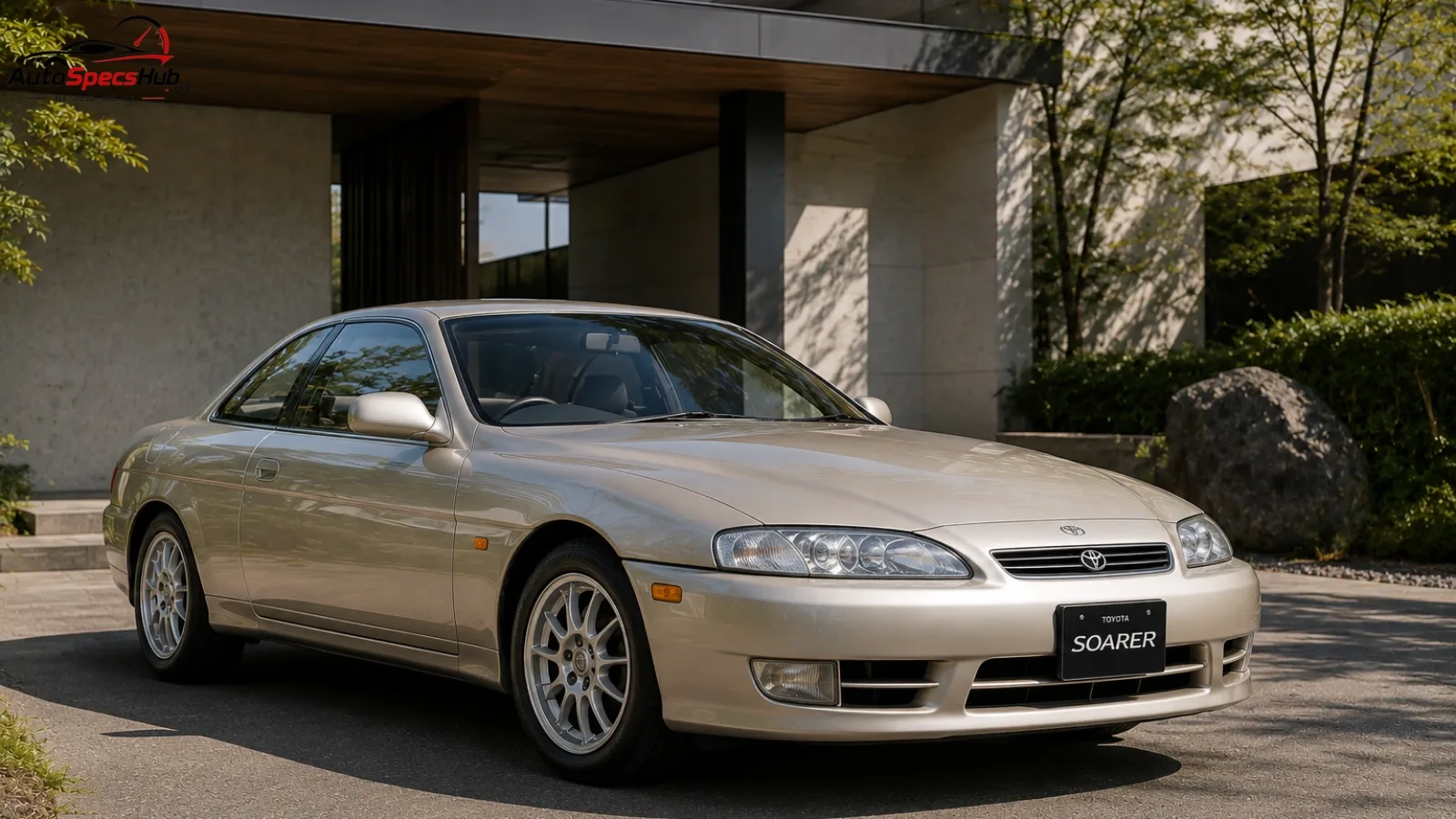
The Toyota Soarer was one of Toyota’s most ambitious attempts to create a luxury coupe that could combine sophisticated technology, strong performance, and long-distance comfort. Introduced in Japan in 1981, the Soarer stood apart from ordinary coupes with its rear-wheel-drive layout, advanced electronics, independent suspension, and increasingly powerful engines.
Over four generations, the Soarer evolved from a technology-focused Japanese luxury coupe into a genuine grand tourer with turbocharged engines and V8 power. Its later connection with the Lexus SC also gave the nameplate an important place in Toyota and Lexus history. Today, the Soarer remains especially interesting to enthusiasts because it brought together luxury, performance, and technology in a way few Toyota coupes did.
What Is the Toyota Soarer?
The Toyota Soarer was a Japanese luxury performance coupe introduced in February 1981. Toyota designed it as a premium two-door model that could deliver the comfort and equipment expected from a luxury car while retaining the performance and driving character of a rear-wheel-drive coupe.
The name “Soarer” referred to a super-glider, reflecting Toyota's emphasis on smooth movement and aerodynamic design. From the beginning, the car was offered with six-cylinder engines, independent suspension, power steering, four-wheel ventilated disc brakes, and a range of advanced electronic features.
The first-generation model also won Japan's Car of the Year award for 1981–82, establishing the Soarer as an important new model in Toyota's Japanese lineup.
Toyota Soarer Generations
The Soarer went through four generations, known as the Z10, Z20, Z30, and Z40. Each generation changed the car considerably while maintaining the basic idea of a sophisticated Toyota luxury coupe.
First Generation Z10 — 1981 to 1986
Toyota introduced the first-generation Soarer in February 1981. The car combined a distinctive two-door design with rear-wheel drive, independent suspension, and a range of six-cylinder engines.
Early versions included the 2.8-liter 5M-GEU engine, while Toyota later introduced turbocharged power with the M-TEU 2.0-liter six-cylinder. The turbocharged Soarer appeared during the first generation and demonstrated that Toyota intended the model to offer more than relaxed luxury.
Technology was equally important. The Z10 featured a fully electronic instrument panel with digital displays, while later versions gained Toyota Electronic Modulated Suspension (TEMS). Toyota also introduced Electro Multivision, a color CRT-based information system capable of displaying vehicle information and functioning as an onboard television.
Second Generation Z20 — 1986 to 1991
The second-generation Soarer brought a more modern design and further improvements in performance, chassis technology, and equipment.
Toyota retained the rear-wheel-drive layout while expanding the range of engines and performance configurations. Turbocharged versions helped strengthen the Soarer's reputation among enthusiasts, while the car continued to provide the comfort and refinement expected from a luxury coupe.
The Z20 demonstrated how Toyota was gradually changing the Soarer from an innovative luxury model into a more complete grand tourer. It could provide enjoyable performance without abandoning the comfortable character that distinguished it from a dedicated sports car.
Third Generation Z30 — 1991 to 2000
The third-generation Soarer represented one of the biggest changes in the model's history. Introduced in 1991, it adopted a smoother, more rounded design and a more sophisticated chassis.
Toyota used four-wheel double-wishbone suspension, emphasizing a balance between handling, stability, ride quality, and comfort.
The biggest attraction for enthusiasts was the engine range. Depending on specification, the Z30 could be equipped with either the 1JZ-GTE 2.5-liter twin-turbocharged inline-six or the 1UZ-FE 4.0-liter V8.
These engines gave the Soarer two distinctly different personalities. The 1JZ-GTE provided the turbocharged performance associated with Toyota's performance models, while the 1UZ-FE delivered smooth V8 power that suited the car's grand-touring character.
By this point, the Soarer had developed far beyond its original role as a technology showcase.
Fourth Generation Z40 — 2001 to 2005
The fourth-generation Soarer represented another major shift. Rather than following the more traditional coupe proportions of earlier models, the Z40 adopted a convertible-oriented design and was closely related to the Lexus SC430.
The fourth-generation car continued the Soarer's luxury and grand-touring philosophy while moving the nameplate closer to Toyota's developing Lexus strategy.
Its connection with the Lexus SC became especially important as Lexus expanded into the Japanese market. The Z40 therefore represents the final stage of the Soarer's evolution from a Toyota-branded Japanese luxury coupe into a model closely tied to Lexus's international luxury-coupe identity.
Toyota Soarer Engines
One of the reasons the Soarer remains popular is the variety of Toyota engines used throughout its history.
Depending on generation and specification, engines included:
5M-GEU six-cylinder
M-series turbocharged engines
1G-series engines
1JZ-GTE 2.5-liter twin-turbocharged inline-six
1UZ-FE 4.0-liter V8
The 1JZ-GTE is particularly important to the Soarer's enthusiast reputation. Toyota's twin-turbocharged inline-six also appeared in other performance-oriented models, including the Toyota Chaser.
However, the Soarer used the engine in a very different environment. The Chaser became strongly associated with four-door performance and later drifting culture, while the Soarer placed the same kind of performance hardware into a larger two-door luxury grand tourer.
The 1UZ-FE V8 provided another interpretation of the Soarer's character. Instead of focusing primarily on turbocharged performance, the V8 version emphasized smooth power delivery and relaxed high-speed cruising.
Why Was the Toyota Soarer So Advanced?
Technology was central to the Soarer from its first generation.
Toyota used the model to introduce equipment that was unusual for the period, including digital instrumentation, electronically controlled suspension, and advanced information displays.
The first generation's digital dashboard was particularly notable because it replaced conventional analog gauges with electronic displays. Later, TEMS allowed the suspension to adjust electronically according to driving conditions.
These systems may appear primitive compared with modern infotainment technology, but they show how ambitious Toyota was with the Soarer. The company used the coupe to experiment with electronics and chassis technology that could eventually influence other vehicles.
Toyota Soarer Performance and Luxury
The Soarer's defining characteristic was its ability to combine performance with luxury.
It was never intended to be a lightweight sports car. Instead, Toyota created a car that could cover long distances quickly while maintaining a comfortable and refined cabin.
Depending on generation and specification, the Soarer offered:
Rear-wheel drive
Independent suspension
Four-wheel double-wishbone suspension on later generations
Turbocharged engines
V8 power
Electronically controlled suspension
Advanced electronic equipment
Luxury interior features
High-speed cruising capability
This combination made the Soarer a genuine grand tourer. Performance gave it excitement, but comfort and refinement gave the car its distinctive identity.
Toyota Soarer and the Lexus SC
One of the most important questions surrounding the Soarer is its relationship with the Lexus SC.
The two cars are closely related luxury coupes. The Soarer was sold as a Toyota-branded model in Japan, while the Lexus SC represented the corresponding luxury-coupe concept in international markets.
The relationship became even more significant as Lexus expanded into Japan. When Lexus officially entered the Japanese market in 2005, Toyota included the SC430 among the initial domestic Lexus models alongside the GS and IS.
This makes the Soarer an important link between Toyota's Japanese-market luxury strategy and the development of Lexus as a global premium brand.
The connection also explains why the Soarer is sometimes described as a Lexus Soarer in search queries and enthusiast discussions. However, the Soarer itself was a Toyota model, particularly in its Japanese-market identity.
Toyota Soarer vs Toyota Aristo
The Toyota Aristo provides an interesting comparison because both models combined luxury with serious performance.
The major difference was their body style and intended character.
The Aristo was a four-door executive sedan that could conceal considerable performance beneath a relatively formal design. The Soarer, by contrast, was a two-door personal luxury coupe designed more around grand touring.
The Soarer therefore offered a more personal and sporting format, while the Aristo provided the practicality of a four-door sedan.
Toyota Soarer vs Toyota Celsior
The Toyota Celsior occupied another part of Toyota's Japanese luxury lineup.
The Celsior was a flagship executive sedan primarily focused on quietness, comfort, refinement, and rear-passenger luxury. The Soarer took many of those ideas and applied them to a more personal two-door format.
This distinction is important because the Soarer was not simply a smaller Celsior. It was Toyota's way of giving buyers a luxury vehicle that also emphasized performance and personal driving enjoyment.
Buying a Toyota Soarer Today
Buying an older Toyota Soarer requires more attention to condition than simply choosing a particular generation or engine.
Most examples have now lived long lives, and previous maintenance, storage conditions, modifications, and ownership history can have a major effect on their condition.
Before buying one, inspect:
Rust and corrosion
Engine leaks
Cooling system
Turbocharger condition
Transmission
Suspension
Steering components
Brakes
Electrical equipment
Air conditioning
Interior condition
Accident repairs
Service history
Previous modifications
Turbocharged cars deserve particular attention. A modified 1JZ-GTE can be highly capable, but undocumented engine work, wiring changes, aftermarket electronics, or poorly executed performance modifications can create expensive problems.
The Soarer's sophisticated electronic and suspension systems can also become more difficult to maintain as the cars age.
For a broader inspection process, see our used car checklist.
Why the Toyota Soarer Still Stands Out
The Toyota Soarer is interesting because its importance goes beyond any single engine or generation.
The first generation demonstrated how ambitious Toyota could be with digital electronics and chassis technology. The second generation developed the luxury-performance concept further. The third generation introduced the 1JZ-GTE and 1UZ-FE, giving the car a stronger enthusiast identity, while the fourth generation brought it even closer to the Lexus SC.
Few Toyota coupes followed such a broad path.
The Soarer began as a Japanese luxury technology showcase and gradually became a sophisticated grand tourer with genuine performance credentials. That combination of technology, luxury, rear-wheel-drive performance, and Toyota engineering is what continues to make the model distinctive.
Frequently Asked Questions
What is the Toyota Soarer?
The Toyota Soarer is a Japanese luxury performance coupe introduced in 1981. It went through four generations and became closely related to the Lexus SC.
When was the Toyota Soarer introduced?
Toyota introduced the Soarer in February 1981. The first-generation model went on to win Japan's Car of the Year award for 1981–82.
How many generations of Toyota Soarer were there?
The Toyota Soarer had four generations: the Z10, Z20, Z30, and Z40.
What engines did the Toyota Soarer have?
The Soarer was offered with a wide range of Toyota engines depending on generation and specification, including the 5M-GEU, 1G-series engines, turbocharged M-series engines, 1JZ-GTE, and 1UZ-FE.
Was the Toyota Soarer turbocharged?
Yes. Toyota introduced turbocharged versions during the first generation, and later the third-generation Soarer could be equipped with the 1JZ-GTE 2.5-liter twin-turbocharged inline-six.
Is the Toyota Soarer the same as the Lexus SC?
They are closely related luxury coupes. The Soarer was the Toyota-branded Japanese-market model, while the Lexus SC served corresponding international markets. The fourth-generation Soarer was particularly closely connected with the Lexus SC430.
Is the Toyota Soarer a sports car?
The Soarer is more accurately described as a luxury performance coupe or grand tourer. It combined performance with comfort, technology, and long-distance refinement rather than focusing solely on lightweight sports-car performance.
Why is the Toyota Soarer popular with enthusiasts?
Its rear-wheel-drive layout, distinctive styling, advanced technology, and powerful Toyota engines have helped make it popular with enthusiasts. The 1JZ-GTE-equipped models are particularly well known.
Is a Toyota Soarer a good used car?
A well-maintained Soarer can be an appealing older Japanese luxury coupe, but age is now a major consideration. Buyers should pay close attention to rust, electronics, suspension, drivetrain condition, and previous modifications.
Final Thoughts
The Toyota Soarer was one of Toyota's most ambitious attempts to combine luxury and performance in a personal coupe.
Its story began with digital instrumentation, advanced suspension, and sophisticated six-cylinder engines. Later generations brought turbocharged power, a V8 option, increasingly capable chassis technology, and a stronger enthusiast following. The Lexus SC connection then gave the Soarer an additional role in the evolution of Toyota's global luxury-car strategy.
What makes the Soarer memorable is not simply the 1JZ-GTE, its technology, or its Lexus connection. It is the way Toyota continued refining the same basic idea across four generations: a luxury coupe that could deliver genuine performance without giving up comfort and sophistication.