
What Is a Fog Light? How It Works and When to Use It
Learn what a fog light is, how it works, when to use it, and how it differs from regular headlights in fog, rain, snow, and other poor-weather conditions.
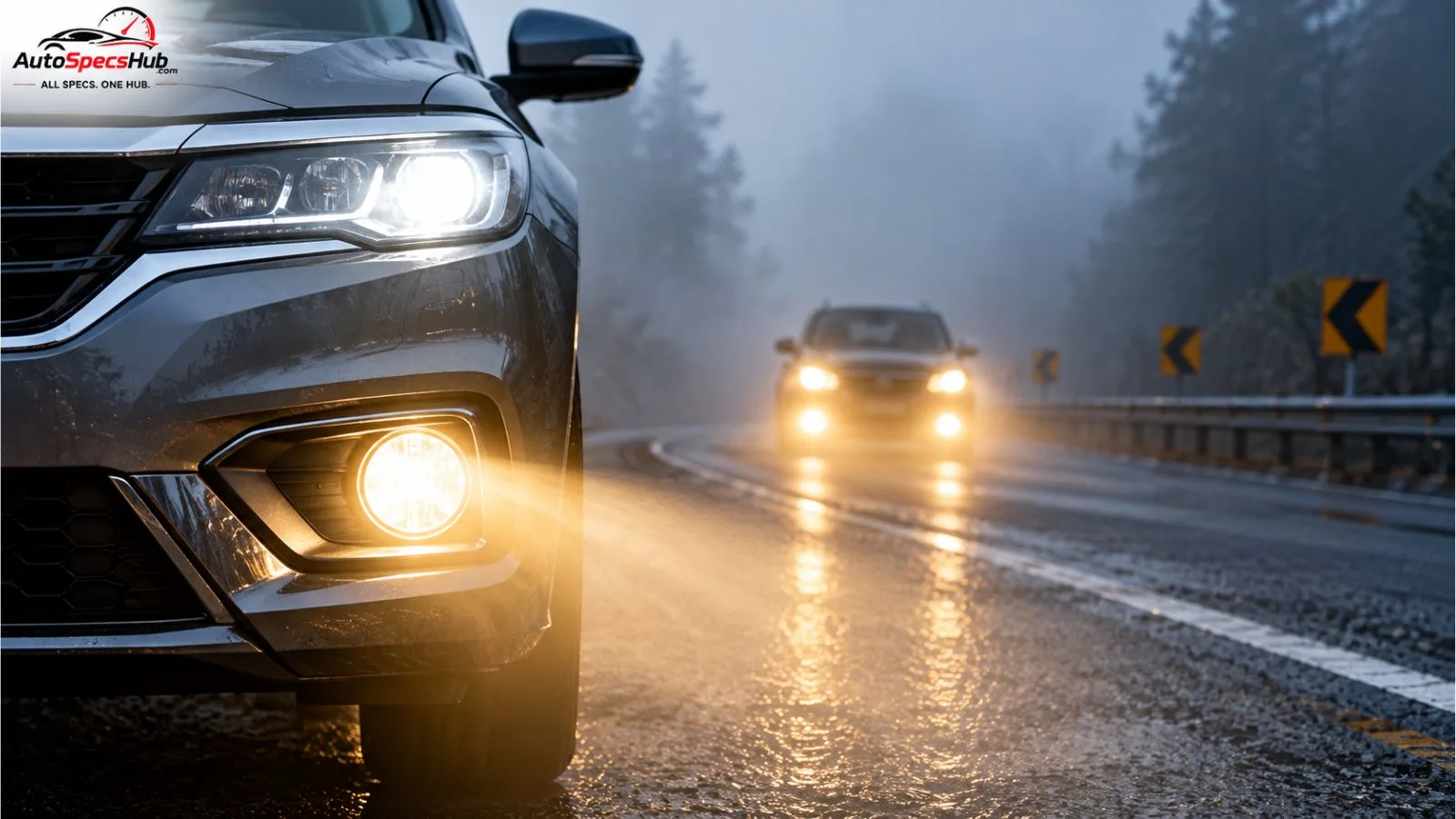
Fog lights are a common feature on many cars, but not every driver knows exactly what they are designed to do. They are usually positioned low on the front of the vehicle and have a different beam pattern from regular headlights. Their purpose is not simply to produce more light. Instead, fog lights are designed to improve visibility in certain conditions where normal headlights may not provide the best view of the road.
Dense fog, heavy rain, snow, dust, and other conditions can make it difficult to see clearly. Understanding how fog lights work, when to use them, and how they differ from headlights can help drivers use them correctly. It can also prevent unnecessary use that may create glare for other road users.
What Is a Fog Light?
A fog light is an auxiliary vehicle light designed to improve visibility during poor-weather or reduced-visibility conditions. Front fog lights are normally mounted low on the front bumper or lower section of the vehicle and produce a broad, relatively low beam.
Unlike regular headlights, fog lights are designed to illuminate the area closer to the vehicle rather than projecting a strong beam far into the distance. This can help drivers see the road surface, lane markings, road edges, and nearby obstacles when visibility is reduced.
Some vehicles have separate fog-light housings, while others integrate fog-light functions into their main headlamp assemblies. The design also varies according to the vehicle, trim level, model year, and market.
Some cars also have rear fog lights. These have a different purpose because they are intended to make the vehicle more visible to traffic approaching from behind.
How Do Fog Lights Work?
Fog lights work mainly through their position and beam pattern.
When normal headlights shine into dense fog, some of the light can scatter from tiny water droplets in the air. This scattered light can reflect toward the driver and create glare, making it harder to see the road ahead.
Traditional fog lights are mounted lower than regular headlights and generally produce a wider, lower beam. Instead of trying to illuminate objects far ahead, they provide more useful light across the road immediately in front of the vehicle.
This can help the driver identify:
Road edges
Lane markings
Nearby obstacles
Curves
The immediate path of travel
However, fog lights cannot remove the effects of poor weather. Their effectiveness depends on the design of the lamp, beam alignment, weather conditions, road surface, and the rest of the vehicle's lighting system.
Why Are Fog Lights Mounted Low?
The low mounting position is one of the most recognizable features of traditional fog lights.
Fog can sit relatively close to the road, so positioning the lights lower allows the beam to illuminate the road surface without projecting as much light directly into the densest part of the fog.
A low and wide beam can also help drivers see the edges of the road and nearby surroundings. This can be particularly useful when visibility is limited to a short distance.
However, simply mounting a light low on the vehicle does not make it a fog light. The optical design, lens, reflector, beam pattern, and alignment all affect how the light performs.
Modern vehicles may use sophisticated headlight systems that provide similar functions without separate traditional fog-light housings.
When Should You Use Fog Lights?
Fog lights are intended for conditions where visibility is significantly reduced.
Depending on local regulations and the vehicle manufacturer's instructions, they may be useful during:
Dense fog
Heavy rain
Snow
Dust or sand
Other severely reduced-visibility conditions
They are generally not designed to be used simply because it is dark outside.
On a clear road at night, normal headlights should provide the primary illumination. Using fog lights unnecessarily can create additional glare for other road users, particularly if the lights are bright or incorrectly aligned.
It is also important to follow local traffic laws because regulations concerning front and rear fog lights vary between countries and regions.
Fog Lights vs Headlights: What's the Difference?
Fog lights and headlights have different purposes even though both illuminate the road.
Headlights are the vehicle's primary forward lighting system. Low beams are designed for normal nighttime driving, while high beams provide greater forward illumination when conditions allow their use.
Fog lights are auxiliary lights with a lower and generally wider beam pattern.
Feature | Fog Lights | Headlights |
|---|---|---|
Primary purpose | Reduced-visibility conditions | General nighttime driving |
Typical position | Low on the vehicle | Higher on the front |
Beam pattern | Wide and low | Designed for forward illumination |
Typical range | Shorter | Longer |
Common use | Fog, heavy rain, snow | Normal nighttime driving |
High-beam function | No | Yes, where equipped |
A fog light should therefore not be considered a replacement for a properly functioning headlight.
Front Fog Lights vs Rear Fog Lights
Front and rear fog lights serve different purposes.
Front Fog Lights
Front fog lights are designed to help the driver see the road in poor visibility. They are usually mounted low at the front of the vehicle and produce a broad beam.
They can provide additional illumination close to the vehicle when dense fog or severe weather makes normal visibility difficult.
Rear Fog Lights
Rear fog lights are designed to make the vehicle more visible to drivers approaching from behind. They are usually much brighter than ordinary rear lights.
Because of their brightness, rear fog lights should generally only be used when visibility is seriously reduced. Using them unnecessarily in clear conditions can create glare for following drivers.
The exact rules for rear fog-light use depend on local regulations, so drivers should check the vehicle manual and applicable laws.
Do Fog Lights Help in Heavy Rain?
Fog lights can sometimes help when heavy rain significantly reduces visibility.
During light or moderate rain, normal headlights may provide sufficient illumination. In very heavy rain, however, a low and wide beam can sometimes make the road immediately ahead easier to see.
Fog lights should not be viewed as a solution to every visibility problem. A dirty windshield, worn wipers, water on the glass, poor road markings, or excessive driving speed can still make driving difficult.
In severe rain, reducing speed and maintaining a greater following distance are just as important as using the appropriate lights.
Can Fog Lights Help in Snow?
Fog lights may also be useful during snowfall when visibility is reduced.
Their low beam can illuminate the road surface and nearby surroundings without relying entirely on a higher-reaching headlight beam.
However, snow can reflect and scatter light. A very bright or incorrectly aimed light can sometimes create additional glare instead of improving visibility.
This is why proper alignment and appropriate use are important regardless of the type of lighting technology installed on the vehicle.
LED vs Halogen Fog Lights
Fog lights can use different lighting technologies, including halogen bulbs and LEDs.
Halogen lighting has been widely used in automotive applications for many years and remains relatively simple in many vehicles. LEDs are increasingly common in modern cars and can offer advantages in areas such as energy efficiency, packaging, durability, and design flexibility.
However, the light source itself does not determine the complete performance of a lighting system. The lens, reflector, optics, beam pattern, alignment, and compatibility with the vehicle all matter.
If you want to understand the broader differences between automotive lighting technologies, the LED vs HID headlights comparison explains how these systems differ in areas such as operation, efficiency, lifespan, startup behavior, and installation.
Common Fog Light Problems
Fog lights can develop many of the same electrical and physical problems as other vehicle lights.
Common issues include:
Fog light not turning on
One fog light working while the other does not
Failed bulb
Failed LED module
Blown fuse
Damaged wiring
Corroded electrical connector
Moisture inside the housing
Cracked lens
Loose housing
Incorrect beam alignment
Faulty switch or lighting control module
If one fog light suddenly stops working, do not automatically assume that the bulb is the only possible cause.
Modern vehicles may use electronic control modules to manage exterior lighting, meaning some faults can require diagnostic equipment to identify correctly.
Why Is One Fog Light Not Working?
If one fog light works while the other does not, several possible causes should be considered.
On vehicles with replaceable bulbs, a failed bulb is an obvious possibility. However, the problem could also be related to a fuse, connector, wiring, lamp housing, LED module, switch, or electronic control system.
Check the affected light for visible damage or moisture. If the vehicle has recently had bumper repairs, bodywork, or an accident, the lamp housing or wiring may also have been disturbed.
If replacing the bulb does not solve the problem, proper diagnosis is better than repeatedly replacing parts without identifying the underlying fault.
How to Maintain Fog Lights
Basic maintenance can help keep fog lights working properly.
Keep the lenses clean because dirt, mud, road salt, and dust can reduce the amount of light reaching the road. This is particularly important during winter or wet weather when road debris can quickly build up on the front of a vehicle.
Inspect the lamp housing for cracks and check for unusual moisture inside the unit. Persistent water accumulation can indicate a damaged seal or housing.
You should also make sure both fog lights operate correctly. If one becomes noticeably dimmer than the other, investigate the cause rather than assuming the difference is normal.
Proper alignment is equally important. If the bumper has been removed, the vehicle has been involved in an accident, or a fog-light assembly has been replaced, its position should be checked.
Are Fog Lights Necessary on Every Car?
No. Not every vehicle needs separate traditional fog lights.
Automotive lighting technology has changed significantly. Many newer vehicles use advanced headlamp systems, adaptive lighting, LED technology, or other solutions that can provide effective illumination without separate front fog-light housings.
Whether a vehicle has fog lights depends on its model, trim level, equipment, model year, and market.
If you are researching a particular vehicle, checking its exact equipment can help you determine whether it has front fog lights, rear fog lights, adaptive lighting, or another lighting configuration.
Can You Drive Without Fog Lights?
Yes, if the vehicle was not designed or equipped with them.
Fog lights are auxiliary equipment rather than a requirement on every vehicle. A car without separate fog lamps can still have a fully functional primary lighting system.
If your vehicle originally came with fog lights and one has stopped working, however, it is worth repairing the issue. A failed fog light can sometimes indicate an electrical problem that may affect other components.
Do Fog Lights Make Driving Safer?
Fog lights can improve visibility in appropriate conditions, but they do not make poor-weather driving automatically safe.
Driving speed, following distance, road conditions, windshield visibility, tires, and driver awareness remain important.
Even a high-quality lighting system has limits. If visibility becomes extremely poor, slowing down significantly or finding a safe place to stop may be more appropriate than relying on additional lighting.
Fog lights should therefore be considered one part of the vehicle's overall visibility system rather than a substitute for careful driving.
Frequently Asked Questions
What is a fog light used for?
A fog light is an auxiliary vehicle light designed to improve visibility during conditions such as dense fog, heavy rain, snow, or dust. Front fog lights generally use a low and wide beam to illuminate the road close to the vehicle.
Are fog lights brighter than headlights?
Not necessarily. Fog lights are designed differently rather than simply being brighter. Their lower position and beam pattern are intended to provide useful illumination close to the road in reduced-visibility conditions.
Can I use fog lights in heavy rain?
They can be useful when heavy rain significantly reduces visibility, although their use should follow local regulations and the vehicle manufacturer's guidance.
Should fog lights be used in clear weather?
Generally, fog lights are intended for reduced-visibility conditions rather than normal clear-weather driving. Unnecessary use can create glare for other road users.
Why is one fog light not working?
Possible causes include a failed bulb or LED unit, blown fuse, damaged wiring, poor electrical connections, moisture, a faulty switch, or an electronic control-system problem.
Final Thoughts
Fog lights are specialized lighting equipment designed to help drivers deal with reduced visibility. Their low mounting position and broad beam pattern distinguish them from regular headlights and make them particularly useful in conditions such as dense fog, heavy rain, snow, and dust.
Using them correctly is just as important as having them. They should not be treated as brighter replacements for headlights or used unnecessarily when visibility is already good. Keeping the lenses clean, checking for damage, and making sure the lights are correctly aligned can also help maintain their intended performance.
If you're checking a used vehicle, lighting should be part of the overall inspection. A used car checklist can help you review important areas such as exterior condition, electrical equipment, tires, brakes, service history, and other potential problems before buying.
The most important thing to remember is simple: fog lights are visibility aids for poor conditions, not all-purpose headlights. Understanding what they do and when to use them can help drivers make better use of their vehicle's lighting system while reducing unnecessary glare for other road users.