

How to Prevent Rust on a Classic Car: What Actually Works
Learn how to prevent rust on a classic car: where it starts, how to wash and dry it, when to use cavity wax and underseal, and how to store it.
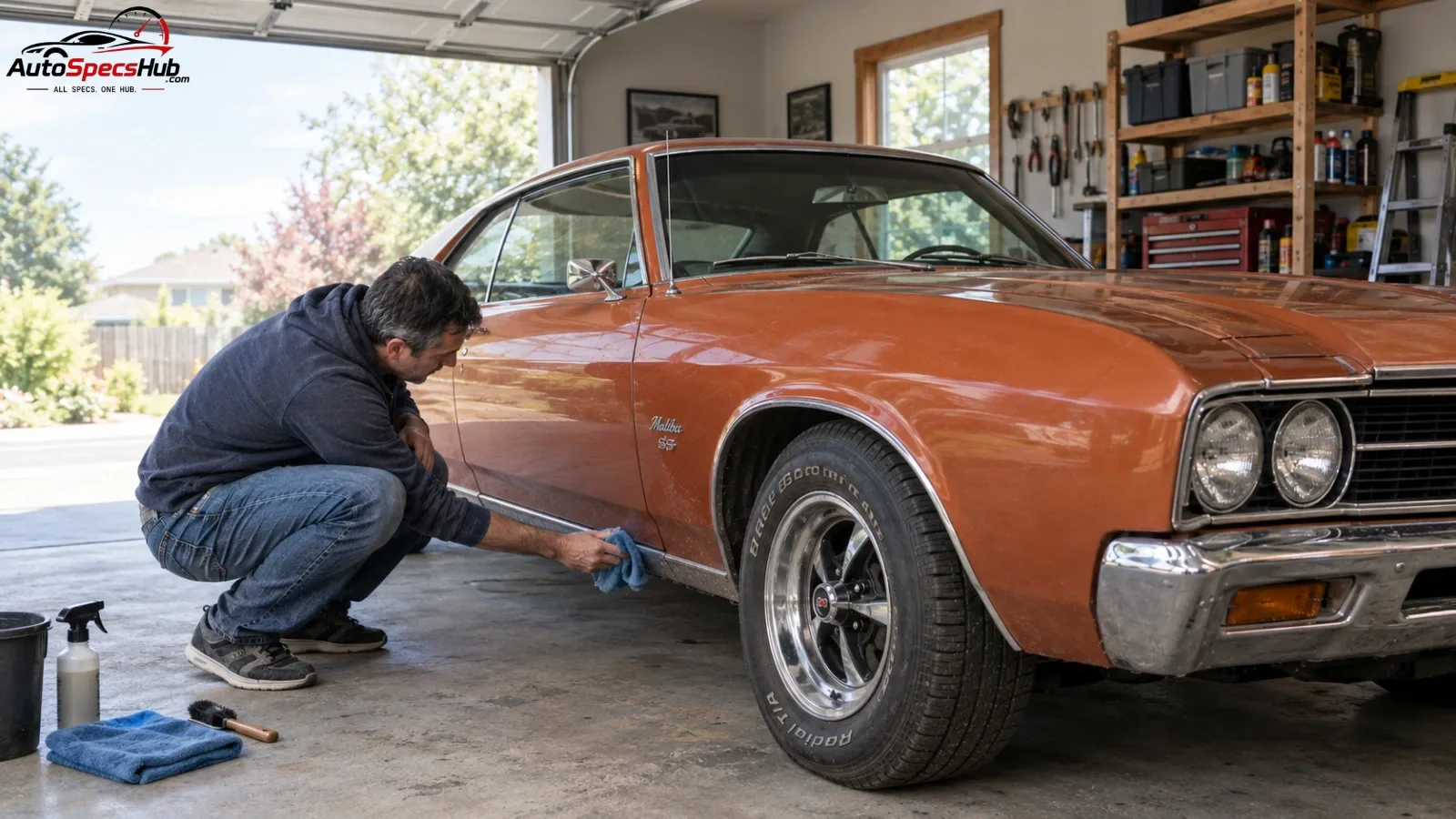
There's an old saying among classic car owners: a rust-free classic is just one where the rust hasn't been found yet.
It sounds dramatic, but it points at something real. The rust you can see, like a bubble on a fender or a stain under a door, is usually the late stage of damage that began out of sight, inside a rocker panel or under the floor.
The good news is that prevention is mostly routine work. Keep moisture off the metal, coat the areas paint can't reach, and check the car often enough to catch small problems while they're still cheap to fix. Here is how to do each one.
Why Classic Cars Rust So Easily
Rust needs water and oxygen. Classic cars give both plenty of chances to get in.
Older cars have seams, overlapping panels, and hollow sections that trap water. Most modern cars are dipped in a corrosion-resistant primer during production, but many classics have little original protection left after decades of use.
Where Rust Usually Starts
Rust tends to begin where water sits and air can't dry it out. These are the areas to check and protect first.
Area | Why it rusts | What helps |
Rocker panels (sills) and door bottoms | Hollow sections that collect water and are hard to see | Cavity wax, clear drain holes |
Wheel wells and fenders | Constant spray of water, mud, and road salt | Regular cleaning, underseal |
Floor pans and frame rails | Road spray from below and water that leaks in from above | Treated metal, underseal |
Around the windshield and windows | Moisture gets trapped around seals and trim | Check seals, dry out damp spots |
Door edges and seams | Water sits in small crevices | Wax, quick paint touch-ups |
Keep the Car Clean and Dry
Dirt holds moisture against the metal, so a clean car rusts more slowly. Pay the most attention to the wheel wells and underside, where mud and road salt build up. If you live near the coast, salt in the air matters too, not just salt on the road.
After a wet drive or a trip on salted roads, this routine works well:
Rinse the underside and wheel wells as soon as you can after the drive.
Wash the body, including door jambs and lower panels.
Dry the car with microfiber towels.
Blow water out of seams, trim, and creases with compressed air, a shop vac, or a leaf blower.
Drying is the step people skip, and it matters as much as washing. Water left in a crease can sit there for days.
Wax the painted panels as well. A good wax or sealant slows moisture from reaching the paint, but it won't protect bare metal and it won't stop rust that has already started.
Fix Paint Chips Quickly
Stone chips and scratches expose bare metal, and moisture will find it. Touch up small chips before they spread.
If you have bare metal, apply a zinc-rich primer first. Cold galvanizing compounds are a common choice. Going straight to filler or topcoat skips the step that protects the metal.
Keep Drains Clear
Cars have drain paths that let water escape, and they can clog with leaves and debris. Damp floorboards are often a sign that a drain is blocked. Check the drains at least once a year, including the drain holes in doors and rocker panels.
Protect Hidden Areas With Cavity Wax and Underseal
Paint only covers what you can see. The inside of a rocker panel or frame rail has none, and that's where classic cars often rot first.
Cavity wax is made for these areas. It's injected through existing drain holes or small access holes and coats the inside of hollow sections. Dinitrol, Bilt Hamber, and Waxoyl are among the widely used names. Which brand you pick matters less than actually using one.
Some cars don't have convenient access points, and applying wax evenly takes a proper probe and some care. If you're not confident, a restoration specialist can do it properly.
Underseal protects the floor, wheel wells, and frame from moisture and road debris. It works best on clean, dry, treated metal. If you seal over rust you haven't dealt with, you're only covering the problem.
Hard underseal can crack over time and let water in behind it. Softer wax-based coatings stay flexible and are less likely to crack, though they are messier and can't be painted over.
None of these products can repair damage. Nothing you spray on will fix a hole in a rocker panel. Once rust has gone through the metal, the fix is new metal, not more coating.
Store the Car Properly
Rust doesn't only happen on the road. A classic can pick up surface rust just sitting in the garage.
An unheated garage is a common culprit, because temperature swings cause condensation on the car. Concrete floors can also release moisture upward, which collects around the wheels and underside.
A few things help:
Store the car in a dry, ventilated space, not a damp basement or outdoors.
Use a dehumidifier if the space stays humid.
Put a moisture barrier, such as a vapor barrier or rubber mat, between the floor and the car.
Use a breathable, fitted cover to keep dust off. Avoid plastic tarps, which trap moisture against the paint.
Place silica gel or another desiccant inside the cabin.
Wash and dry the car before it goes into storage. Any moisture left on it will have months to do its work.
Storage affects more than the bodywork. Fluids and rubber parts age on cars that barely move, which our guide on how often you should service your car explains in more detail.
Inspect the Car Regularly
Prevention only works if you catch problems while they're still small. Every few months, look over the car with a flashlight and a mirror. Focus on rocker panels, wheel wells, door bottoms, and the areas around the windows.
Look for bubbling paint, stains, flaking underseal, and damp carpets. Any of these can mean water is getting in somewhere.
The same hot spots matter if you're looking at a classic you haven't bought yet. Our used car checklist covers rust along with the other things to check before you buy.
Surface rust is usually manageable. Sand back to bright metal, treat it with a rust converter or primer, and repaint. A rust converter only works on surface corrosion, so it isn't a fix for rot.
If you find rust in a structural area, get it assessed by a bodywork specialist before deciding how to deal with it. Getting it wrong costs far more than getting a proper opinion first.
FAQs
How often should I rustproof a classic car?
Check the underseal once a year and reapply it if it's flaking. Cavity wax dries out and cracks over time, so plan to redo it every few years. Follow the product's own instructions for exact timing.
Can I rustproof a car that already has rust?
Surface rust can be sanded back, treated, and sealed. Rust that has eaten through the metal needs repair first, and coating over it won't stop it from spreading.
Do I still need to worry about rust if I only drive in summer?
Yes. Condensation in a cold or damp garage can cause surface rust while the car sits. Dry storage and regular inspections matter just as much as how the car is driven.
Does driving the car help?
Taking the car out every so often is generally better than leaving it untouched for months. Just wash and dry it afterward, especially after wet or salty roads.
Bottom Line
Most classic car rust comes from moisture that stays where you can't see it. Keep the car clean and dry, protect the hidden areas with cavity wax and underseal, and store it somewhere with controlled humidity.
Then check it regularly. A small patch caught early is a quick job. The same patch left for a few years can turn into a panel replacement.