
Most Reliable BMW Models: Best Years, Engines & Used Picks
Discover the most reliable BMW models, best model years, engine choices, and what to check before buying a dependable used BMW.
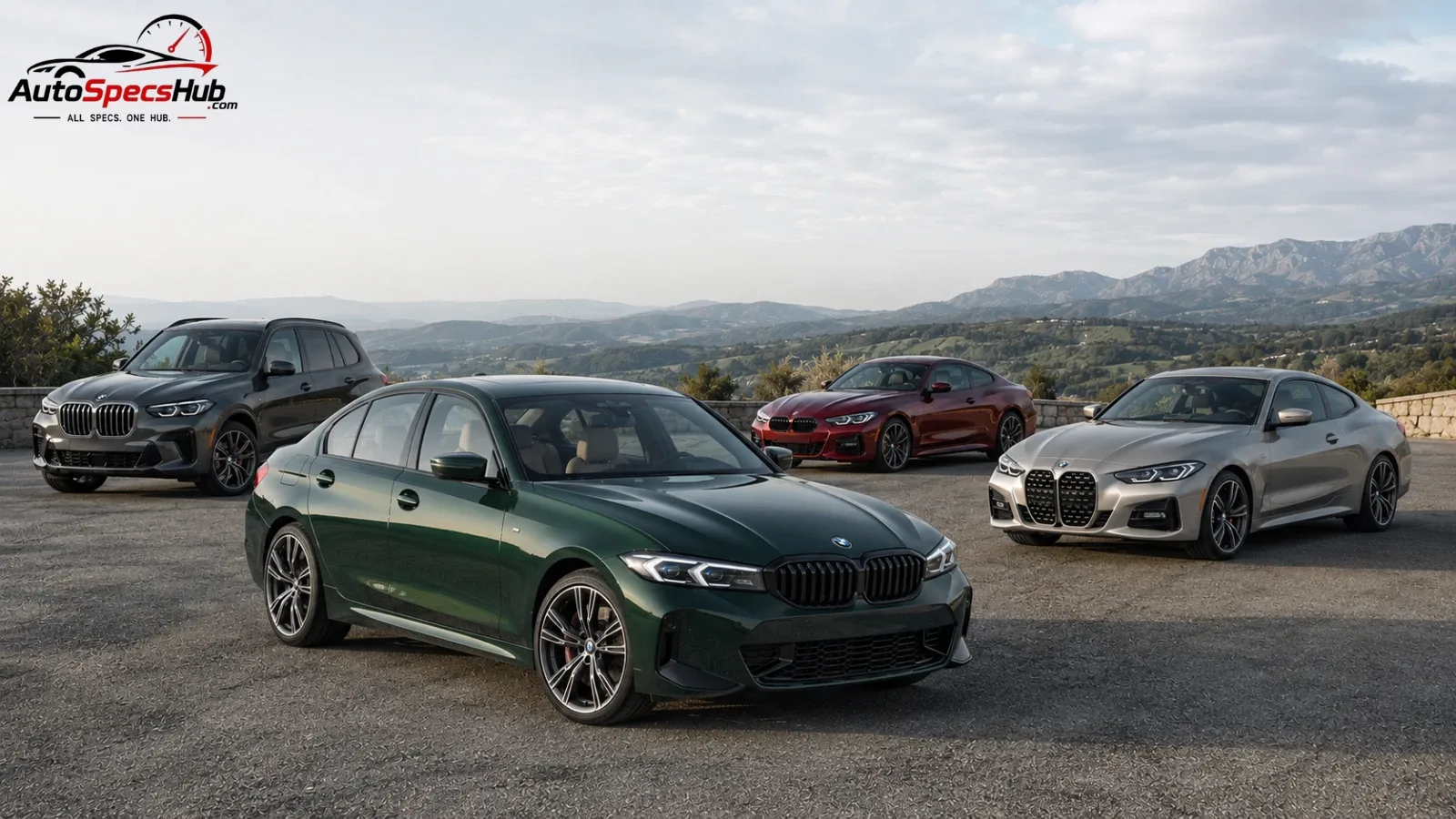
BMW has built everything from compact performance coupes to luxury sedans and family SUVs, so asking whether “BMW is reliable” is too broad. Reliability can vary considerably by model, generation, model year, engine, maintenance history, and previous ownership.
For buyers searching for the most reliable BMW models, some of the strongest candidates include selected years of the BMW 2 Series, 3 Series, 4 Series, and X3. These models combine encouraging owner-reported reliability results with practical availability on the used-car market.
However, the badge alone should never decide the purchase. A well-maintained BMW with complete service records can be a much safer choice than a higher-rated model that has been neglected, heavily modified, or poorly repaired.
Quick Answer: Which BMW Models Are Most Reliable?
For buyers prioritizing reliability, these models are good places to start:
BMW Model | Strong Model-Year Example | Why It Stands Out | Best For |
BMW 2 Series | 2020 | Strong owner-reported reliability result | Compact BMW buyers |
BMW 3 Series | 2022 | Strong dependability data and practical ownership | Best all-round choice |
BMW 4 Series | 2023 | Strong recent quality and reliability result | Coupe and Gran Coupe buyers |
BMW X3 | 2024 | Strong result from a mature SUV generation | Luxury SUV buyers |
These are shortlist recommendations, not guarantees. Available owner data supports these particular model-year examples, but the condition of the individual vehicle remains critical. The 2020 2 Series received an 88/100 J.D. Power Quality & Reliability score, the 2022 3 Series 84/100, the 2023 4 Series 85/100, and the 2024 X3 84/100.
How We Chose the Most Reliable BMW Models
There is no single perfect measurement of automotive reliability, so this guide does not rank BMWs using one score alone.
The shortlist considers:
Owner-reported quality and reliability data
Evidence from specific model years
Whether a model is mature or newly redesigned
Powertrain configuration
Vehicle complexity
Practical availability on the used market
The importance of maintenance and ownership history
That distinction matters because a reliability score describes reported problems across a group of vehicles. It cannot tell you whether the BMW sitting in front of you received regular oil changes, was heavily tuned, suffered accident damage, or had important repairs postponed.
Reliability should therefore help you narrow your search, while service history and inspection should determine which individual car you buy.
1. BMW 3 Series — Best All-Round Choice
For most people, the BMW 3 Series is the strongest all-round starting point.
It combines useful passenger space, strong performance, broad used-car availability, and encouraging recent reliability results without moving into the size and complexity of BMW’s flagship luxury vehicles.
The 2022 BMW 3 Series received an 84/100 Quality & Reliability score from J.D. Power and was also listed as a Dependability Award Winner.
That does not mean every 2022 3 Series is equally desirable. Trim, mileage, drivetrain, maintenance, and previous use still matter.
Which 3 Series Should You Consider?
For buyers who prioritize everyday usability, the 330i is a sensible model to research.
BMW confirms that the current 330i uses a B48-family 2.0-liter turbocharged four-cylinder, while the M340i uses a B58-family 3.0-liter turbocharged inline-six.
The M340i provides significantly greater performance, but a reliability-focused buyer should also consider running costs. Higher-performance versions can require more expensive tires, brakes, and other consumables even when the underlying vehicle proves dependable.
For many owners, the 330i offers the more balanced combination of performance, practicality, and ownership cost.
Best for: commuting, daily driving, first-time BMW ownership, and buyers wanting one car that can handle most situations.
2. BMW 4 Series — One of the Strongest Recent Choices
The BMW 4 Series is another strong candidate.
The 2023 BMW 4 Series received an 85/100 Quality & Reliability score, while the 2026 model currently carries an 84/100 score. J.D. Power notes that current-model ratings can sometimes use previous-year data until newer survey information becomes available, which is worth remembering when evaluating very recent cars.
The 4 Series is particularly appealing to buyers who want BMW’s compact premium-car formula but prefer coupe, convertible, or Gran Coupe styling.
430i or M440i?
For buyers emphasizing lower ownership stress rather than maximum performance, the 430i is the logical place to begin.
BMW’s 2025 technical information identifies a B48-family 2.0-liter four-cylinder in the 430i and a B58-family 3.0-liter inline-six in the M440i.
The M440i is considerably more performance-focused. That does not automatically make it unreliable, but performance hardware and consumables can increase ownership costs.
This is an important distinction throughout this guide:
A reliable BMW is not necessarily a cheap BMW to own.
Best for: drivers wanting premium styling and performance without moving into a larger luxury model.
3. BMW 2 Series — A Strong Used BMW Candidate
The BMW 2 Series deserves serious consideration, particularly on the used market.
The 2020 BMW 2 Series received an 88/100 Quality & Reliability score, one of the strongest owner-reported results among the models discussed here.
There is, however, an important qualification.
The 2 Series name has covered different body styles and platforms. A 2 Series Coupe should not automatically be treated as mechanically identical to every other vehicle carrying a 2 Series badge.
Always research the:
Exact model year
Body style
Engine
Drivetrain
Generation
Service history
rather than buying based on the model name alone.
The 2 Series makes particular sense for buyers who want a smaller BMW and do not need the additional passenger or cargo space offered by the 3 Series or X3.
Best for: compact-car buyers, enthusiasts, couples, and drivers who prioritize agility over maximum practicality.
4. BMW X3 — Best Reliability-Focused BMW SUV
For SUV buyers, the 2024 BMW X3 is one of the most interesting BMW choices.
It received an 84/100 Quality & Reliability score, making the final years of that generation particularly worth researching on the used market.
Why does the specific year matter?
Major redesigns introduce new hardware, software, electronics, and production changes. A mature vehicle near the end of a generation has had more time for engineering refinements and for real-world ownership data to accumulate.
That does not mean you should automatically avoid every first-year redesign. It simply means a mature model with an established history can be easier to evaluate.
If you are deciding between an X3 and a BMW passenger car, this is a natural place to compare the tradeoffs covered in SUV vs Sedan guide.
Best for: families, SUV buyers, cargo-space needs, and drivers who still want a more engaging driving experience.
Model Year Matters More Than the Badge
One of the biggest mistakes when researching BMW reliability is searching only by model name.
“BMW 3 Series reliability” can refer to vehicles separated by many years and equipped with completely different:
Engines
Transmissions
Electronics
Infotainment systems
Driver-assistance technology
Suspension components
Emissions systems
The same applies to the X3, 2 Series, and 4 Series.
For example, the 2023 4 Series carried an 85/100 Quality & Reliability score, while the 2024 model showed 81/100 in J.D. Power’s available data. That does not automatically make one model year universally better, but it demonstrates why reliability research should be year-specific.
When shopping used, research the exact year rather than assuming an entire generation has one reliability rating.
Which BMW Engines Are Worth Considering?
Two modern BMW engine families appear repeatedly in popular models: the B48 four-cylinder and B58 inline-six.
Neither engine should be described as “bulletproof.” No modern engine deserves that guarantee.
BMW B48
The B48 is BMW’s turbocharged four-cylinder engine family and powers models including current versions of the 330i and 430i. BMW’s technical documentation confirms current B48 applications in both cars.
For buyers who do not need M Performance levels of power, B48-equipped cars can provide an attractive balance of performance and efficiency.
BMW B58
The B58 is BMW’s turbocharged 3.0-liter inline-six engine family.
BMW has used versions of the B58 in models including the M340i, M440i, M240i, X3 M40i, and others. A B58 variant powering several BMW performance models received a Wards 10 Best Engines and Powertrains award in 2020.
That recognition reflects the engine’s engineering and performance. It should not be presented as proof of lifetime reliability.
When evaluating either engine, service history remains more important than internet reputation.
Check whether the vehicle has:
Regular oil-change records
Evidence of cooling-system maintenance
Unresolved leaks
Warning lights
Aftermarket tuning
Documented repairs
Correct servicing for its mileage
A desirable engine cannot compensate for neglect.
Reliability vs BMW Maintenance Cost
Reliability and maintenance cost are related, but they are not the same thing.
A BMW may avoid major breakdowns yet still require premium-priced:
Tires
Brake components
Fluids
Filters
Batteries
Suspension parts
Specialist labor
This is why buyers should consider BMW maintenance costs separately from reliability.
A dependable premium car can still cost more to own than a mainstream vehicle.
How to Buy a Reliable Used BMW
Choosing the right model is only the beginning.
Before buying a used BMW, check:
Complete service records
Cold-start behavior
Dashboard warnings
Oil or coolant leaks
Battery condition
Transmission operation
Suspension noises
Brake condition
Uneven tire wear
Cameras and sensors
Infotainment functions
Signs of ECU tuning
Previous accident damage
Outstanding recalls
A pre-purchase inspection from a technician familiar with BMW vehicles can be particularly valuable for an older or higher-mileage car.
Frequently Asked Questions
What is the most reliable BMW model?
There is no single BMW that is the most reliable across every generation and year. Strong model-year examples in available owner-reported data include the 2020 2 Series, 2022 3 Series, 2023 4 Series, and 2024 X3.
Which BMW is best for long-term ownership?
For many buyers, the 3 Series 330i is a strong starting point because it combines useful space, good performance, broad availability, and encouraging reliability data without the complexity of BMW’s largest luxury models.
Which used BMW years have strong reliability results?
Examples include the 2020 2 Series at 88/100, 2022 3 Series at 84/100, 2023 4 Series at 85/100, and 2024 X3 at 84/100 in J.D. Power Quality & Reliability ratings.
Is the BMW B58 reliable?
The B58 is used in numerous BMW performance models and has received recognition for its engineering, but that does not guarantee the reliability of an individual used car. Mileage, maintenance history, modifications, and previous ownership remain important.
Are reliable BMWs expensive to maintain?
They can be. Reliability refers primarily to problems and failures, while maintenance expenses also include routine service, tires, brakes, fluids, parts, and labor.
Should I buy a BMW without service records?
A documented service history is strongly preferable. Missing records make it difficult to determine whether important maintenance was performed and increase the uncertainty surrounding the vehicle.
Final Verdict
The most reliable BMW models are not necessarily the newest, fastest, or most expensive cars BMW sells.
Based on the owner-reported reliability evidence reviewed here, the 2020 BMW 2 Series, 2022 BMW 3 Series, 2023 BMW 4 Series, and 2024 BMW X3 are worthwhile model-year examples for reliability-focused buyers to investigate.
For most shoppers, the 3 Series remains the best all-round starting point. The 4 Series is a strong alternative for style-conscious buyers, the 2 Series suits drivers wanting something smaller, and the 2024 X3 makes a compelling case for SUV shoppers.
But one rule matters more than any ranking:
Buy the condition and history, not just the BMW badge.
A well-maintained, documented, unmodified BMW is usually a more sensible purchase than a neglected example of a supposedly stronger model.
Use reliability research to create your shortlist. Then use maintenance records, vehicle condition, and a proper inspection to choose the actual car.