

Shocks vs Struts: What’s the Difference and When Should You Replace Them?
Learn the difference between shocks and struts, recognize common warning signs, understand their lifespan, and find out when replacement is necessary to maintain safe handling and ride comfort.
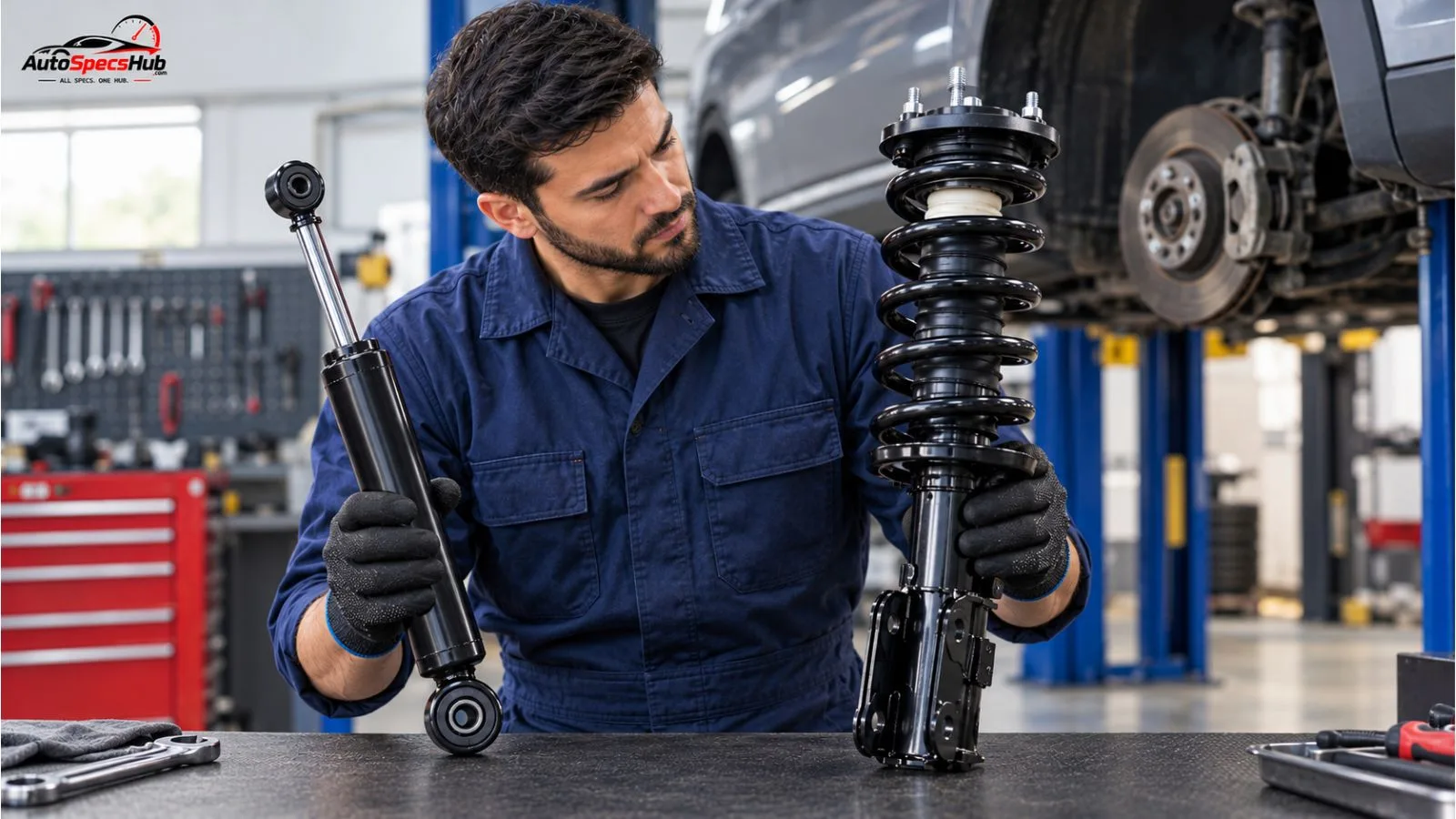
Shocks and struts help your car handle uneven roads, maintain tire contact with the pavement, and remain stable during braking and cornering. Although these terms are often used interchangeably, they have different designs and structural responsibilities. Understanding the difference can help you identify suspension problems, recognize when repairs are necessary, and avoid paying for parts your vehicle does not need.
The main distinction is that a shock absorber controls suspension movement, while a strut combines damping with a structural role in the suspension system. Both can wear out over time, but their lifespan depends on driving conditions, vehicle design, and component quality.
This guide explains how shocks and struts work, their main differences, common failure symptoms, expected lifespan, and replacement costs.
What Are Shocks on a Car?
Shock absorbers, commonly called shocks, control the movement of a vehicle’s suspension springs. When a wheel encounters a pothole or speed bump, the spring compresses and rebounds. Without effective damping, it could continue bouncing, making the vehicle feel unsettled.
A shock absorber uses hydraulic fluid, internal valves, or other damping mechanisms to resist this movement. It helps the suspension settle after an impact and allows the tires to maintain more consistent contact with the road.
Shocks are commonly installed separately from coil springs, although suspension layouts vary between vehicles.
What Do Shock Absorbers Do?
Shock absorbers contribute to several aspects of driving:
Ride comfort: Reduce excessive bouncing over uneven surfaces.
Handling: Help control body movement during cornering.
Braking stability: Manage suspension movement as weight shifts forward.
Tire contact: Help the tires follow the road surface.
Tire wear: Reduce irregular wear associated with uncontrolled wheel movement.
Shocks primarily control movement rather than serving as the suspension’s main structural locating members.
What Are Struts on a Car?
A strut combines a damping function with a structural role in the suspension. In a common MacPherson strut design, it helps locate the wheel assembly and connects the suspension to the vehicle body.
A typical strut assembly may include the strut unit, coil spring, spring seat, mounting hardware, and related components. The exact arrangement depends on the vehicle.
Because struts help support and locate the suspension, their condition can affect ride quality, steering behavior, and wheel geometry. Many passenger cars use front struts, while some also use them at the rear.
What Do Struts Do?
Struts perform several important functions:
Control spring movement and body motion.
Work with the spring to support vehicle loads.
Help maintain suspension geometry.
Contribute to steering and wheel positioning in many front-strut designs.
Support predictable handling over uneven roads.
A damaged strut can therefore affect more than comfort. Depending on the failure, it may also compromise steering behavior or suspension integrity.
Shocks vs Struts: What’s the Difference?
The main difference is structural: a shock primarily provides damping, whereas a strut also performs a suspension-supporting and locating function.
Feature | Shock Absorber | Strut |
|---|---|---|
Primary function | Controls suspension movement | Controls movement and contributes to suspension structure |
Structural role | Usually not a primary structural member | Structural part of the suspension |
Spring arrangement | Often separate from the spring | Commonly integrated with the spring assembly |
Steering involvement | Depends on suspension design | Often involved in front-wheel positioning |
Replacement work | Depends on vehicle layout | May require spring compression and alignment checks |
Neither design is automatically better. Manufacturers select suspension layouts according to packaging, cost, handling requirements, ride comfort, and vehicle purpose.
For drivers, the important consideration is identifying which components their vehicle uses and whether those parts remain in good condition.
Can a Car Have Both Shocks and Struts?
Yes. Some vehicles use struts on the front axle and separate shocks at the rear. Others use struts at both ends or separate shock absorbers throughout the suspension.
The arrangement depends on the vehicle’s engineering, not a universal rule. You should not assume every car has four shocks or four struts.
Check your owner’s manual or a vehicle-specific parts catalog before ordering replacement components. Model year, trim, drivetrain, and suspension package can affect compatibility.
Signs of Bad Shocks or Struts
Wear often develops gradually, so drivers may not immediately notice declining suspension performance. The following symptoms warrant inspection, although none alone confirms which component has failed.
1. Excessive Bouncing
If your car continues bouncing after crossing a speed bump, its damping components may no longer control spring movement effectively. A healthy suspension should generally settle without prolonged oscillation.
2. Nose-Diving During Braking
Some forward body movement is normal when braking. However, excessive or worsening nose-dive may indicate worn shocks or struts, particularly if the vehicle also feels unstable.
Because braking behavior is safety-critical, arrange an inspection if the car becomes difficult to control while slowing down.
3. Excessive Body Roll
A vehicle naturally leans when cornering, but pronounced leaning or a floating sensation may indicate deteriorating damping. Worn sway-bar links, bushings, springs, and other components can produce similar symptoms.
4. Uneven Tire Wear
Worn shocks or struts can contribute to irregular tread wear by allowing excessive wheel movement. Incorrect tire pressure, poor alignment, damaged suspension joints, and wheel imbalance are other possible causes.
Steering wheel vibration can also point to other issues, including wheel imbalance, alignment problems, or worn suspension parts.
5. Fluid Leaks
Hydraulic shocks and struts contain damping fluid. Wetness accompanied by fluid running down the unit may indicate a leak, although a light film of residue does not always mean the component has failed.
A technician can assess the leakage and determine whether replacement is necessary.
6. Knocking or Clunking Noises
Clunks over bumps may come from worn strut mounts, loose fasteners, damaged bushings, ball joints, sway-bar links, or other suspension parts. The noise alone does not prove that a shock or strut is faulty.
A proper inspection helps identify the source before parts are replaced.
How Long Do Shocks and Struts Last?
Shocks and struts do not have a universal replacement mileage. In many everyday driving situations, they may last approximately 50,000 to 100,000 miles, but some wear out earlier while others remain serviceable for longer.
Their lifespan depends on several factors:
Road conditions: Potholes and rough surfaces increase impact loads.
Driving habits: Aggressive driving and heavy loads can accelerate wear.
Vehicle weight: Heavier vehicles may place greater demands on suspension components.
Environment: Corrosion and road contaminants can damage exposed parts.
Component quality: Design and materials affect durability.
Treat mileage as a reason to inspect the suspension rather than an automatic replacement deadline. Follow your manufacturer’s recommendations and base repair decisions on the components’ actual condition.
When Should You Replace Shocks or Struts?
Replacement is generally appropriate when an inspection confirms a failed component, unacceptable fluid leakage, significant damage, or insufficient damping.
Arrange an inspection if you notice worsening handling, excessive bouncing, persistent suspension noises, or visible damage. A professional assessment can distinguish worn shocks or struts from other faults that produce similar symptoms.
Should Shocks and Struts Be Replaced in Pairs?
Replacing shocks or struts in pairs on the same axle is often recommended. Installing a new component beside a significantly worn one can create uneven damping and handling characteristics.
If both front struts have similar mileage and wear, replacing them together may provide more consistent performance. However, the correct approach depends on the manufacturer’s guidance and the condition of each component.
Ask the technician to explain the inspection findings and whether both sides require replacement.
Do Struts Need Wheel Alignment After Replacement?
A wheel alignment check is often recommended after strut replacement, particularly when the work affects suspension mounting points or wheel geometry.
The requirement varies by vehicle design and the work performed. Ask the repair shop whether alignment is necessary and whether it is included in the estimate.
Shocks vs Struts Replacement Cost
Replacement costs vary according to vehicle type, part quality, labor rates, and suspension design. Separate shocks are often less expensive to replace than complete strut assemblies, although this is not true for every vehicle.
Your estimate may include:
Replacement shocks or struts
Installation labor
Mounts, bearings, boots, or related hardware, if needed
Other damaged suspension components
Wheel alignment, when required
Original-equipment parts may cost more than aftermarket alternatives. Compare compatibility, quality, warranty, and expected use rather than choosing solely by price.
Before approving a repair, confirm whether the estimate covers one component or a pair, which hardware is included, and whether alignment costs extra.
Can You Drive With Bad Shocks or Struts?
Worn suspension components can reduce stability, ride control, and consistent tire contact with the road. The risk depends on the severity of the wear and the type of damage.
If the vehicle is difficult to control, a component is loose, a strut is visibly damaged, or a tire is making abnormal contact with the body, avoid driving until it has been inspected. Arrange professional assistance if necessary.
Do not assume the suspension is safe simply because the vehicle does not bounce noticeably. Some faults require a hands-on inspection to identify.
How to Maintain Your Suspension
Regular inspections can help identify suspension problems before they become more serious.
Maintain tire pressures at the manufacturer’s recommended levels.
Investigate new noises, unusual tire wear, or changes in handling.
Avoid hitting potholes and road hazards at excessive speeds.
Have damaged springs, mounts, and bushings inspected.
Follow the recommended maintenance schedule for your vehicle.
Regular servicing can help catch suspension issues early. Following the right maintenance schedule also helps keep your car in good condition.
Frequently Asked Questions
Are shocks and struts the same thing?
No. Both control suspension movement, but a strut also performs a structural role in the suspension. They are not automatically interchangeable.
How do I know if my car has shocks or struts?
Check your owner’s manual or a vehicle-specific parts catalog. A mechanic can also identify the suspension layout during an inspection.
Do bad shocks or struts affect braking?
They can affect vehicle stability and tire contact during braking. However, increased stopping distance can have other causes and should be investigated separately.
Should I replace all four shocks and struts at once?
Not necessarily. The condition of each axle should be assessed individually. Replacing components in pairs on the same axle is often recommended, but all four do not automatically need replacement together.
Can new shocks improve ride comfort?
Yes, if the original components are worn. The improvement depends on the condition of the old parts, the replacement design, and the rest of the suspension.
Do new struts include springs?
Not always. Some replacement products are complete assemblies containing the spring and related hardware, while others include only the strut unit. Check the product details before purchasing.
Final Thoughts
Shocks and struts both help control suspension movement, but struts also perform a structural role. Recognizing the difference can help you understand repair recommendations and identify potential suspension problems.
Neither component has a fixed replacement interval for every vehicle. If you notice excessive bouncing, fluid leakage, unusual noises, uneven tire wear, or worsening handling, arrange an inspection rather than assuming a specific part has failed.
Before approving repairs, confirm which components your vehicle uses, request a clear diagnosis, and compare the complete cost, including any necessary hardware and alignment. Timely replacement of worn components helps preserve predictable handling and safe suspension performance.