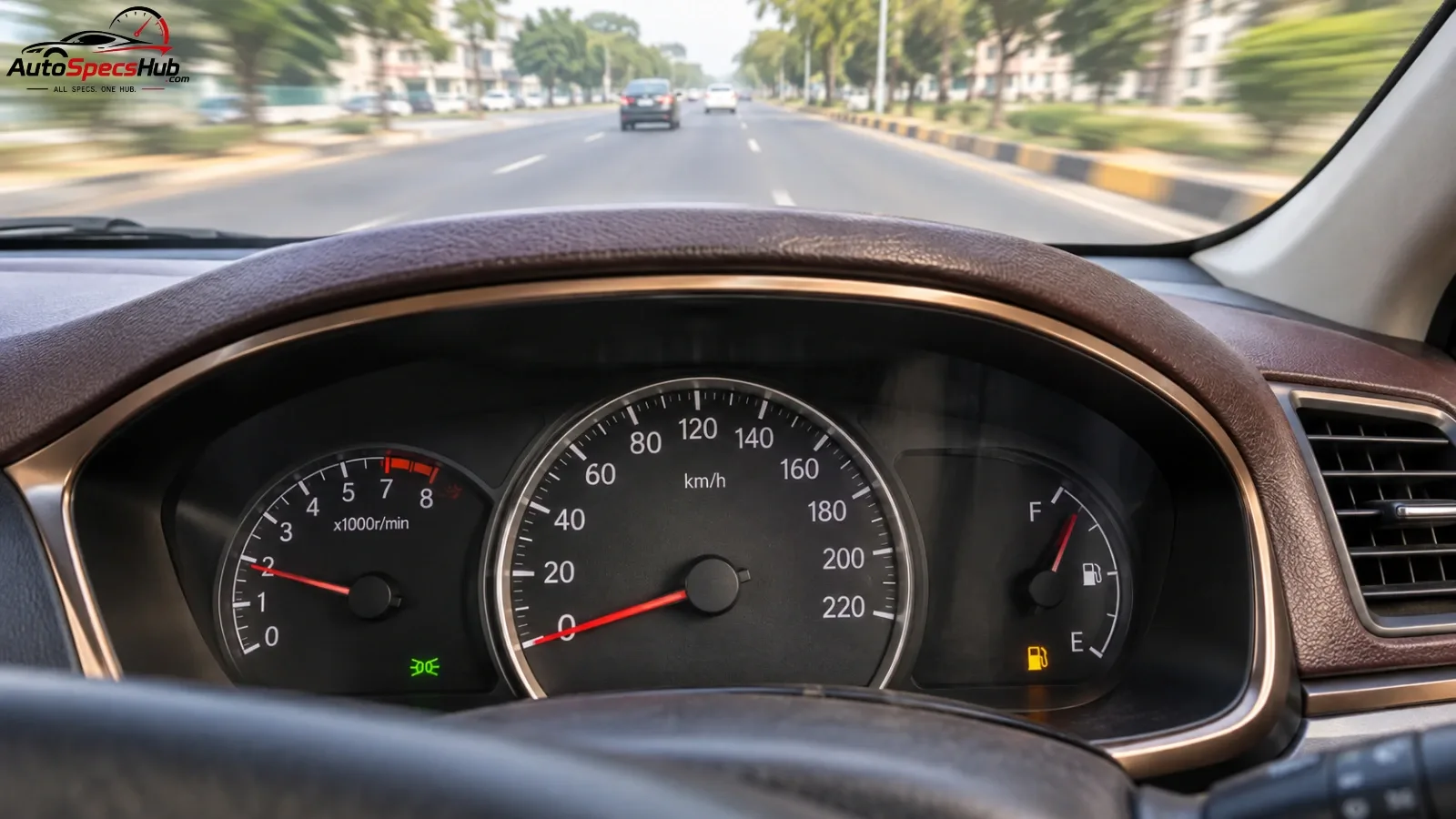

Bad Ignition Coil Symptoms: How to Spot One and What to Do
Bad ignition coil symptoms to watch for, the misfire codes they trigger, how to confirm the coil, and what replacement typically costs.
A bad ignition coil rarely announces itself. It shows up as a car that shakes at red lights, hesitates when you pull away, or lights up the check engine light for no obvious reason.
The most common bad ignition coil symptoms are a misfire, a rough idle, hard starting, poor acceleration, worse fuel economy, and a check engine light, often with a P0300 or P0351 code. When one coil fails, one cylinder usually stops firing properly.
It's a small, inexpensive part, but driving on it can damage a much more expensive one.
What Does an Ignition Coil Do?
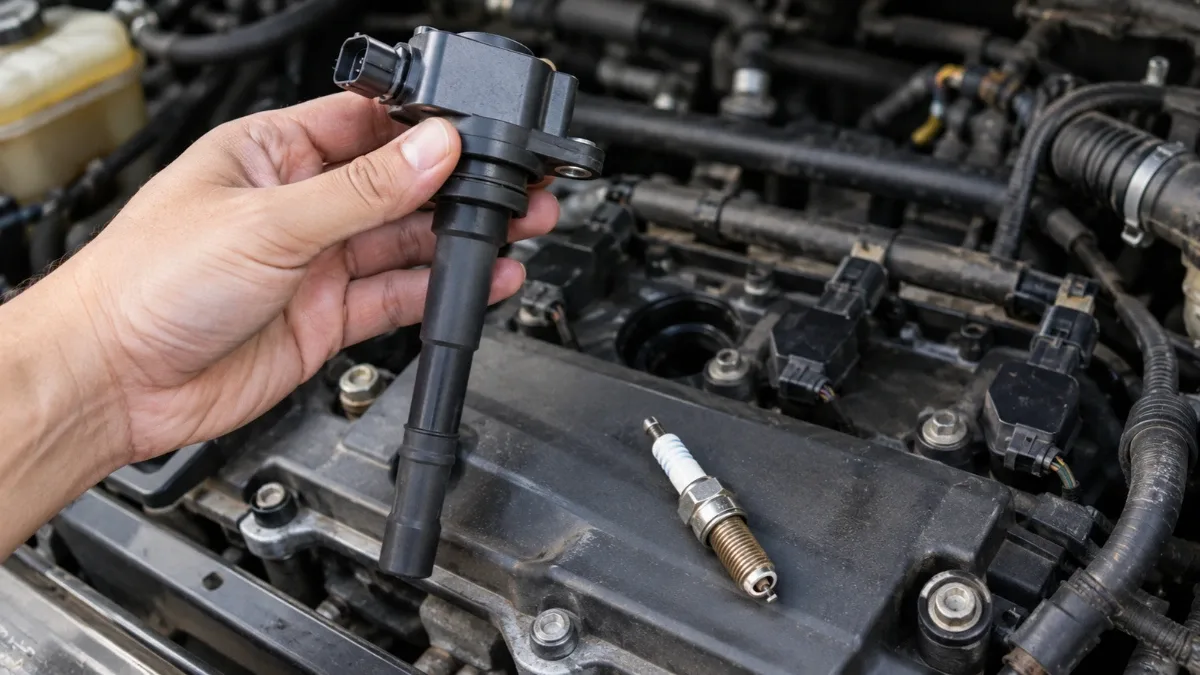
An ignition coil turns your battery's low voltage into the thousands of volts a spark plug needs to ignite the fuel. Most modern cars use a coil-on-plug design, with one coil sitting directly on top of each spark plug. Older cars often use one coil for all the plugs.
Coils wear out. On average they last between 60,000 and 100,000 miles, though heat, age, and cheap parts can shorten that.
Signs of a Bad Ignition Coil
Engine Misfires
A failing coil often leaves one cylinder with a weak, inconsistent, or missing spark. You feel it as jerking or hesitation, especially when you accelerate.
Rough Idle and Shaking
At idle, the engine has little momentum, so a weak cylinder is easy to feel. The car shakes or vibrates at stoplights. If the shaking mostly happens when you're stopped, the causes in vehicle shakes while idling are worth ruling out too.
Hard Starting
A weak spark makes the engine crank longer than normal before it catches.
Check Engine Light
Most modern cars turn on the check engine light when a coil misfires. A steady light means a problem to check soon. A flashing light means a severe misfire that needs attention right away.
Poor Acceleration
Acceleration puts more load on the ignition system, so a weak coil can show up as sluggish power when you merge or climb a hill, even if the car seems fine while cruising.
Worse Fuel Economy
When a cylinder misfires, unburned fuel goes out the exhaust. You use more gas for the same driving.
Stalling, Backfiring, or a Fuel Smell
An intermittent coil can make the engine stall, especially as the revs drop when you slow down. Unburned fuel can also cause black smoke, a fuel odor, or a backfire.
None of these symptoms prove it's the coil. Spark plugs, fuel injectors, wiring, and vacuum leaks can cause the same problems, so confirm the cause before you buy parts.
What Codes Does a Bad Ignition Coil Trigger?
A scan tool usually shows one of these:
P0300: random or multiple cylinder misfires
P0301 to P0308: a misfire in a specific cylinder
P0351 to P0358: an ignition coil circuit fault, for coils A through H
A misfire code points to a symptom, not a part. P0300 can also come from a vacuum leak or fuel problem, and a P035x code can be caused by wiring or a connector, so check the harness before replacing the coil.
Bad Ignition Coil or Bad Spark Plug?
Both cause misfires, which is why the two get confused. The swap test usually separates them.
Clue | Bad coil | Bad spark plug |
|---|---|---|
After swapping the coil to another cylinder | The misfire follows the coil | The misfire stays in the original cylinder |
How it tends to start | Often sudden, and can be severe | Often gradual |
Typical fix | Replace the coil | Replace the plug |
How to Confirm It's the Coil
Work through these in order:
Scan the car for codes, and write down which cylinder is misfiring.
Look at the coil for cracks, burn marks, or oil in the spark plug well.
Do a swap test: move the suspect coil to another cylinder, clear the codes, and drive. If the misfire moves with the coil, the coil is bad.
Have a mechanic test the coil with a multimeter or spark tester if the results are unclear.
If you get a P035x code, check the wiring and connector before buying a coil.
What Causes Ignition Coils to Fail?
A few things shorten a coil's life:
Age and heat. Coils sit on a hot engine, and heat cycles wear them out.
Worn spark plugs. Worn plugs make the coil work harder, which is a leading cause of burnout.
Oil or moisture in the plug wells. A leaking valve cover gasket can soak the coil.
Electrical problems. Voltage irregularities can damage coils.
Cheap parts. OEM-quality coils tend to last longer than bargain ones.
Some of this is preventable. Replacing plugs on schedule is the easiest step, and for the broader maintenance routine, see how often you should service your car.
Can You Drive With a Bad Ignition Coil?
A mild misfire with a steady check engine light usually isn't an emergency, but get it checked soon. If the engine is shaking badly, power is dropping, or the light is flashing, limit your driving.
A flashing check engine light means an active misfire, and the unburned fuel it sends into the exhaust can damage the catalytic converter.
How Much Does Ignition Coil Replacement Cost?
RepairPal estimates the job at about $227 to $335, with parts around $155 to $229 and labor around $72 to $106. The total rises with each coil you replace, and it runs higher on luxury cars and engines where the coils are hard to reach.
If you do it yourself, parts alone can run from $40 to $100 or more per coil. On most cars the swap takes minutes.
If the plugs are old, replace them at the same time. The labor overlaps, and new plugs help the new coil last.
FAQs
Should I replace all my ignition coils at once?
Not necessarily. There's no rule that says you must. But on a high-mileage engine with old plugs, doing the plugs and coils together can save on labor and head off the next failure.
Can a bad ignition coil damage the catalytic converter?
Yes. A misfire sends unburned fuel into the exhaust, which can overheat and ruin the converter over time. If you've driven on a misfire for a while, know the signs of a bad catalytic converter.
Do diesel engines have ignition coils?
No. Diesels ignite fuel with compression, not spark, so they don't use ignition coils or spark plugs. Rough running in a diesel points to other parts, like glow plugs or injectors.
Can I replace an ignition coil myself?
Often, yes. RepairPal says it's usually an easy job that takes minutes, as long as you take precautions against electric shock. On some engines, coils at the back are hard to reach.
Can a bad ignition coil cause a no-start?
On a modern coil-on-plug engine, one bad coil usually causes a misfire, not a no-start. On older cars that use a single coil for all the plugs, a failed coil can stop the engine from starting.
Confirm the Coil Before You Buy One
Bad ignition coil symptoms look a lot like spark plug, fuel, and vacuum problems, so a misfire code alone isn't proof. The swap test is a quick way to know for sure.
Confirm it's the coil, replace it, check the plugs, and don't ignore a flashing light, because that's the one that gets expensive.