
Blue Smoke From Exhaust: What It Means and What It Costs to Fix
Blue smoke from exhaust means your engine is burning oil. Learn the causes by when it appears, typical repair costs, and whether it's safe to drive.
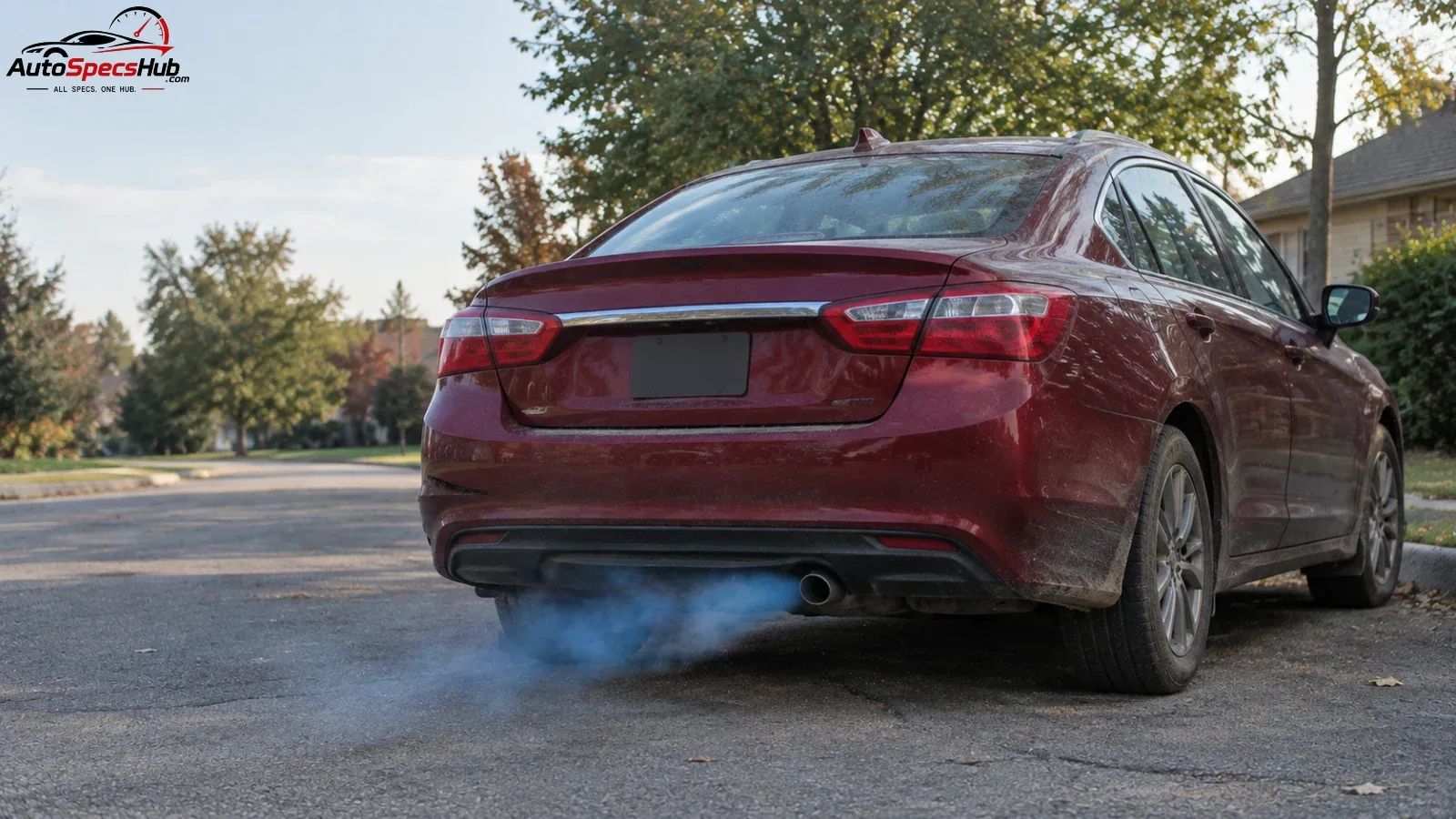
A puff of blue smoke at startup and a steady blue cloud under hard acceleration can look alike from behind the car, but they can mean very different repair bills.
Blue smoke from the exhaust means your engine is burning oil. Oil is getting into the combustion chamber or onto hot exhaust parts, and when the smoke appears usually points to where it's coming from.
Reading the pattern takes a few minutes, and it can keep you from paying for the wrong repair.
What Does Blue Smoke From the Exhaust Mean?
Engine oil is supposed to stay in the crankcase and lubricate parts. When it slips past a worn seal, ring, or valve, it burns with the fuel and leaves a thin, bluish-gray haze at the tailpipe.
Color matters. White smoke usually points to coolant or condensation, as the white smoke from exhaust guide explains, while black smoke means the engine is getting too much fuel. This guide covers gas cars.
What the Timing of the Smoke Tells You
Mechanics start by asking when the smoke shows up. Here's the usual pattern, with typical shop prices for the repair.
When you see it | Most likely cause | Typical repair cost |
|---|---|---|
A puff at cold startup that clears quickly | Worn valve stem seals | $500 to $1,500 |
A cloud when accelerating, climbing, or towing | Worn piston rings or cylinder wear | $2,500 to $6,000 or more |
At idle or light throttle, with oil in the intake hose | Stuck or clogged PCV valve | About $120 to $175 |
On a turbocharged engine, especially under boost | Failing turbo seals | $1,500 to $3,500 for a turbo replacement |
Burning-oil smell and wisps from the engine bay | Oil leaking onto hot parts | Depends on the leak |
Treat these as ranges. Prices swing with the engine, the shop, and how much labor the job takes.
Common Causes of Blue Smoke From the Exhaust
Worn Valve Stem Seals
Small rubber seals on each valve stem keep oil out of the combustion chamber. As they harden with age and heat, oil seeps down the valve while the car sits, then burns off when you start it.
The classic sign is a puff at cold startup, or after a long downhill coast. It's less serious than worn rings, but it tends to get worse over time.
Worn Piston Rings or Cylinders
Piston rings seal the gap between the piston and the cylinder wall. When they wear or stick, oil gets past them, and you see blue smoke under load, such as climbing a hill or towing. Heavy oil consumption is the other big sign.
A mechanic can confirm worn rings with a compression test or a leak-down test. If compression jumps after a little oil is added to the cylinder, the rings aren't sealing.
This is the expensive one. Fixing it usually means an engine rebuild or replacement.
A Stuck or Clogged PCV Valve
The PCV valve vents crankcase pressure into the intake. If it sticks open or clogs, oil vapor can get pulled or pushed into the intake, where it burns.
Look for blue smoke at idle or light throttle and oil residue inside the air intake hose. Since it's the cheapest fix on the list, it's worth checking first. RepairPal puts the average replacement at about $119 to $173.
Failing Turbocharger Seals
A turbo spins on an oil-fed shaft. When its seals fail, oil gets pushed into the intake or exhaust, and you may see smoke, especially under boost.
If your car is turbocharged, ask a mechanic to inspect the turbo and the intake piping for oil before assuming the engine is worn.
Oil Leaking Onto the Exhaust
Sometimes the oil never enters the engine. A leaking valve cover gasket or oil filter housing can drip onto hot exhaust parts and make smoke with a burnt-oil smell. That's an external leak, and it's fixed by replacing the leaking part.
Overfilled Oil or the Wrong Oil
An overfilled crankcase can push oil where it doesn't belong, and oil that's too thin for the engine can slip past worn seals more easily. Check the dipstick, and make sure you're using the grade in your owner's manual.
How Much Oil Burning Is Normal?
A little. Consumer Reports said it's normal for engines to burn some oil as they age toward 100,000 miles, and it defined excessive consumption as adding more than one quart between recommended oil changes.
Automakers set their own limits. In a 2015 Consumer Reports survey, certain Audi and BMW models had standards allowing roughly a quart every 600 to 750 miles, while Subaru considered a quart every 1,000 to 1,200 miles acceptable. The same survey found 98 percent of owners of 2010 to 2014 models never had to add oil between changes.
To measure yours, check the dipstick on level ground after an oil change, then recheck every 500 to 1,000 miles.
Is It Safe to Drive With Blue Smoke?
Light, occasional smoke is usually fine for short trips as long as the oil level stays up. Heavy or constant smoke, an oil level that drops quickly, or an oil pressure warning means you should stop driving. Running low on oil can wreck an engine fast.
Oil that keeps burning can also foul spark plugs and oxygen sensors and wear out the catalytic converter, which is expensive to replace. The signs of a bad catalytic converter are worth knowing if you've been driving with smoke for a while.
What to Do Next
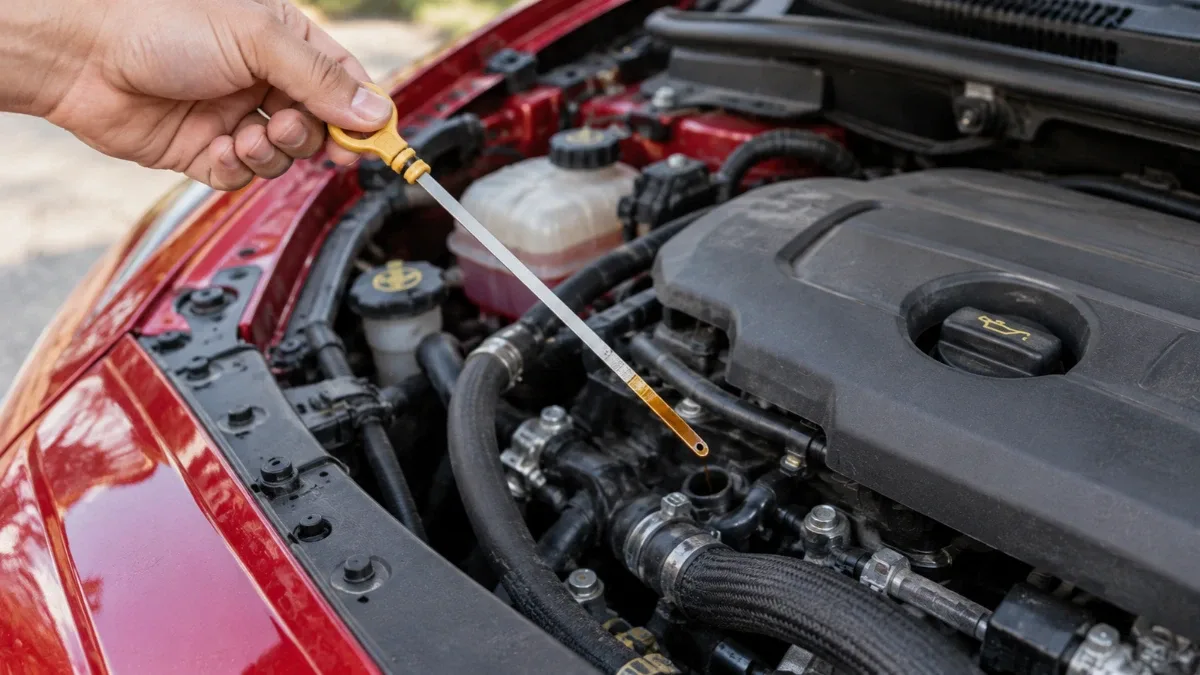
Work through the cheap checks before you assume the worst:
Check the oil level, and top it up if it's low.
Note when the smoke appears: startup, acceleration, idle, or all the time.
Look inside the air intake hose for oily residue, which points to the PCV system.
Ask a mechanic for a compression or leak-down test if the smoke shows up under load.
Get a quote for the cause, and a second opinion before agreeing to an engine rebuild.
If the check engine light starts flashing, treat it as urgent, because a flashing check engine light means an active misfire.
Do Additives or Thicker Oil Help?
Seal-conditioning additives and high-mileage oils can slow minor seepage from hardened seals, but they can't fix broken rings, a failing turbo seal, or a clogged PCV valve.
Some mechanics suggest a slightly thicker oil for worn engines. Stick with the viscosity in your owner's manual unless a mechanic who has inspected the engine recommends something else.
Can You Prevent Blue Smoke?
You can slow it down. Regular oil changes with the right grade, fixing leaks early, and replacing the PCV valve when the maker recommends it all help, and the intervals in how often you should service your car cover the basics.
Wear still happens with age. Prevention just keeps small problems from becoming big ones.
FAQs
Why does my car smoke blue only at startup?
That usually means worn valve stem seals. Oil seeps past them while the car sits, and it burns off when you start the engine. If the smoke lasts longer over time, the seals are getting worse.
Will blue smoke go away on its own?
No. Blue smoke comes from wear, a leak, or a failed part, so it won't clear up by itself. Some causes, like an overfilled crankcase or a clogged PCV valve, are quick and inexpensive to fix.
Does blue smoke mean I need a new engine?
Not necessarily. A PCV valve or valve seals cost far less than an engine. Only badly worn piston rings or cylinders usually lead to a rebuild or replacement.
How can I tell blue smoke from white smoke?
Blue smoke is thin and bluish-gray, and it smells like burning oil. White smoke is thicker and, when it's coolant, can smell sweet and may come with a rising temperature gauge.
Check the Dipstick First
Blue smoke from the exhaust is a message, and the timing is how you read it. A puff at startup, a cloud under load, and smoke at idle each point to a different part and a different price.
Start with the oil level and the cheap checks, and get a proper diagnosis before you commit to anything expensive.