
White Smoke From Exhaust: 6 Common Causes and When to Worry
White smoke from the exhaust can be harmless condensation or a sign of a cooling or combustion problem. Learn the six common causes, how to tell when it is serious, and when you should stop driving.
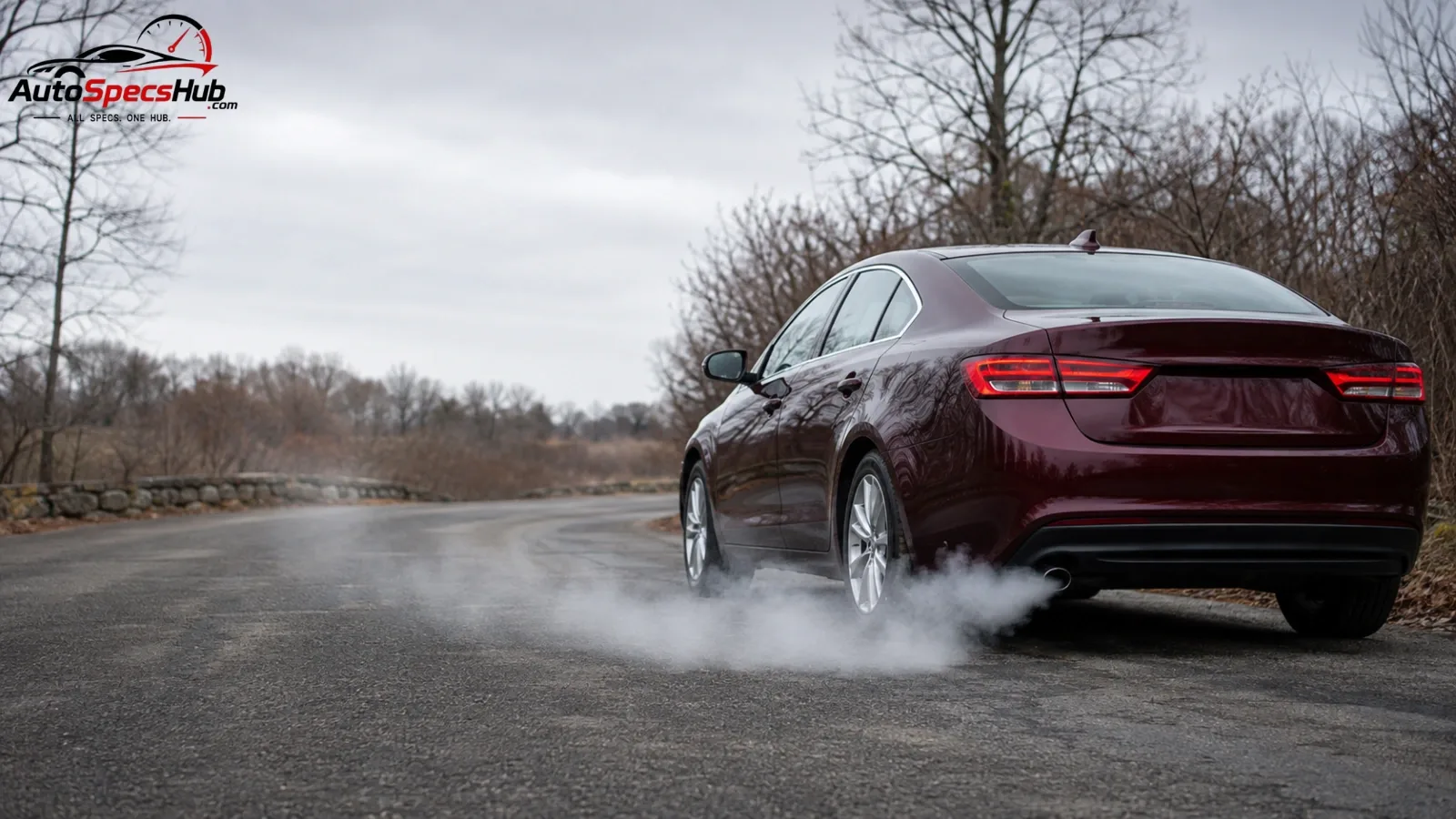
White smoke from the exhaust can mean two very different things. A thin cloud that disappears a few minutes after a cold start is often just water vapor. Thick white smoke that continues after the engine is warm can point to coolant entering the engine, incomplete combustion, or another fault that needs attention.
The quickest way to judge how serious it is is to look at when the smoke appears, how long it lasts, how dense it is, and what other symptoms come with it.
If the smoke is heavy and continuous, the coolant level is falling, the engine is overheating, or the car is running badly, stop treating it as normal condensation. Those combinations can indicate a problem that may become much more expensive if the engine keeps running hot.
Quick Answer: Is White Exhaust Smoke Normal?
Sometimes.
What you notice | Likely cause | What to do |
Thin white vapor on a cold start | Normal condensation | Let the engine warm up |
Vapor disappears after a few minutes | Moisture in the exhaust | Usually no concern |
Thick white smoke after warm-up | Possible coolant or combustion fault | Diagnose soon |
White smoke with a sweet smell | Coolant may be entering the engine | Check coolant when cold |
White smoke with overheating | Serious cooling-system or engine fault | Stop driving when safe |
White smoke from a diesel engine | Possible incomplete combustion | Check fuel, glow, timing, or compression issues |
Gasoline and diesel engines can produce similar-looking smoke for different reasons. Confirming the exact engine fitted to the vehicle can help when researching model-specific causes. AutoSpecsHub's vehicle specifications can help identify the correct configuration.
First, Make Sure It Is Smoke and Not Water Vapor
Water is a normal by-product of combustion, and moisture can collect inside a cold exhaust system while a vehicle is parked. When the engine starts, hot exhaust gases turn that moisture into visible vapor.
Normal vapor is usually thin, strongest on a cold or humid morning, and fades as the exhaust warms.
You may even notice a small amount of water dripping from the tailpipe. That can also be normal.
What deserves more attention is dense white smoke that continues after the engine reaches normal operating temperature. At that point, condensation becomes a less likely explanation and the engine or cooling system should be checked.
6 Common Causes of White Smoke From the Exhaust
The likely cause depends on whether the engine is cold or warm, whether the smoke is continuous, how it smells, and whether the vehicle has other symptoms.
1. Normal Condensation
Condensation is the least concerning explanation and one of the most common reasons drivers notice white exhaust vapor.
It is especially common:
In cold weather
Early in the morning
After the car has been parked overnight
During short trips when the exhaust does not fully warm up
If the vapor clears after a few minutes and there is no coolant loss, overheating, rough running, or warning light, there is usually nothing to repair.
2. A Head Gasket Leak
The head gasket seals the joint between the engine block and cylinder head while keeping combustion pressure, coolant, and engine oil in their correct passages.
If the gasket fails between a coolant passage and a cylinder, coolant can enter the combustion chamber and leave the exhaust as thick white steam or smoke.
Other signs may include:
Falling coolant level
Engine overheating
Rough running
Misfires
A sweet exhaust smell
Unusual pressure in the cooling system
White smoke alone does not prove that the head gasket has failed. Proper testing matters because several other faults can produce similar symptoms.
3. A Cracked Cylinder Head or Engine Block
A cracked cylinder head can also allow coolant to enter a combustion chamber. In less common cases, damage to the engine block can create a similar problem.
Severe overheating is one possible cause of cracking, although other types of engine damage may also be responsible.
Because a cracked cylinder head and failed head gasket can produce similar symptoms, visual observation of the exhaust is not enough to identify the exact fault.
Cooling-system pressure tests, compression tests, leak-down tests, or combustion-gas checks may be needed.
4. Other Internal Coolant Leaks
A head gasket is not the only route coolant can take into the engine or exhaust.
Depending on engine design, a failed intake gasket, cooler, turbo-related component, or another coolant-fed part may allow coolant to enter an area where it can be burned or turned into steam.
This is one reason model-specific diagnosis is important. Two vehicles producing similar white smoke may have completely different underlying faults.
5. Incomplete Combustion in a Diesel Engine
White smoke from a diesel engine can have a different explanation.
Diesel fuel relies on heat from compression to ignite. If combustion is incomplete, unburned or partly burned fuel can leave the exhaust as white or light-gray smoke.
Possible causes include:
Faulty glow plugs during cold starts
Injector problems
Incorrect injection timing
Low cylinder compression
Poor fuel atomization
Very low combustion temperature
A small amount of white smoke during a cold diesel start can be normal. Persistent smoke after the engine warms up should be investigated.
6. Injector, Timing, or Compression Problems
A combustion fault can sometimes create white or gray-white exhaust even when coolant is not involved.
An injector may deliver too much fuel, too little fuel, or an uneven spray pattern. Low compression can also prevent the fuel from burning properly.
Look for additional symptoms such as:
Hard starting
Uneven idle
Hesitation
Knocking
Reduced power
Poor fuel economy
Do not replace parts based on smoke color alone. Persistent white smoke should be diagnosed using the vehicle's other symptoms and test results before repairs are made.
How to Tell Normal Vapor From a Real Problem
The overall pattern matters more than the color by itself.
White vapor is more likely to be normal when:
The engine is cold
The weather is cool or humid
The vapor is thin
It disappears within a few minutes
Coolant level remains stable
The engine temperature stays normal
White smoke is more likely to need diagnosis when:
It is thick and continuous
It continues after full warm-up
Coolant level keeps falling
The engine overheats
The exhaust smells sweet
The engine misfires, shakes, or loses power
If several warning signs appear together, treat the problem more seriously.
What Does White Smoke With a Sweet Smell Mean?
A sweet smell can make an internal coolant leak more likely.
Many engine coolants contain glycol-based chemicals with a distinctive odor. If dense white smoke appears after the engine is warm and the coolant level is also dropping, coolant leakage should move higher on the diagnostic list.
Do not rely on smell alone. Exhaust odors vary between vehicles, fuels, and emissions systems.
Always check coolant only when the engine is cold, and never open a hot pressurized cooling system.
White Smoke With a Flashing Check Engine Light
White smoke becomes more concerning when it appears together with a warning light and poor engine performance.
If the engine is also shaking, misfiring, hesitating, or losing power, the issue may involve an active combustion fault rather than harmless condensation.
Our guide to a flashing check engine light explains why that warning deserves faster attention and what symptoms to watch for.
White Smoke While Driving vs Only on Startup
Only on startup: Condensation is much more likely, particularly during cold weather. Watch whether the vapor disappears as the engine and exhaust warm.
While driving: Persistent smoke after warm-up deserves more attention. Coolant leakage, diesel combustion issues, or another engine fault becomes more plausible.
Under acceleration: Extra engine load can make an existing coolant or combustion problem more noticeable. Look at the smoke together with coolant level, engine temperature, power delivery, and warning lights.
The timing of the smoke is often one of the most useful diagnostic clues.
Can You Keep Driving With White Smoke?
It depends on what else is happening.
If the vapor is thin, appears only after a cold start, and disappears quickly, normal driving is usually fine.
If white smoke remains after warm-up but the engine temperature and performance are normal, arrange a diagnosis rather than ignoring it.
Stop driving when safe if the vehicle develops:
Heavy continuous smoke
Overheating
Rapid coolant loss
Severe shaking
Major power loss
Serious warning lights
An overheating engine can suffer expensive internal damage quickly, so continuing the journey is rarely worth the risk.
What Should You Check Before Assuming the Worst?
Start with simple observations before assuming the engine needs major repair.
1. Let the Engine Warm Up
See whether the vapor fades as the exhaust reaches operating temperature.
2. Check the Coolant Level
Only do this when the engine is cold. If the level repeatedly falls without an obvious external leak, an internal leak may need investigation.
3. Watch the Temperature Gauge
Overheating significantly increases the urgency.
4. Look for External Coolant Leaks
Check the ground beneath the vehicle, coolant hoses, reservoir, radiator area, and visible connections.
5. Pay Attention to How the Engine Runs
Rough idle, difficult starting, hesitation, shaking, or loss of power can help separate a combustion fault from normal condensation.
6. Scan for Trouble Codes
If a warning light is on, diagnostic trouble codes can narrow the search. They should be treated as clues rather than automatic instructions to replace a part.
7. Confirm the Engine Type
Gasoline and diesel engines can produce white smoke for different reasons, so identifying the exact engine matters.
Avoid adding stop-leak products simply because you see white smoke. Masking the symptom can make proper diagnosis more difficult and may create other problems.
White Smoke During a Used-Car Test Drive
Persistent white smoke is a red flag when evaluating a used vehicle.
Whenever possible, ask to start the car from cold. This makes it easier to see whether the vapor disappears normally as the engine warms or continues once the engine reaches operating temperature.
Also check:
Coolant level
Temperature gauge
Rough idle
Warning lights
Unusual exhaust smells
Signs of coolant leaks
Recent cooling-system work
Service history
Do not automatically accept explanations such as "they all do that" or "it only needs a sensor" without evidence.
Used car checklist covers the other mechanical, history, tire, fluid, body, and test-drive checks worth making before you buy.
Frequently Asked Questions
Why Is White Smoke Coming Out of My Tailpipe?
White vapor coming from the tailpipe can be normal when a cold engine is warming up, particularly in cool or humid conditions. If the white smoke is thick, continues after the engine reaches operating temperature, or occurs with coolant loss, overheating, a sweet smell, or poor engine performance, the vehicle should be inspected.
Why does my car blow white smoke only when I first start it?
Brief white vapor on startup is commonly caused by moisture inside a cold exhaust. If it disappears within a few minutes and there is no coolant loss, overheating, or rough running, it is usually normal.
Does white smoke always mean a blown head gasket?
No. Condensation is common, while diesel combustion problems, injector faults, compression issues, and other internal coolant leaks can also produce white smoke. A failed head gasket should be confirmed through proper diagnosis.
Can a bad fuel injector cause white smoke?
Yes, particularly on a diesel engine. An injector that delivers fuel incorrectly can cause incomplete combustion, allowing partly burned fuel to appear as white or light-gray exhaust smoke.
Is White Smoke From the Exhaust Normal in Cold Weather?
Thin white vapor from the exhaust is often normal in cold weather because moisture in the exhaust system condenses and becomes visible when the engine starts. It should gradually fade as the engine and exhaust warm up. Thick white smoke that continues after warm-up, especially with coolant loss, overheating, or rough running, should be diagnosed.
Why does white smoke get worse when I accelerate?
Acceleration increases engine load, fuel delivery, and cylinder pressure. If coolant is entering a cylinder or fuel is not burning correctly, the extra load can make the smoke more noticeable.
When White Smoke Needs Attention
White smoke from the exhaust is not automatically a sign of engine failure. Thin vapor after a cold start that disappears as the exhaust warms is usually normal condensation.
The situation changes when the smoke is thick, persistent, or accompanied by coolant loss, overheating, a sweet smell, rough running, hard starting, warning lights, or reduced power.
Do not diagnose the vehicle from smoke color alone. Use the timing, temperature, smell, fluid levels, engine behavior, and diagnostic data together.
If the vehicle is overheating or producing heavy continuous white smoke, stop driving and find the cause. Diagnosing the problem early can prevent a manageable cooling or combustion fault from becoming major engine damage